French Numbers 1-100: Why 70 Is "Sixty-Ten" (And How to Actually Learn This Mess)
Last updated: December 7, 2025
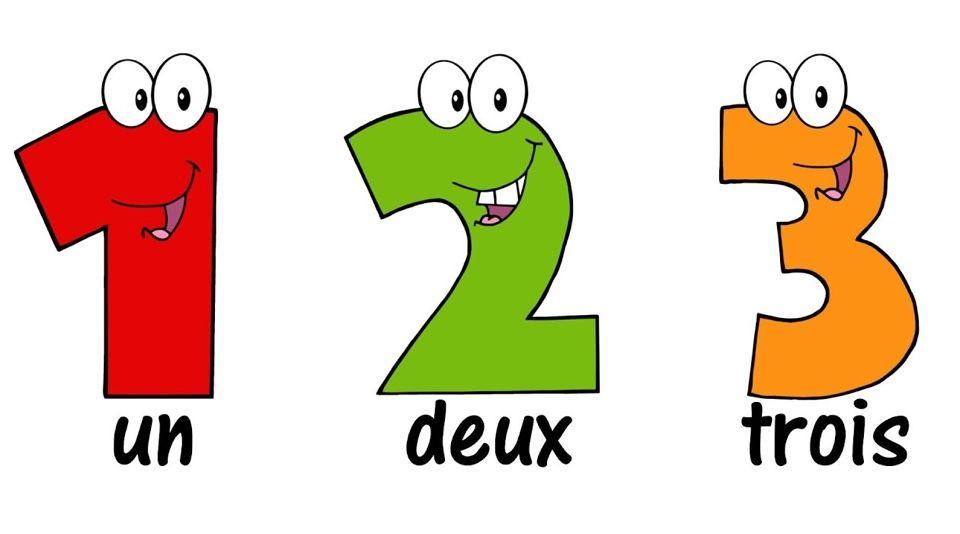
Look, if you're learning French and just hit the numbers section, you're probably confused as hell right now. You've been cruising along nicely with un, deux, trois, and then suddenly you get to 70 and the French are telling you it's "sixty-ten." Then 80 is "four-twenties." And 90? That's "four-twenties-ten."
What the actual hell, France?
Here's the thing: French numbers are genuinely tricky. Not "oh it takes a bit of practice" tricky. Actually difficult, even for people who pick up languages easily. So if you're struggling, that's completely normal. The good news? Once you understand why the French count like this, it gets a lot easier to remember.
- The Foundation: Learn French Numbers 1-20 (For Real)
- Pronunciation: The Stuff That Actually Matters
- The Tens: This Part Is Easy
- The Vigesimal Nightmare: French Numbers 70-99
- Why Do the French Count Like This?
- How to Actually Learn French Counting
- Beyond 100: Larger Numbers in French
- Ordinal Numbers: First, Second, Third...
- Practical Applications: Phone Numbers, Prices, Time
The Foundation: Learn French Numbers 1-20 (For Real)
Before we tackle the weird stuff, you need to nail 1-20. I'm serious about this. These numbers show up everywhere in the French counting system, especially in the 70-99 range that trips everyone up.
Here's your starting point:
1-10: un, deux, trois, quatre, cinq, six, sept, huit, neuf, dix
11-16: These are all irregular: onze, douze, treize, quatorze, quinze, seize
17-19: Now a pattern emerges—just combine dix with the smaller number: dix-sept (ten-seven), dix-huit (ten-eight), dix-neuf (ten-nine)
You'll notice that 17-19 are literally "ten-seven," "ten-eight," "ten-nine." Keep that in mind—it's the same logic that shows up later when 70 becomes "sixty-ten."
Pronunciation: The Stuff That Actually Matters
French pronunciation can be a pain, but with numbers, there are just a few rules you need to know:
Silent letters everywhere: The final E, S, and X are usually silent. So six is pronounced "see," not "seeks." Deux is "duh," not "doo-eks."
Nasal sounds: Un has that nasal /ɛ̃/ sound. If you're not used to nasal vowels, this takes practice. Don't stress about it being perfect at first.
Numbers that change: Six, huit, and dix change pronunciation depending on what follows them:
- Before a consonant: silent ending (six minutes = "see minut")
- Before a vowel: liaison with a Z sound (six euros = "see-zeuros")
Honestly? You'll pick this up through exposure. Don't overthink it.
The Tens: This Part Is Easy
20-60 follows a straightforward pattern. Learn these:
- 20 = vingt
- 30 = trente
- 40 = quarante
- 50 = cinquante
- 60 = soixante
To make compound numbers, just hyphenate: vingt-deux (22), trente-quatre (34), cinquante-sept (57).
One exception: Numbers ending in 1 use "et" (and): vingt-et-un (21), trente-et-un (31), quarante-et-un (41), cinquante-et-un (51), soixante-et-un (61).
The Vigesimal Nightmare: French Numbers 70-99
This is where French counting gets wild. Instead of having unique words for 70, 80, and 90, French uses math:
70 = soixante-dix (literally "sixty-ten")
- 71 = soixante-et-onze ("sixty-eleven")
- 75 = soixante-quinze ("sixty-fifteen")
- 79 = soixante-dix-neuf ("sixty-nineteen")
80 = quatre-vingts (literally "four-twenties")
- 81 = quatre-vingt-un ("four-twenty-one")
- 85 = quatre-vingt-cinq ("four-twenty-five")
- 89 = quatre-vingt-neuf ("four-twenty-nine")
Notice that quatre-vingts has an "s" when it stands alone as 80, but loses the "s" in compounds like quatre-vingt-deux (82). This trips people up constantly.
90 = quatre-vingt-dix (literally "four-twenty-ten")
- 91 = quatre-vingt-onze ("four-twenty-eleven")
- 93 = quatre-vingt-treize ("four-twenty-thirteen")
- 99 = quatre-vingt-dix-neuf ("four-twenty-nineteen")
Yeah, to say 98 in French, you're literally saying "four-twenty-eighteen." It's math, and you have to do it in your head every single time.
Why Do the French Count Like This?
The vigesimal (base-20) system comes from Celtic languages that influenced French centuries ago. The Celts counted in twenties instead of tens—probably because they counted on their fingers and toes.
This system was common across Europe. Remember Abraham Lincoln's "four score and seven years ago"? A score is 20, so four score and seven equals 87. English used to count this way too, but we simplified it. France... didn't.
Fun fact: French-speaking Belgium and Switzerland got sick of this system. They use septante (70), octante or huitante (80), and nonante (90). Way more logical. But if you're learning standard French, you're stuck with the "four-twenties" approach.
How to Actually Learn French Counting
Break it into chunks. Don't try to learn all 100 numbers at once. Master 1-20 first. Then 20-69. Then tackle 70-99. The vigesimal stuff makes sense once you're comfortable with the building blocks.
Practice out of order. Don't just count 1, 2, 3, 4... If you always practice in sequence, you'll struggle to recall individual numbers quickly. Grab random numbers and practice those: 47, 83, 61, 94.
Use them constantly. When you check the time, say it in French. When you see a price, convert it to French in your head. When you're waiting for something, try counting in French. The more you use them in real contexts, the faster they'll stick.
Listen to native French speakers. Reading numbers is one thing; understanding them when someone rattles off "quatre-vingt-dix-huit" at normal conversational speed is another. You need exposure to how French people actually say these numbers.
Beyond 100: Larger Numbers in French
Once you hit cent (100), things get easier.
- 100 = cent
- 200 = deux cents (but 201 = deux cent un—no "s" when followed by another number)
- 1,000 = mille (never takes an "s")
- 1,000,000 = un million
- 1,000,000,000 = un milliard (billion)
One thing to watch: French uses a comma as a decimal separator (3,14) and spaces for thousands (1 000 000), which is the opposite of English.
Ordinal Numbers: First, Second, Third...
Converting cardinal numbers to ordinal numbers (first, second, third) is pretty simple: just add "-ième" to the number.
- deuxième (second)
- troisième (third)
- quatrième (fourth)
- cinquième (fifth—note the added "u")
- neuvième (ninth—"f" becomes "v")
Big exception: "First" is completely irregular—premier (masculine) or première (feminine). This is the only ordinal number that changes for gender.
For dates, you use le premier for the first of the month, but cardinal numbers for everything else: le premier mai (May 1st), le deux mai (May 2nd). If you need help with days and months, check out our guides on French weekdays and months in French.
Practical Applications: Phone Numbers, Prices, Time
Phone numbers: French phone numbers have 10 digits and are said in pairs: 06 23 45 67 89 becomes "zéro six, vingt-trois, quarante-cinq, soixante-sept, quatre-vingt-neuf."
Prices: The euro symbol comes after the number with a space: 15,50 € (quinze euros cinquante).
Time: French uses both 12-hour and 24-hour clocks. For 24-hour time, just state the numbers directly: 14h30 is "quatorze heures trente." For 12-hour time, you use expressions like "et quart" (quarter past), "et demie" (half past), and "moins le quart" (quarter to).
The Real Secret: Learn French Numbers in Context
Here's the brutal truth: you won't get fluent with French numbers by drilling flashcards. You need to hear them and use them in real situations—ordering at restaurants, watching French shows, listening to French people talk about prices or times or dates.
This is where learning French the traditional way falls short. Textbooks give you lists of numbers and maybe some practice exercises, but they don't give you the thousands of exposures you need to actually internalize this stuff.
That's the whole point of learning from real French content. When you're watching a French show and someone says "quatre-vingt-quinze euros," you're not doing mental math exercises—you're connecting that number to an actual situation. When you look up a word in a French article and Migaku shows you example sentences with numbers in them, you're building associations that stick.
Migaku's browser extension lets you learn from actual French content—Netflix shows, YouTube videos, news articles, whatever you're into. When you encounter numbers in real contexts, you can instantly look them up, add them to your spaced repetition deck, and review them alongside the actual sentence where you found them. That's how you go from "okay, quatre-vingt-dix-huit is... let me calculate... 98" to just knowing it's 98.
Plus, the mobile app syncs everything, so you can review on the go. You'll see these numbers over and over in different contexts until they become automatic. There's a 10-day free trial if you want to check it out.