Italian Directional Words: Understand Directions in Italian Like a Local
Last updated: March 30, 2026
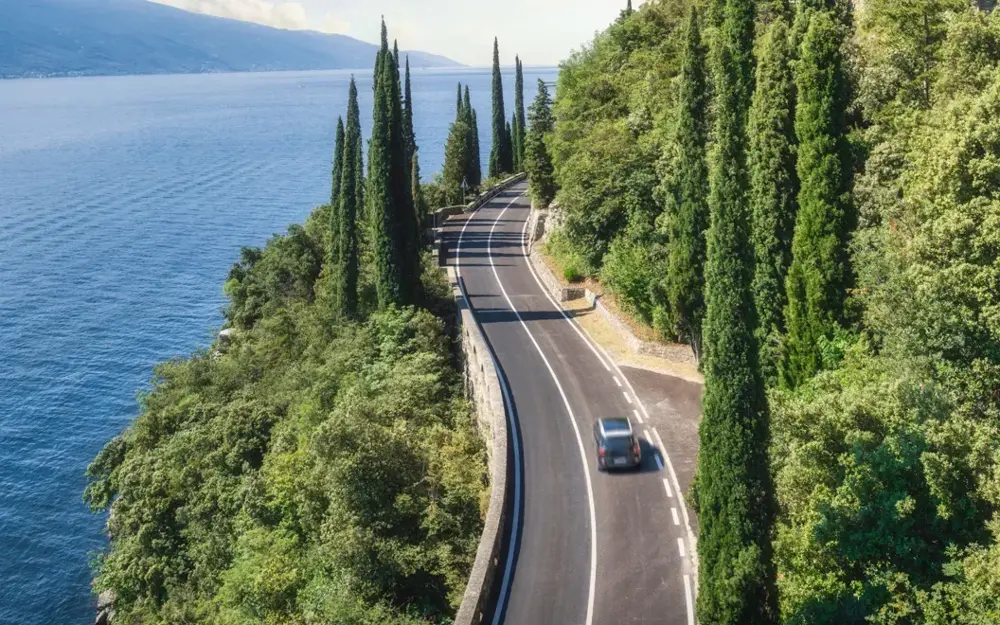
Getting lost in Italy can be pretty stressful, especially when you're trying to find that amazing gelato shop everyone's been raving about. The good news? Italians are generally super helpful when you ask for directions. The challenge? Understanding their response when they start rattling off a series of turns, landmarks, and street names at native speed. Learning Italian directional vocabulary and phrases will save you from wandering around aimlessly and actually help you navigate Italian cities like you know what you're doing.
- Basic directional vocabulary you need to know
- Cardinal directions and their practical use
- Essential prepositions and landmarks
- How to ask for directions in italian
- Common verbs used in giving directions
- Words and phrases for distances and time
- Regional variations and cultural tips
- How Italian directional words work grammatically
- Building your directional vocabulary systematically
Basic directional vocabulary you need to know
Let's start with the absolute essentials. These are the Italian directional words you'll hear constantly when someone gives you directions.
The big three are "destra" (right), "sinistra" (left), and "dritto" (straight). You'll almost always hear these with the preposition "a" in front, so it becomes "a destra" (to the right), "a sinistra" (to the left), and "sempre dritto" (straight ahead). The word "sempre" literally means "always," so "sempre dritto" is like saying "keep going straight."
Here's a quick reference list of the most common directions in Italian:
Italian | English |
|---|---|
a destra | To the right, on the right |
a sinistra | To the left, on the left |
sempre dritto | Straight ahead |
avanti | Forward, ahead |
indietro | Back, backward |
vicino | Near, close |
lontano | Far |
qui / qua | Here |
lì / là | There |
When someone tells you to "turn right," they'll usually say "gira a destra" or "svolta a destra." Both verbs (girare and svoltare) mean to turn. If they want you to go straight, you'll hear "vai sempre dritto" or just "dritto."
Cardinal directions and their practical use
The four direction words for cardinal points are "nord" (north), "sud" (south), "est" (east), and "ovest" (west). Italians don't use these as much in everyday street directions, but you'll definitely encounter them when someone's describing general locations or when you're looking at maps.
You might hear phrases like:
- verso nord: toward the north
- nella parte sud della città: in the southern part of the city
- a est di Roma: east of Rome
Pretty straightforward stuff. The cardinal directions work basically the same way they do in English, just with Italian pronunciation.
Essential prepositions and landmarks
This is where giving directions gets more detailed. Italians love using landmarks when they give directions in Italian, and you need to know the prepositions that connect everything together.
Common prepositions for directions:
Italian | English |
|---|---|
davanti a | In front of |
dietro | Behind |
accanto a | Next to |
di fronte a | Across from, facing |
vicino a | Near to |
lontano da | Far from |
tra / fra | Between |
dopo | After |
prima di | Before |
fino a | Until, as far as |
Now for the landmarks and street vocabulary you'll hear all the time:
Italian | English |
|---|---|
la strada | The street, the road |
la via | The street (more formal) |
il viale | The avenue, boulevard |
la piazza | The square |
il semaforo | The traffic light |
l'incrocio | The intersection |
l'angolo | The corner |
il ponte | The bridge |
la chiesa | The church |
la fontana | The fountain |
la stazione | The station |
il municipio | The town hall |
When someone gives you directions, they'll combine these elements. For example: "Gira a sinistra al semaforo" (turn left at the traffic light) or "È davanti alla chiesa" (It's in front of the church).
How to ask for directions in italian
Before you can understand directions, you need to learn how to ask for them. Here are the most useful phrases for asking for directions:
"Scusi, dove si trova...?" (Excuse me, where is...?) is probably the most common and polite way to ask. You can also say "Dov'è...?" which is more casual but perfectly acceptable.
Other useful questions:
- Come arrivo a...?
How do I get to...? - Può indicarmi la strada per...?
Can you show me the way to...? - Sono lontano da...?
Am I far from...? - È vicino?
Is it close? - Quanto tempo ci vuole?
How long does it take? - Posso andarci a piedi?
Can I walk there?
When you're asking for directions, starting with "scusi" (formal) or "scusa" (informal) is important. Italians appreciate politeness, and you'll get way better responses if you're courteous.
Common verbs used in giving directions
Understanding the verb forms you'll hear is essential. Most directions use the imperative mood, which sounds commanding but is totally normal in Italian when giving directions.
Key verbs to know:
Verb | Informal | Formal | English |
|---|---|---|---|
andare | vai | vada | To go |
girare | gira | giri | To turn |
svoltare | svolta | svolti | To turn |
continuare | continua | continui | To continue |
prendere | prendi | prenda | To take |
attraversare | attraversa | attraversi | To cross |
seguire | segui | segua | To follow |
The formal versions (ending in -a or -i) are what you'll hear if someone's being polite with you. The informal versions are more common among friends or when someone's being casual.
Words and phrases for distances and time
When people give directions, they often include how far something is or how long it will take. Here's the vocabulary for that:
Italian | English |
|---|---|
lontano | Far |
vicino | Near, close |
a piedi | On foot, by foot |
in macchina | By car |
circa | About, approximately |
metri | Meters |
chilometri | Kilometers |
minuti | Minutes |
Example phrases:
- Sono circa 10 minuti a piedi.
It's about 10 minutes on foot. - È molto vicino, solo 100 metri.
It's very close, only 100 meters. - È abbastanza lontano, meglio prendere l'autobus.
It's pretty far, better to take the bus.
Regional variations and cultural tips
Here's the thing about learning Italian: there are regional differences in how people give directions. In some areas, people might use different words for the same thing. For example, "strada" is universal, but some regions prefer "via" for street names.
Also, Italians tend to use landmarks way more than street names. Don't be surprised if someone tells you "It's near the church with the red door" instead of giving you an actual address. This is completely normal and actually pretty helpful once you get used to it.
The famous Italian hand gesture 🤌 (fingers pinched together) can mean different things depending on context, but when giving directions, you'll often see Italians using hand gestures to indicate left, right, or straight. Pay attention to their hands as much as their words.
One more cultural note: if you say "ciao tutti" (hi everyone) when asking a group for directions, you'll come across as friendly and approachable. Italians generally respond well to warmth and friendliness.
How Italian directional words work grammatically
Quick grammar note: Italian directional words follow standard Italian grammar rules. When you use prepositions like "a" (to) or "di" (of) with articles, they combine into single words.
For example:
- a + il = al (at the, to the): "Gira al semaforo" (turn at the traffic light)
- a + la = alla: "Vai alla piazza" (go to the square)
- di + il = del: "all'angolo del palazzo" (at the corner of the building)
The word order typically follows subject-verb-object patterns, but in directions, you'll often just hear the verb and the direction: "Gira a destra" (turn right) without needing to say "you" because the verb form already indicates who's doing the action.
Building your directional vocabulary systematically
To really learn italian directional vocabulary, you need to practice it in context.
- maps in Italian, watching Italian travel vlogs, or even playing video games in Italian can help you internalize these words and phrases.
- The essential strategy is to learn how to ask first, then focus on understanding responses. Start with the basic phrase "Scusi, dov'è...?" and practice it with different destinations. Once you're comfortable asking, work on recognizing the key words in responses: destra, sinistra, dritto, semaforo, piazza.
- Build up your vocabulary in layers. Master the basics (right, left, straight), then add prepositions (in front of, next to), then landmarks (church, square, traffic light), then verbs (turn, cross, continue). This layered approach makes it way easier to navigate actual conversations.
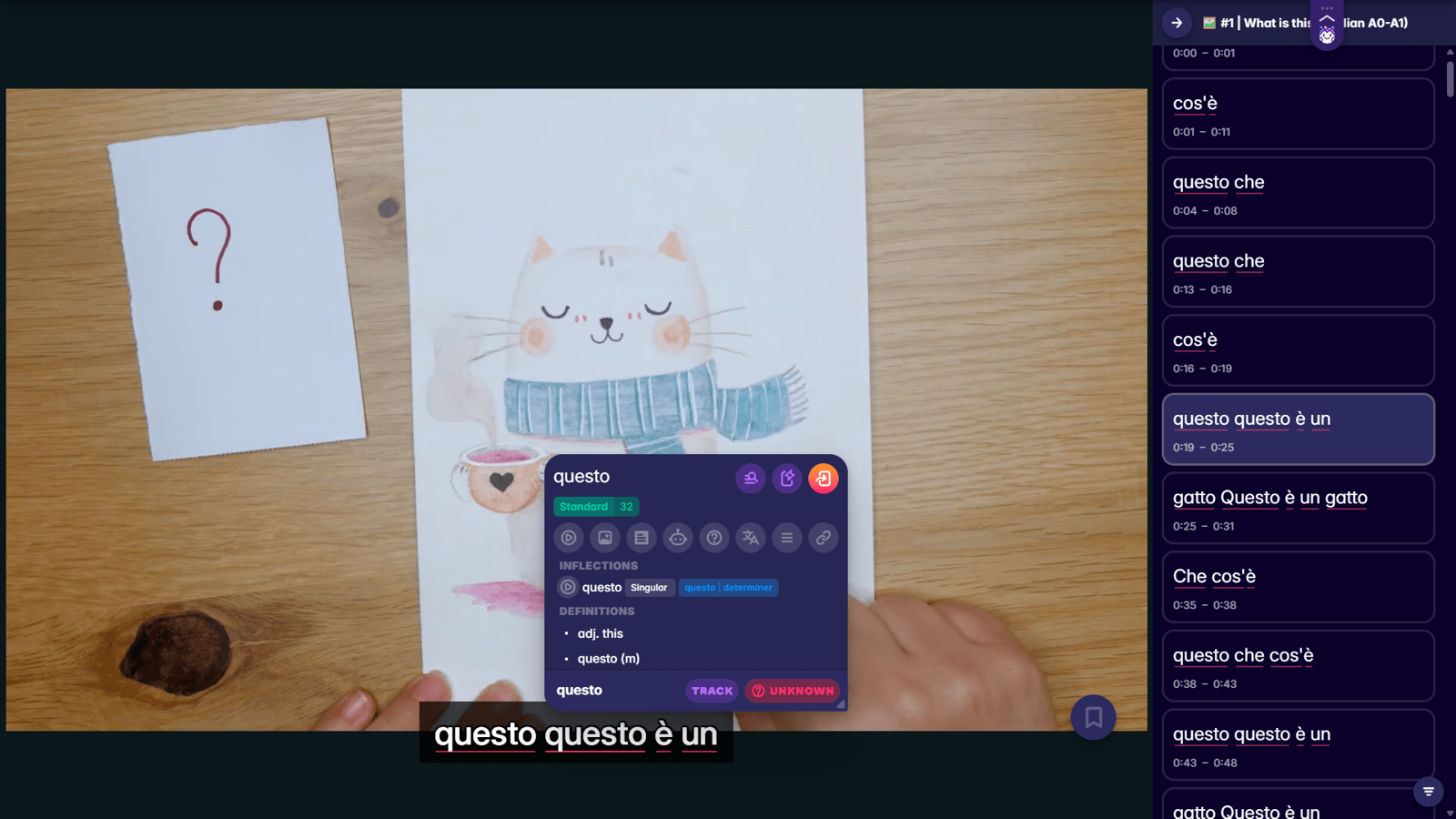
Want to practice these directional phrases with real Italian content? Migaku's browser extension and app let you look up any word instantly while watching Italian shows or reading articles, so you can learn vocabulary in actual context. There's a 10-day free trial if you want to check it out.
Understand directions in Italian and never get lost again 🗺️
Learning directional vocabulary might seem like a small piece of the Italian language puzzle, but it makes a huge difference in your daily life when you're in Italy. Being able to ask for directions confidently and understand the response transforms you from a confused tourist into someone who can actually navigate. The key is practice. Use these phrases, make mistakes, ask for clarification, consume Italian travel media content, and gradually you'll find yourself understanding more and more.
If you consume media in Italian, and you understand at least some of the messages and sentences within that media, you will make progress. Period.
In a foreign country, simple directional words can feel empowering.💡