# How the Comprehensible Input Works for Language Learners
> Classroom teaching and textbook learning are not for everyone. Learn how comprehensible input improves language acquisition beyond traditional methods.
**URL:** https://migaku.com/blog/language-fun/comprehensible-input-method-language-learning
**Last Updated:** 2026-02-09
**Tags:** resources, discussion, deepdive
---
You've probably heard people say that the best way to [learn a language](https://migaku.com/) is through [immersion](https://migaku.com/blog/japanese/the-problem-with-textbooks). But what makes immersion actually work? The answer comes down to something called **comprehensible input**.🧠 This concept explains why watching shows, reading books, and listening to podcasts in your target language can be way more effective than traditional [grammar](https://migaku.com/blog/japanese/japanese-sentence-structure) drills. Here's how it works and why it might change how you think about language learning.
---
## What is comprehensible input: Stephen Krashen's theory
Comprehensible input is language that you can mostly understand, even if you don't know every single word. The idea comes from linguist Stephen Krashen, who developed the Input Hypothesis back in the 1980s.
> His theory says that we acquire language (not just learn it) when we're exposed to messages we can comprehend that are **slightly above our current level**.⬆️
Krashen uses the formula i+1 to describe this sweet spot. The "i" represents your current language level, and the "+1" means input that's just one step beyond what you already know. So if you're a beginner who knows basic greetings and common nouns, comprehensible input might be a simple children's story where you can figure out new words from context and pictures.
The key thing here is that comprehension comes first. You're not trying to memorize grammar rules or [vocabulary](https://migaku.com/blog/japanese/how-to-learn-japanese-vocabulary) lists. You're just trying to understand messages, and through that process of understanding, your brain naturally picks up the patterns and structures of the language.
---
## The five hypotheses of second language acquisition
Krashen didn't just propose the Input Hypothesis in isolation. He developed five related hypotheses that together form a complete theory of second language acquisition:
1. **The Acquisition-Learning Hypothesis** says there are two different ways we develop language skills. Acquisition happens subconsciously when we're exposed to comprehensible input, similar to how kids pick up their native language. Learning is the conscious study of grammar rules and vocabulary. According to Krashen, only acquisition leads to real fluency.
2. **The Monitor Hypothesis** explains that learned knowledge serves as an editor or monitor that can check our output, but it doesn't help us produce language naturally. When you're having a conversation, you don't have time to think through grammar rules. You need acquired language for that.
3. **The Natural Order Hypothesis** suggests that we acquire grammatical structures in a predictable order, regardless of the order they're taught in [textbooks](https://migaku.com/blog/japanese/best-japanese-textbooks). A learner will naturally pick up certain structures before others, and forcing a different order through explicit instruction doesn't speed things up.
4. **The Input Hypothesis** (which we already covered) states that we acquire language when we understand messages that contain structures slightly beyond our current level.
5. **The Affective Filter Hypothesis** says that emotional factors like anxiety, lack of confidence, or boredom can block language acquisition. Even if you're getting tons of comprehensible input, a high affective filter prevents that input from reaching the part of your brain that acquires language. This is why compelling, interesting content works better than boring textbook exercises.
---
## How comprehensible input drives language acquisition
So how does this actually work in practice? When you encounter comprehensible input, your brain is actively working to extract meaning from the language. You're using context clues, gestures, images, cognates (Words similar to your native language), and the words you already know to figure out what's being communicated.
This process of **meaning-making** is what drives acquisition. Your brain notices patterns, infers grammar rules, and builds connections between words and concepts, all without you consciously trying to memorize anything. Pretty cool, right?
The comprehension part is crucial. If the input is too difficult and you can't understand the main message, your brain can't acquire anything from it. You're just hearing noise. But if it's too easy and contains nothing new, there's nothing to acquire either. The i+1 level keeps you in that productive zone where you're challenged but not overwhelmed.
### Differences between acquisition and learning
This distinction is central to understanding why comprehensible input works. When you learn a language through grammar study and memorization, you're building explicit knowledge. You can recite [conjugation](https://migaku.com/blog/japanese/japanese-verb-conjugation) tables and explain rules, but that knowledge doesn't automatically translate to fluent communication.
> **Acquisition builds implicit knowledge.** You develop an intuitive feel for what sounds right, similar to how you know your native language. You can produce correct sentences without thinking through the rules.
Think about it this way: if someone asks you why a sentence is grammatically correct in your native language, you might say "it just sounds right" even if you can't explain the rule. That's acquired knowledge. If you have to think through a rule to determine if a sentence is correct, that's learned knowledge.
Both have their place, but only acquisition gets you to real fluency and the ability to use another language naturally in real-time communication.
---
## What comprehensible input looks like in practice
For a beginner, comprehensible input might look like:
- Picture books with simple sentences
- Videos where the visuals clearly show what's happening
- Slow, clear speech about everyday topics
- Stories with lots of repetition and gestures
For intermediate learners, CI could be:
- Young adult novels in the target language
- TV shows with subtitle support
- Podcasts about familiar topics
- Conversations with patient native speakers who adjust their speech
For advanced language learners, comprehensible input includes:
- News articles and adult literature
- Movies and shows without subtitles
- Academic podcasts or lectures
- Natural conversations with natives
The subtitle question comes up a lot here. Subtitles in your target language can actually support comprehension without preventing acquisition, especially for intermediate learners. They provide that extra context that keeps the input comprehensible.
---
## Comprehensible input techniques you can use for language learning
Here are some practical ways to get comprehensible input:
1. Start with graded readers designed for language learners. These books are written specifically to be comprehensible at different levels, with controlled vocabulary and grammar.
2. Use extensive reading and listening. This means consuming lots of content at a comfortable level rather than intensively studying difficult texts. The volume of input matters.
3. Try TPRS (Teaching Proficiency through Reading and Storytelling). This method uses repetitive storytelling with comprehension checks to provide CI in a classroom setting. Teachers tell engaging stories using a limited set of vocabulary and structures, constantly checking that students understand.
4. Watch content with visual support. Cooking shows, [travel](https://migaku.com/blog/japanese/japanese-travel-phrases) vlogs, and children's programs provide tons of visual context that makes the language more comprehensible.
5. Find compelling input. Krashen later emphasized that the most effective CI is compelling, meaning it's so interesting that you forget you're even learning a language. When you're genuinely curious about what happens next in a story, your affective filter drops and acquisition happens naturally.
---
## The 3-2-1 comprehension strategy to consolidate the compelling input
This strategy helps you process comprehensible input more effectively. After consuming content in your target language, you:
- Identify 3 things you understood or learned
- Note 2 things you found interesting or surprising
- Ask 1 question that you still have
This reflection process helps you recognize what you're acquiring and keeps you engaged with the material. It also gives you a sense of progress, which keeps your affective filter low.
---
## How the FBI and other organizations use CI principles
You asked about how the FBI learns languages quickly. While they use intensive programs at the Foreign Service Institute, the core principle is massive amounts of comprehensible input combined with output practice. Their programs typically involve 6-8 hours daily of target language exposure through reading, listening, and conversation with instructors.
The key is that learners spend most of their time with comprehensible content at their level, gradually increasing difficulty. They're not spending months on grammar before speaking. They're getting input and using the language from day one, with grammar explanations serving as support rather than the main focus.
---
## Aren't speaking and writing important for learning a new language too
Here's the thing: Krashen's theory says that speaking and writing are the result of acquisition, not the cause. You develop the ability to speak by acquiring language through comprehensible input, and then speaking emerges naturally.
That said, output (Speaking and writing) does serve useful purposes. It helps you notice gaps in your knowledge, gives you opportunities to get feedback, and lets you practice using what you've acquired. But according to CI theory, output practice alone won't make you fluent if you haven't acquired enough of the language first.
The practical takeaway is that as a beginner, you should prioritize getting tons of comprehensible input before worrying too much about speaking perfectly. Build up that acquired knowledge first.
---
## The role of the affective filter when using comprehensible input
This concept explains why some foreign language learning environments work better than others. When you're stressed, embarrassed, or bored, your affective filter goes up and blocks input from being acquired. The language might be comprehensible, but your emotional state prevents your brain from processing it for acquisition.
This is why relaxed, low-pressure environments produce better results, and you could understand the messages better. It's also why compelling input works so well. When you're genuinely interested in content, you forget to be anxious about your language level.
As a language learner, you can manage your affective filter by choosing content you enjoy, studying in comfortable environments, and not beating yourself up over mistakes. The goal is to stay relaxed and engaged.
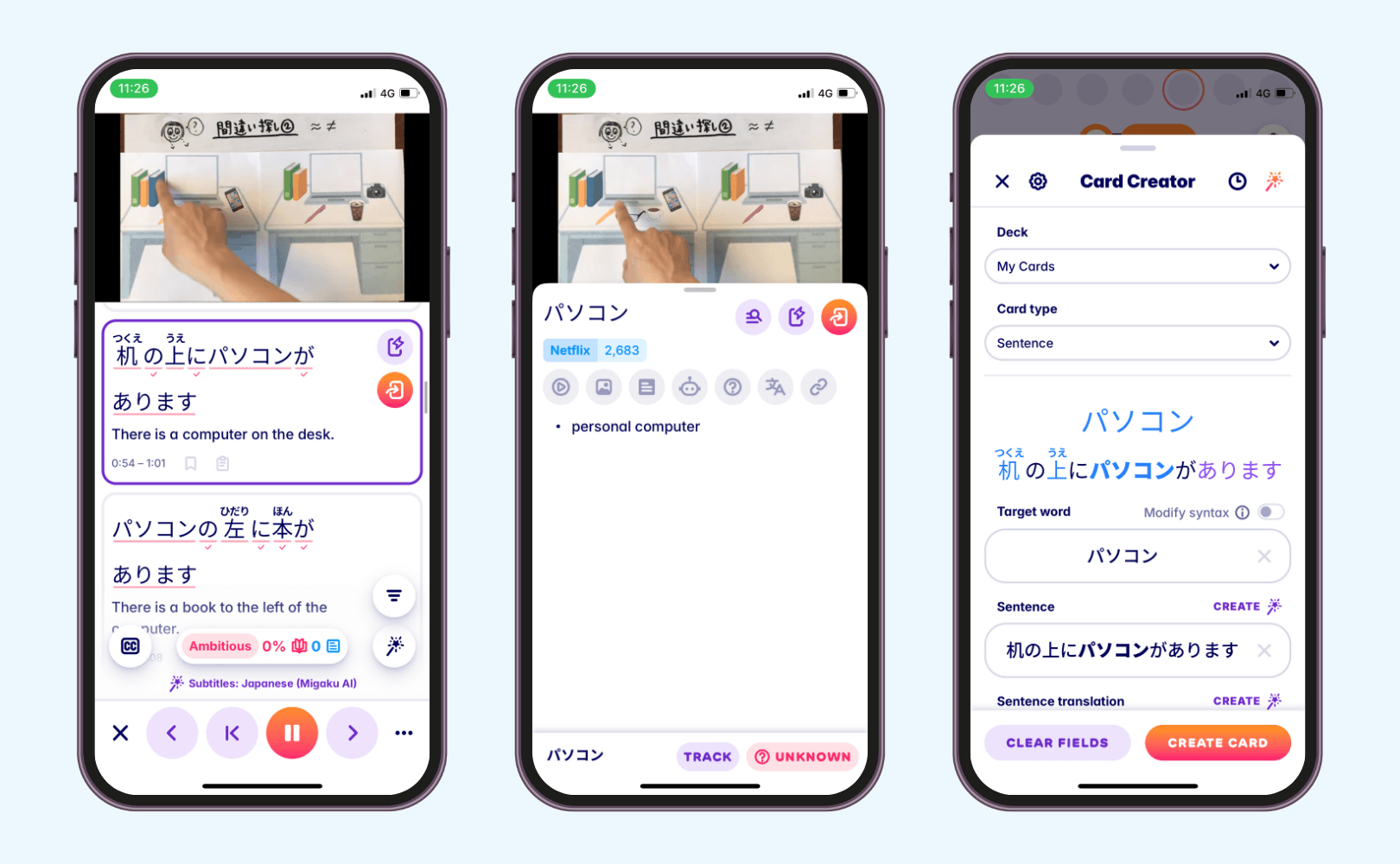
To put these CI principles into practice with real content, Migaku's browser extension and app let you look up words instantly while watching shows or reading articles in your target language. Makes the whole immersion thing way more practical. There's a 10-day free trial if you want to check it out.
 ---
## OK, so should you drop studying grammar or vocabulary as a learner
Not necessarily. Some explicit learning can help, especially for adults who want to understand how the language works. But the foundation of your study should be massive amounts of comprehensible input. That's what builds the implicit knowledge you need for fluency. The key is finding that sweet spot of i+1, where content is challenging but comprehensible, and keeping your affective filter low through compelling, interesting material.
> If you consume media in the language you want to learn, and you understand at least some of the messages and sentences within that media, you will make progress. _Period_.
Input takes pritority at the early stage.
---
## OK, so should you drop studying grammar or vocabulary as a learner
Not necessarily. Some explicit learning can help, especially for adults who want to understand how the language works. But the foundation of your study should be massive amounts of comprehensible input. That's what builds the implicit knowledge you need for fluency. The key is finding that sweet spot of i+1, where content is challenging but comprehensible, and keeping your affective filter low through compelling, interesting material.
> If you consume media in the language you want to learn, and you understand at least some of the messages and sentences within that media, you will make progress. _Period_.
Input takes pritority at the early stage.