# Portuguese False Friends: False Friends in Portuguese and English That Confuse Learners
> Learn the most common Portuguese false friends that trip up English speakers. Avoid embarrassing mistakes with this guide to tricky cognates and their real meanings.
**URL:** https://migaku.com/blog/language-fun/portuguese-false-friends
**Last Updated:** 2026-02-14
**Tags:** vocabulary, phrases
---
You're making solid progress with Portuguese, feeling pretty confident, and then you tell someone you're "constipado" expecting sympathy for your emotional state. Instead, they offer you tissues. Congrats, you just announced you have a cold.😶🌫️ Welcome to the wild world of Portuguese false friends, where words look familiar but mean something completely different. These tricky cognates trip up learners constantly, and honestly, they're one of the most frustrating parts of [learning Portuguese](https://migaku.com/learn-portuguese). Let's break down the most common ones so you can avoid some seriously awkward situations.
---
## What exactly are false friends in Portuguese
> A false friend (or false cognate) happens when a word in Portuguese looks or sounds similar to an English word but means something totally different.
The technical term is **"falsos amigos"** in Portuguese, and they exist because both languages borrowed from Latin and other shared sources. The problem is that these words evolved differently in each language over time.
True cognates are the helpful ones. Words like "hospital" (hospital), "animal" (animal), and "music" (música) mean basically the same thing in both languages. False cognates, though? They're the troublemakers that make you think you understand when you absolutely don't.
Here's the thing about false friends: they're different from just learning new [vocabulary](https://migaku.com/blog/language-fun/portuguese-verb-conjugation). When you see a completely unfamiliar Portuguese word, your brain knows to look it up or figure it out from context. But when you see "pretender" and your brain screams "I know this one!", you're way more likely to misunderstand. Your confidence works against you.
---
## Common Portuguese false friends between Portuguese and English
Let me walk you through the most common offenders. I've organized these by how likely they are to cause actual confusion or embarrassment.
### The really embarrassing ones
1. **"Constipado"** might be the most famous Portuguese false friend. In English, "constipated" refers to digestive issues. In Portuguese, "constipado" means you have a cold or are congested. Totally different body systems. If you want to say you're constipated in Portuguese, you'd say "preso" or use "prisão de ventre.
2. **"Exquisito"** looks like "exquisite" but actually means weird, strange, or picky. So calling someone's cooking "exquisito" won't go over well. The Portuguese word for exquisite is "requintado" or "primoroso."
3. **"Esquisito"** (Note the different spelling from exquisito) also means strange or odd. Both words come from different etymological paths but ended up meaning similar things in Portuguese.
### Verbs that fool everyone
1. **"Pretender"** is super common and super confusing. It doesn't mean to pretend. It means to intend, plan, or want to do something. "O que você pretende fazer?" means "What do you intend to do?" If you want to say pretend, use "fingir."
2. **"Assistir"** looks like assist, but it means to watch or attend. "Vou assistir o filme" means "I'm going to watch the movie." To actually help someone (Assist), you'd use "ajudar." This one trips people up constantly because "assistir" is such a common verb.
3. **"Realizar"** means to accomplish, achieve, or carry out, not to realize (as in become aware). "Realizei meu sonho" means "I accomplished my dream." For the English meaning of realize, Portuguese uses "perceber" or "dar-se conta."
4. **"Atendar"** means to attend to, serve, or answer (like answering a phone). It doesn't mean to attend an event. That would be "comparecer" or "assistir a" (Yes, that same assistir we just talked about).
5. **"Puxar"** means to pull, and "empurrar" means to push. But "push" in English sounds a bit like "puxar," which actually means the opposite. I've watched tourists push when they should pull and vice versa.
6. **"Suportar"** means to tolerate or endure, not to support. "Não suporto isso" means "I can't stand that." To support someone, use "apoiar."
7. **"Resumir"** means to summarize, not to resume. If you want to say you'll resume something, use "continuar" or "retomar."
8. **"Discutir"** means to discuss or argue, which is pretty close to English, but the connotation leans more toward arguing or debating than casual discussion.
### Nouns that sound familiar but aren't
1. **"Balcão"** is a classic example. Looks like balcony, right? Wrong. It means counter (like at a store or bar). The word for balcony is "varanda" or "sacada" in [Brazilian](https://migaku.com/blog/language-fun/brazilian-vs-european-portuguese) Portuguese.
2. **"Parentes"** doesn't mean parents. It means relatives. Your actual parents are "pais." This one causes confusion in both directions for speakers of different languages.
3. **"Pasta"** can mean folder, briefcase, or paste (like toothpaste), depending on context. It doesn't specifically mean the Italian food, though Brazilians do use it for pasta sometimes. The confusion here is real.
4. **"Livraria"** means bookstore, not library. A library is "biblioteca." I've seen so many learners confidently walk into a bookstore expecting to borrow books for free.
5. **"Exquisite"** actually appears in older Portuguese texts with a meaning closer to the English, but modern usage has shifted completely to the "strange" meaning.
6. **"Fabric"** in English translates to "tecido" in Portuguese. But "fábrica" in Portuguese means factory. Totally different shopping experience if you mix these up.
### Adjectives that mislead
1. **"Sensível"** means sensitive, not sensible. A sensible person in Portuguese is "sensato." So calling someone "sensível" might sound like you're saying they're emotionally delicate rather than practical.
2. **"Atual"** means current or present, not actual. "O presidente atual" means "the current president." For actual, you'd use "real" or "verdadeiro."
3. **"Largo"** means wide, not large. Large would be "grande." A "rua larga" is a wide street, which might also be large, but the word specifically refers to width.
4. **"Esquisito"** (Yes, again) sometimes gets confused with "exquisite" by English speakers, but as we covered, it means strange or peculiar.
---
## False words in different languages: They trip up more than English speakers
Portuguese shares false friends with Spanish too, which adds another layer if you're learning both. "Embarazada" means pregnant in Spanish, but "embaraçada" in Portuguese means embarrassed. The Portuguese word for pregnant is "grávida."
The phenomenon of false cognates exists across tons of language pairs. English and German have them, French and English have them, and basically any two languages with shared linguistic roots will have words that drifted apart over centuries.
The interesting thing about Portuguese specifically is that Brazilian Portuguese and European Portuguese have developed some of their own false friends with English independently. Usage in Brazil sometimes differs from Portugal, especially with borrowed English words that got adapted differently.
---
## Building your false friends awareness
1. Make a personal list as you encounter these. When you spot a word that looks familiar, write down what you thought it meant versus what it actually means. The act of recording your mistakes helps cement the correct meaning.
2. Practice with real Portuguese content. When you're reading news articles or watching shows, you'll see these words in context. Context helps you remember the actual meaning better than just memorizing lists.
3. Quiz yourself periodically. Go back through your false friends list and test whether you remember the correct meanings. The ones you keep forgetting are the ones to focus on.
4. Some learners find it helpful to create silly mental images or stories connecting the Portuguese word to its actual meaning. Whatever helps you break the English association and build a new one.
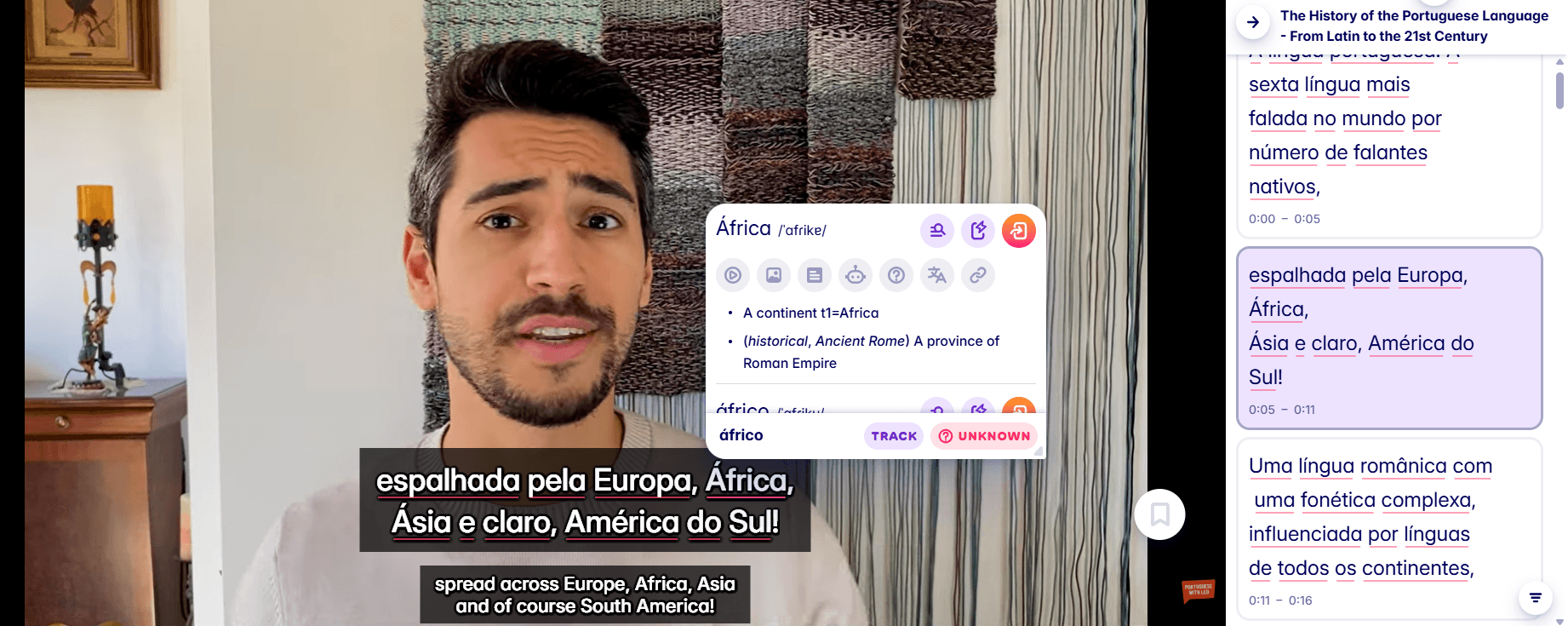
Anyway, if you want to actually practice spotting these words in real Portuguese content, Migaku's browser extension and app let you look up words instantly while watching shows or reading articles. Makes it way easier to verify those suspicious cognates before they become fossilized mistakes. There's a 10-day free trial if you want to check it out.
 ---
## FAQs
The ones I covered above are the heavy hitters. Constipado, pretender, assistir, balcão, parentes, and actual/atualmente probably cause 80% of the confusion.
Not exactly. Most false friends come from shared Latin roots. Both languages borrowed from Latin independently, and the words evolved differently in each language over centuries. Some are coincidental similarities with no shared origin.
This is a side question, but yeah, "você" can come across as distant or even rude in European Portuguese in some contexts. They prefer "tu" for informal situations. In Brazil, "você" is the standard informal you. Different Portuguese-speaking regions have different pronoun preferences.
This is a Brazilian Portuguese term of endearment meaning a favorite person or thing, like a sweetheart or beloved. It's pretty regional and informal. Not really a false friend, just a fun word that doesn't have a direct English equivalent.
---
## Know the commonest false cognates and go from there
False friends make Portuguese trickier than it might seem at first glance. The good news? Once you learn the common ones, you'll stop making the same mistakes. The key is awareness. When you see a familiar-looking word in dramas, texts, movies, etc., pause for half a second and verify you actually know what it means. That tiny moment of doubt will save you from confidently saying something completely wrong.
> If you consume media in Portuguese, and you understand at least some of the messages and sentences within that media, you will make progress. _Period_.
Pick up the good habit of pausing at things you aren't sure about!⏸️
---
## FAQs
The ones I covered above are the heavy hitters. Constipado, pretender, assistir, balcão, parentes, and actual/atualmente probably cause 80% of the confusion.
Not exactly. Most false friends come from shared Latin roots. Both languages borrowed from Latin independently, and the words evolved differently in each language over centuries. Some are coincidental similarities with no shared origin.
This is a side question, but yeah, "você" can come across as distant or even rude in European Portuguese in some contexts. They prefer "tu" for informal situations. In Brazil, "você" is the standard informal you. Different Portuguese-speaking regions have different pronoun preferences.
This is a Brazilian Portuguese term of endearment meaning a favorite person or thing, like a sweetheart or beloved. It's pretty regional and informal. Not really a false friend, just a fun word that doesn't have a direct English equivalent.
---
## Know the commonest false cognates and go from there
False friends make Portuguese trickier than it might seem at first glance. The good news? Once you learn the common ones, you'll stop making the same mistakes. The key is awareness. When you see a familiar-looking word in dramas, texts, movies, etc., pause for half a second and verify you actually know what it means. That tiny moment of doubt will save you from confidently saying something completely wrong.
> If you consume media in Portuguese, and you understand at least some of the messages and sentences within that media, you will make progress. _Period_.
Pick up the good habit of pausing at things you aren't sure about!⏸️