# Sentence Mining Guide: Learn Vocabulary Faster in 2026
> Are you still drilling through isolated new words? Learn how to use sentence mining in immersion for language learning. Covers the 1T rule, SRS, and tips.
**URL:** https://migaku.com/blog/language-fun/sentence-mining-guide-learn-vocabulary-faster
**Last Updated:** 2026-02-09
**Tags:** fundamentals, discussion, deepdive
---
You've probably heard about sentence mining if you've been looking into language [learning method](https://migaku.com/blog/japanese/the-problem-with-textbooks)s. The basic idea is simple: instead of memorizing [vocabulary](https://migaku.com/blog/japanese/how-to-learn-japanese-vocabulary) from random word lists, you pull sentences from real content you're consuming (Shows, books, articles) and turn them into flashcards.🗂️ The sentence gives you context for how the word actually gets used, which makes it way easier to remember and use correctly later. This guide walks you through exactly how to start sentence mining and use it to build your vocabulary faster.
---
## What is the sentence mining method
> Sentence mining means **extracting** sentences from your immersion content and **adding** them to a spaced repetition system like Anki.
When you encounter an unknown word while reading or watching something, you save the whole sentence containing that word instead of just the word by itself.
Here's the thing: your brain remembers words better when they come with context. If you just memorize that "elaborate" means "detailed," you might forget it in a week. But if you remember the sentence "She gave an elaborate explanation of the process," you've got the meaning plus how it's actually used in conversation.
The sentence mining process works alongside immersion. You're not creating flashcards from textbook examples or pre-made lists. You're pulling directly from content you're already consuming, which means the vocabulary is relevant to what you care about.
---
## Why sentence mining works
Does sentence mining actually work? Yeah, and there's a practical reason why.
When you learn vocabulary in isolation, you're missing half the information. You might know what a word means, but you don't know which verbs it pairs with, what register it belongs to, or what grammatical patterns it appears in.
An example sentence gives you all of that automatically. If you mine "I need to wrap up this project by Friday," you're learning "wrap up" means to finish something, but you're also learning it's casual, it takes a direct object, and it's commonly used with work-related tasks.
Plus, memory works through association. The more connections your brain makes with a piece of information, the easier it is to recall. A sentence provides multiple hooks: the meaning, the [grammar](https://migaku.com/blog/japanese/japanese-sentence-structure), the context, even the source material if it's from a show you enjoyed.
---
## When to start to mine sentences
You can start sentence mining pretty early in your learning journey, but timing matters.
If you're an absolute beginner who doesn't know basic grammar yet, sentence mining will feel overwhelming. You'll encounter sentences where you don't know five or six words, and trying to mine all of them creates too many flashcards to review.
> 💡A better approach:
> 1. Work through a basic grammar resource first and learn the most common 300-500 words from a frequency list.
> 2. Once you can understand simple sentences with maybe one or two unknown words, that's when sentence mining becomes practical.
For most learners, this happens after a few weeks or months of study. You'll know you're ready when you can watch content aimed at learners or read simple articles and understand the general meaning, even if specific vocab is missing. The general comprehension can be achieved.
---
## How to choose which sentences to mine and to create cards: One target rule
Another question, how do you personally choose what to sentence mine? This is where people often mess up and create way too many cards.
> The 1T rule is your friend here. 1T stands for **"one target,"** meaning you should only mine sentences where you understand everything except one unknown word or grammar point.
If a sentence has three words you don't know, skip it and wait until you encounter those words in simpler contexts.
Why? Because if you're trying to learn multiple things from one card, you won't remember which word the flashcard is testing. You'll see the sentence, struggle to remember what you're supposed to be learning, and waste time.
Here's my approach: I only mine words that I've **encountered at least twice** in different contexts. If I see a word once, I might look it up out of curiosity, but I don't make a card. If I see it again a few days later, that's a signal it's common enough to be worth learning.
Also, choose words that matter to your goals. For example, if I'm learning Mandarin to watch drama, mining business vocabulary from a medicine-genre drama probably isn't the best use of my time.
---
## How to [make a card efficiently](https://migaku.com/learn-japanese) from your sentences
Once you've found a sentence to mine, you need to turn it into a flashcard. The standard format is simple:
> **Front**: The sentence with the target word
>
**Back**: The reading (For languages with non-phonetic scripts), the meaning of the target word, and optionally an audio recording
For example, if you're learning Japanese and you mine the word (Interesting), your card might look like:
- Front:
- Back: Reading: kono hon wa omoshiroi. Meaning: Interesting
Some people add screenshots from shows or additional example sentences on the back. That's fine, but don't overcomplicate it. The goal is to review cards quickly, not study each one for two minutes.
One thing to avoid: don't put the English translation of the entire sentence on the front. You want to test whether you understand the Japanese (Or whatever language you're learning), and seeing English first defeats the purpose.
---
## Tools and apps for sentence mining
Anki is the most popular tool for sentence mining because it's free, customizable, and has a solid SRS algorithm. You can create your own deck and add cards manually, or use add-ons that make the process faster.
For Japanese learners specifically, there are add-ons that automatically generate readings and definitions when you paste a sentence. This cuts down the time per card from a few minutes to about 30 seconds.
Other SRS options exist, like Memrise or Quizlet, but they're not as flexible as Anki for serious sentence mining. You want a system that lets you customize card templates and review schedules.
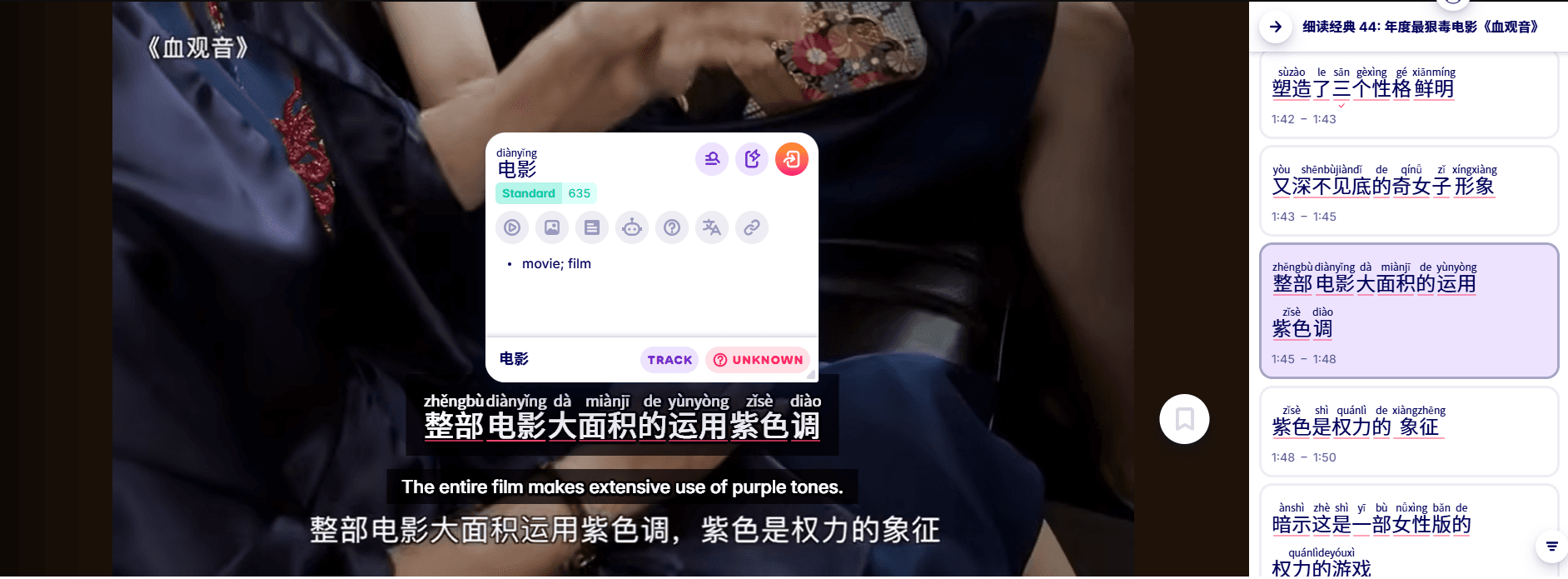
If you're mining from digital content, browser extensions can speed things up. Some tools, such as the Migaku browser extension, let you click a word to instantly create a flashcard with the sentence included.
 ---
## The actual mining process, step by step
Here's how I mine sentences when I'm watching a show:
1. I watch with subtitles in my target language
2. When I hear or read an unknown word that seems useful, I pause
3. I copy the sentence containing that word
4. I paste it into Anki or generate it using Migaku and add the word's meaning
5. I continue watching
The whole process takes maybe 20 seconds per card. If it's taking longer, you're probably overthinking it.
For reading, the process is even faster because you can highlight and copy text directly. I usually mine 5-10 sentences per hour of immersion, depending on the difficulty of the content.
Some people prefer to mine in batches. They'll watch an entire episode, note down timestamps of interesting words, then go back and create all the cards at once. That works too, but I find it breaks my immersion less to just pause briefly and make the card immediately.
---
## How to review your sentence mining flashcards
Creating the cards is only half the battle. You need to actually review them, and this is where the SRS part matters.
Anki (Or whatever spaced repetition system you use) will show you cards at increasing intervals based on whether you remember them. A new card might appear the next day, then three days later, then a week later, then two weeks, and so on.
Your job during reviews is simple:
1. Look at the sentence,
2. Try to recall what the target word means,
3. Flip the card, and mark whether you remembered correctly.
The whole review should take 5-10 seconds per card.
Don't spend time re-reading the sentence multiple times or trying to memorize it word-for-word. You're testing recognition, not trying to learn during the review itself. The learning happened when you first encountered the word in context.
I usually review cards once per day, typically in the morning. Most people end up with 50-100 reviews per day once they've been mining for a few months, which takes about 10-15 minutes.
---
## Common mistakes that slow you down
1. The biggest mistake is mining too many sentences. If you're creating 30 cards per day, you'll burn out within a week. Start with 5-10 per day max, especially as a beginner.
2. Another issue: mining sentences that are too complex. Remember the 1T rule. If you're constantly reviewing cards where you forgot what the target word was supposed to be, your sentences have too many unknowns.
3. Some learners also waste time making their cards perfect. They add beautiful formatting, multiple example sentences, audio from native speakers, and screenshots. This is procrastination disguised as productivity. A basic card with just the sentence and meaning works fine.
4. Also, don't mine from content that's way above your level. If you're a beginner trying to mine sentences from academic papers, you're going to have a bad time. Pick content that's slightly challenging but mostly comprehensible.
If you have never tried sentence mining before, this whole process, with its potential mistakes, may feel discouraging. But if you like learning from real content and you're willing to put in consistent daily effort, sentence mining is one of the most efficient ways to build vocab. You're learning words you actually encounter, in contexts that actually matter, which beats memorizing random word lists any day.
Anyway, if you want to make sentence mining way easier, Migaku's browser extension and app let you create flashcards directly from videos and websites with just a click. You can look up words instantly and mine sentences without breaking your immersion flow. There's a 10-day free trial if you want to check it out.
---
## The actual mining process, step by step
Here's how I mine sentences when I'm watching a show:
1. I watch with subtitles in my target language
2. When I hear or read an unknown word that seems useful, I pause
3. I copy the sentence containing that word
4. I paste it into Anki or generate it using Migaku and add the word's meaning
5. I continue watching
The whole process takes maybe 20 seconds per card. If it's taking longer, you're probably overthinking it.
For reading, the process is even faster because you can highlight and copy text directly. I usually mine 5-10 sentences per hour of immersion, depending on the difficulty of the content.
Some people prefer to mine in batches. They'll watch an entire episode, note down timestamps of interesting words, then go back and create all the cards at once. That works too, but I find it breaks my immersion less to just pause briefly and make the card immediately.
---
## How to review your sentence mining flashcards
Creating the cards is only half the battle. You need to actually review them, and this is where the SRS part matters.
Anki (Or whatever spaced repetition system you use) will show you cards at increasing intervals based on whether you remember them. A new card might appear the next day, then three days later, then a week later, then two weeks, and so on.
Your job during reviews is simple:
1. Look at the sentence,
2. Try to recall what the target word means,
3. Flip the card, and mark whether you remembered correctly.
The whole review should take 5-10 seconds per card.
Don't spend time re-reading the sentence multiple times or trying to memorize it word-for-word. You're testing recognition, not trying to learn during the review itself. The learning happened when you first encountered the word in context.
I usually review cards once per day, typically in the morning. Most people end up with 50-100 reviews per day once they've been mining for a few months, which takes about 10-15 minutes.
---
## Common mistakes that slow you down
1. The biggest mistake is mining too many sentences. If you're creating 30 cards per day, you'll burn out within a week. Start with 5-10 per day max, especially as a beginner.
2. Another issue: mining sentences that are too complex. Remember the 1T rule. If you're constantly reviewing cards where you forgot what the target word was supposed to be, your sentences have too many unknowns.
3. Some learners also waste time making their cards perfect. They add beautiful formatting, multiple example sentences, audio from native speakers, and screenshots. This is procrastination disguised as productivity. A basic card with just the sentence and meaning works fine.
4. Also, don't mine from content that's way above your level. If you're a beginner trying to mine sentences from academic papers, you're going to have a bad time. Pick content that's slightly challenging but mostly comprehensible.
If you have never tried sentence mining before, this whole process, with its potential mistakes, may feel discouraging. But if you like learning from real content and you're willing to put in consistent daily effort, sentence mining is one of the most efficient ways to build vocab. You're learning words you actually encounter, in contexts that actually matter, which beats memorizing random word lists any day.
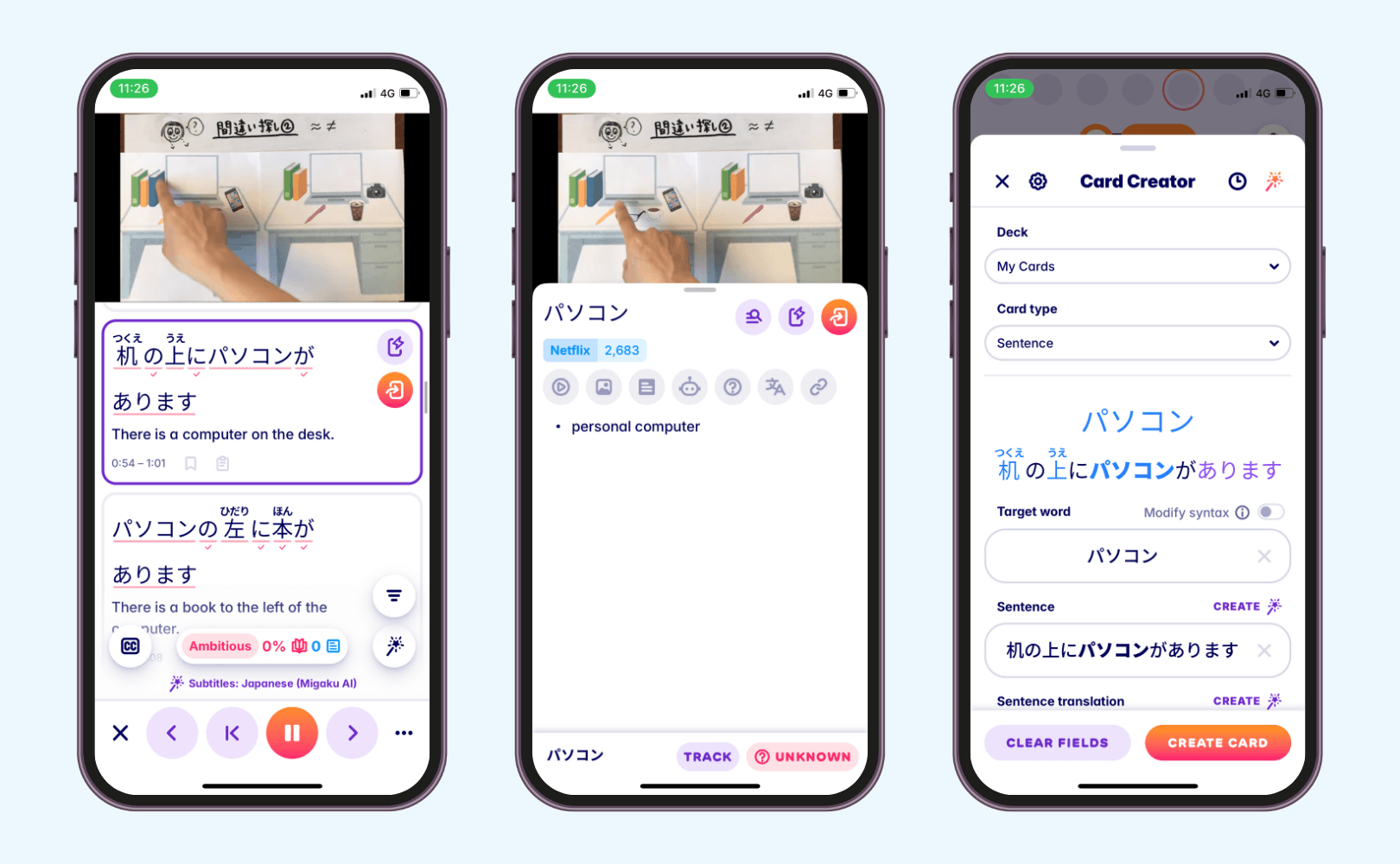
Anyway, if you want to make sentence mining way easier, Migaku's browser extension and app let you create flashcards directly from videos and websites with just a click. You can look up words instantly and mine sentences without breaking your immersion flow. There's a 10-day free trial if you want to check it out.
 ---
## FAQs
The 10000 sentence method is exactly what it sounds like: the idea that if you mine and learn 10000 sentences, you'll reach fluency in a language. Is that number accurate? Probably not exactly, but it's in the right ballpark. After mining a few thousand sentences, you'll have encountered the most common vocabulary multiple times and developed a strong intuition for grammar patterns.
---
## Sentences work better than isolated words
At the beginner stage, you might not fully understand the grammar or all the other words in your mined sentences. Over time, as your grammar knowledge improves through other study, those same sentences will make more sense. You'll review a card you made three months ago and suddenly understand a grammatical pattern you missed before, and the message conveyed in the context clears up.
> If you consume media in the language you want to learn, and you understand at least some of the messages and sentences within that media, you will make progress. _Period_.
An imperfect context is still better than isolated words.
---
## FAQs
The 10000 sentence method is exactly what it sounds like: the idea that if you mine and learn 10000 sentences, you'll reach fluency in a language. Is that number accurate? Probably not exactly, but it's in the right ballpark. After mining a few thousand sentences, you'll have encountered the most common vocabulary multiple times and developed a strong intuition for grammar patterns.
---
## Sentences work better than isolated words
At the beginner stage, you might not fully understand the grammar or all the other words in your mined sentences. Over time, as your grammar knowledge improves through other study, those same sentences will make more sense. You'll review a card you made three months ago and suddenly understand a grammatical pattern you missed before, and the message conveyed in the context clears up.
> If you consume media in the language you want to learn, and you understand at least some of the messages and sentences within that media, you will make progress. _Period_.
An imperfect context is still better than isolated words.