Spanish Food Vocabulary: Basic Guide to Spanish Food and Drinks Vocabulary
Last updated: February 1, 2026
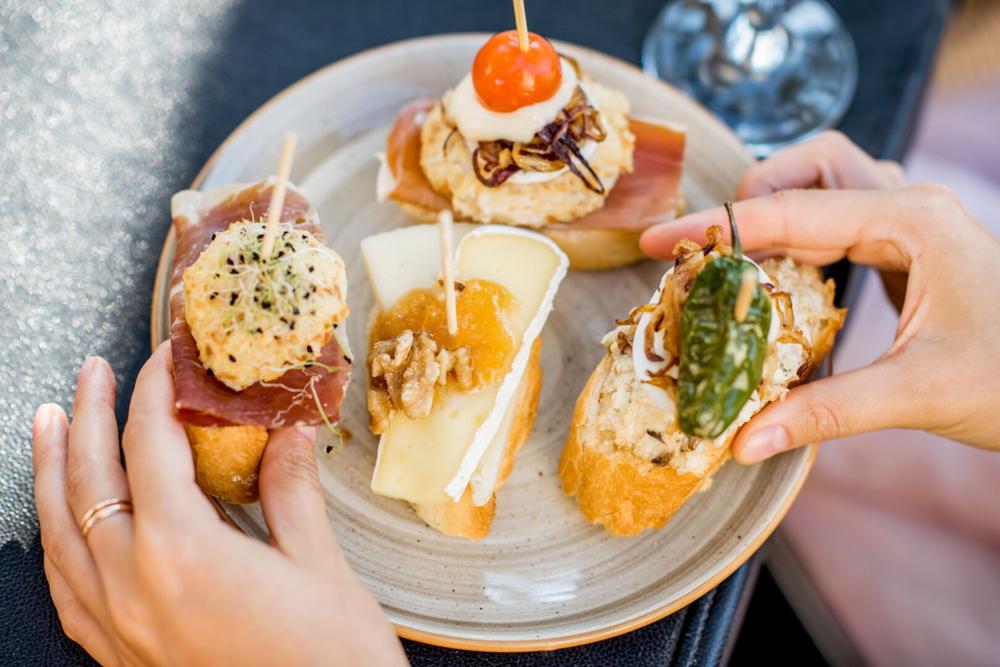
Learning Spanish food vocabulary opens up a whole new world when you're traveling through Spanish-speaking countries or just trying to order at your local taqueria without pointing at the menu like a lost tourist. Whether you're planning a trip to Madrid, want to cook authentic Latin American dishes, or just love watching Spanish cooking shows, knowing the right words for ingredients, dishes, and restaurant situations makes everything way more enjoyable.🤤
This guide covers the essential Spanish food and drink terms you'll actually use, organized in a way that makes sense for real-world situations.
- Why Spanish food vocabulary matters
- Basic Spanish food categories
- Meat and protein food words in Spanish
- Seafood essentials in Spanish words
- Fruit and vegetables in Spanish
- Grains, legumes, and staple food in Spanish
- Dairy products and cheese in Spanish vocabulary
- Herbs, seasoning, and spices in Spanish
- Basic food cooking methods and preparations
- Restaurant vocabulary you'll use to order food in Spanish
- Food and drink pairings in Spanish food words
- Regional variations in food vocabulary you should know
- Common mistakes to avoid
- Learn Spanish food vocabulary effectively
- FAQs
Why Spanish food vocabulary matters
Here's the thing: you can get by with pointing and gestures, sure. But actually knowing what you're ordering, what ingredients are in your food, and how to ask for what you want? That's a completely different experience. I've seen people accidentally order tripe when they wanted steak, or end up with a plate of anchovies when they're allergic to fish. Not fun.
Spanish food vocabulary also helps you connect with people. When you can discuss ingredients, ask about cooking methods, or compliment a dish properly, Spanish speakers really appreciate the effort. Plus, food is such a huge part of Spanish and Latin American culture that you'll hear these words constantly in everyday conversations, not just at restaurants.
Basic Spanish food categories
Let's start with the broad categories you need to know. These are the foundation words that'll help you navigate any menu or grocery store in a Spanish-speaking country.
- The word for food in Spanish is "comida ," which you'll see everywhere.
- "Bebida " means drink or beverage.
- When you're talking about meals specifically, "desayuno " is breakfast, "almuerzo " is lunch, and "cena " is dinner. In Spain, they also use "comida" to refer to lunch, which can be a bit confusing at first.
- "Plato " means both plate and dish (as in a prepared meal). You'll see "plato principal " for main course and "plato del día " for the daily special.
- "Entrada " or "aperitivo " refers to appetizers or starters.
Meat and protein food words in Spanish
If you eat meat, you absolutely need these words.
- "Carne " is the general term for meat.
- "Res " or "vaca " refers to beef, though you'll also hear "bistec" for steak.
- "Cerdo " or "puerco " means pork.
- "Pollo " is chicken. Pretty straightforward so far.
- "Cordero " is lamb, and you'll find it in many traditional Spanish dishes.
- "Pato " means duck.
- "Pavo " is turkey.
For specific cuts and preparations:
- "Chuleta " means chop or cutlet.
- "Costilla " is rib.
- "Filete " is fillet.
- "Jamón " is ham.
And if you're in Spain, you've probably heard of "jamón serrano" or "jamón ibérico," which are cured hams that Spanish people are genuinely obsessed with.
For organ meats, which are way more common in Spanish cuisine than in American cooking:
- "Hígado " is liver.
- "Riñones " are kidneys.

Seafood essentials in Spanish words
Spanish-speaking countries, especially Spain and coastal Latin American nations, have incredible seafood traditions.
The general word for seafood is "mariscos ," which technically refers to shellfish but gets used more broadly.
- "Pescado " means fish (when it's food), while "pez" is a living fish swimming around.
- "Camarón " or "gamba " means shrimp, depending on the region.
- "Langosta " is lobster.
- "Cangrejo " is crab.
- "Pulpo " is octopus.
- "Calamar " means squid, and you'll find it fried as "calamares " in pretty much every tapas bar.
- "Mejillones " are mussels.
- "Almejas " are clams.
- "Ostras " are oysters.
- "Atún " is tuna.
- "Salmón " is salmon (Yeah, basically the same).
- "Bacalao " is cod, which shows up in tons of traditional Spanish recipes.
Fruit and vegetables in Spanish
"Verduras" or "vegetales" both mean vegetables.
- "Lechuga " is lettuce.
- "Tomate " is tomato.
- "Cebolla " is onion.
- "Zanahoria " means carrot.
- "Papa " or "patata " is potato (Papa in Latin America, patata in Spain)
- "Maíz " is corn.
- "Pimiento " or "chile " refers to peppers, whether sweet bell peppers or spicy chili peppers. The specific type usually comes from context or additional descriptors.
- "Ajo " is garlic, which you'll need to know because Spanish cooking uses a ton of it.
- "Espinaca " means spinach.
- "Brócoli " is broccoli.
- "Coliflor " is cauliflower.
- "Champiñones " or "hongos " means mushrooms.
For fruits, "fruta" is the general term.
- "Manzana " is apple.
- "Naranja " is orange.
- "Plátano " or "banana " means banana.
- "Uva " is grape.
- "Fresa " means strawberry.
- "Limón " can mean either lemon or lime depending on the country (Confusing, I know).
- "Sandía " is watermelon.
Grains, legumes, and staple food in Spanish
- "Arroz " is rice, and you'll encounter it constantly in Spanish cuisine.
- "Pan " means bread.
- "Pasta " is, well, pasta.
- "Frijoles " or "habichuelas " means beans, which are absolutely central to Latin American cooking.
- "Lentejas " are lentils.
- "Garbanzos " are chickpeas.
- "Guisantes " or "chícharos " means peas.
- "Harina " is flour.
- "Azúcar " is sugar.
- "Sal " is salt.
- "Huevo " means egg, and you should definitely know the different preparations: "huevo frito " is fried egg, "huevo revuelto " is scrambled, and "huevo cocido " or "huevo duro " is hard-boiled.
Dairy products and cheese in Spanish vocabulary
- "Leche " is milk.
- "Queso " is cheese.
- "Mantequilla " is butter.
- "Crema " means cream.
- "Yogur " is yogurt, basically the same word.
Spanish-speaking countries have amazing cheese traditions.
- "Queso fresco " is fresh cheese.
- "Queso manchego " is the famous Spanish sheep's milk cheese.
- "Queso añejo " means aged cheese.
Herbs, seasoning, and spices in Spanish
This is where things get interesting.
The general word for spice is "especia ," and "condimento " means seasoning or condiment. "Hierba " means herb.
- "Pimienta " is pepper (The spice, not the vegetable).
- "Pimienta negra " specifically means black pepper.
- "Canela " is cinnamon.
- "Comino " is cumin.
- "Orégano " is oregano.
- "Cilantro " means cilantro or coriander, depending on whether you're talking about the leaves or seeds.
- "Perejil " is parsley.
- "Albahaca " is basil.
- "Romero " is rosemary.
- "Azafrán " is saffron, which Spanish cooking, especially paella, uses extensively.
- "Pimentón " is paprika, another essential Spanish seasoning.
- "Vainilla " means vanilla.
- "Jengibre " is ginger.
- "Nuez moscada " is nutmeg.
- "Laurel " refers to bay leaves, which go into tons of Spanish stews and soups.
Basic food cooking methods and preparations
Knowing how food is prepared helps you order exactly what you want.
- "Frito " means fried.
- "Asado " means roasted or grilled.
- "Hervido " means boiled.
- "Al horno " means baked or oven-roasted.
- "A la plancha " means grilled on a flat griddle.
- "Al vapor " means steamed.
- "Crudo " means raw.
- "Relleno " means stuffed.
- "Empanizado " or "rebozado " means breaded.
- "Guisado " means stewed.
Restaurant vocabulary you'll use to order food in Spanish
Have you ever wanted to order food in Spanish and didn't know where to start? These phrases make restaurant situations way easier.
- "La cuenta, por favor " means "the check, please."
- "Mesero " or "camarero " means waiter.
- "Menú " or "carta " means menu.
- "Propina " is tip.
Some common expressions are:
- When you want to order, you can say "Quisiera... " (I would like) or "Para mí... " (For me).
- To ask what someone recommends, try "¿Qué recomienda? " or "¿Cuál es la especialidad? " (What's the specialty?).
- "Tengo alergia a... " means "I'm allergic to," which is pretty crucial if you have food allergies.
- "Sin... " means "without," so "sin cebolla " is "without onion."
Food and drink pairings in Spanish food words
Spanish food culture is all about pairing the right foods and drinks.
- "Vino " means wine, with "vino tinto " being red wine and "vino blanco " being white wine.
- "Cerveza " is beer.
- "Agua " is water.
- "Refresco " means soft drink or soda.
- "Café " is coffee.
- "Té " is tea.
- "Jugo " or "zumo " means juice (Jugo in Latin America, zumo in Spain).
- "Chocolate " means both chocolate and hot chocolate, depending on context.
Regional variations in food vocabulary you should know
Spanish food vocabulary changes quite a bit between countries.
- In Spain, you'll hear "patatas " for potatoes, but in Mexico and most of Latin America, it's "papas ."
- Spain uses "zumo " for juice, while Latin America says "jugo ."
- The word for beans varies wildly: "frijoles " in Mexico and Central America, "habichuelas " in the Caribbean, "porotos " in Chile and Argentina, and "alubias " in Spain. Same ingredient, completely different words.
- "Torta " means cake in Spain but refers to a sandwich in Mexico. "Pastel " means cake in Latin America but pie in Spain.
You can see how this gets confusing fast.
Common mistakes to avoid
- Don't confuse "pollo" (Chicken) with "polo" (Polo, the sport or shirt). The double-L makes a different sound in Spanish, usually like a Y.
- "Sopa" is soup, but "sopa" doesn't always mean what English speakers think of as soup. In some contexts and regions, it can refer to pasta or noodle dishes.
Learn Spanish food vocabulary effectively
Do you want to expand your knowledge of Spanish?
- Start with the foods you actually eat regularly. If you love chicken, learn all the chicken-related words first. If you're vegetarian, focus on vegetables and preparation methods.
- Use real menus to practice. You can find Spanish restaurant menus online from actual restaurants in Madrid, Mexico City, Buenos Aires, wherever. Try to decode them without immediately translating everything. This builds real-world skills way faster than memorizing random word lists.
- Watch cooking shows in Spanish. Even if you don't understand everything, you'll hear these food vocabulary words in context repeatedly, which helps them stick. Spanish cooking shows are pretty entertaining too.
- Label your kitchen items and ingredients in Spanish. Sounds dorky, but it works. When you see "arroz" on your rice container every day, you'll remember it.
Anyway, if you want to actually learn Spanish through real content instead of just memorizing lists, Migaku's browser extension and app let you look up Spanish words instantly while watching cooking shows or reading recipes online. Makes learning vocabulary from actual Spanish content way more practical. There's a 10-day free trial if you want to check it out.

FAQs
Can't wait to start the Spanish food journey?
Learning Spanish food vocabulary opens up authentic experiences you'd miss otherwise. You can order confidently, shop at local markets, follow recipes in Spanish, and actually understand what people are talking about when they discuss food, which happens constantly in Spanish-speaking cultures. Even if you are not heading to a Spanish-speaking country, try cooking a recipe written in Spanish. The more you use food vocabulary in real situations, the faster it becomes automatic.
If you consume media in Spanish, and you understand at least some of the messages and sentences within that media, you will make progress. Period.
Ready to have a bite? 🍰