# Spanish Imperative Mood: How to Give Spanish Commands With the Right Tone
> Learn how to use the Spanish imperative mood to give commands with tú, usted, and other pronouns. Covers affirmative, negative, and irregular forms.
**URL:** https://migaku.com/blog/spanish/spanish-imperative-mood-commands
**Last Updated:** 2026-02-19
**Tags:** fundamentals, phrases, grammar
---
If you've been [learning Spanish](https://migaku.com/learn-spanish) for a while, you've probably noticed that giving commands sounds different from just making normal statements. That's because Spanish uses a special verb form called the imperative mood. Unlike English where we mostly just drop the subject and use the base verb ("Go!" or "Eat!"), Spanish has specific conjugations depending on who you're talking to and whether you're being polite or casual.
---
## What is the imperative mood in Spanish
> The imperative mood is one of the main moods in Spanish [grammar](https://migaku.com/blog/spanish/spanish-grammar-guide), alongside the indicative and subjunctive. While the indicative mood states facts and the subjunctive expresses doubt or wishes, the imperative is specifically for **giving direct commands, instructions, or requests**.
Here's the thing: Spanish doesn't just have one imperative form. You'll need different conjugations depending on whether you're talking to one person or multiple people, and whether you're being formal or informal. That's because Spanish has multiple "you" pronouns (tú, usted, vosotros, ustedes), and each one requires its own imperative form.
When you tell a friend "¡Habla más despacio!" (Speak more slowly!), that's the informal singular command for tú. But if you're asking your boss the same thing, you'd say "¡Hable más despacio!" using the formal usted form. The verb changes completely.
### How the imperative mood fits with other moods in Spanish
Understanding where the imperative sits among the moods in Spanish helps clarify when to use each one.
1. The indicative mood handles facts and reality ("I eat," "You spoke," "They will go").
2. The subjunctive mood deals with uncertainty, desires, and hypotheticals ("I hope you eat," "I doubt they went").
3. The imperative mood is specifically for direct commands and requests. You're telling someone to do something right now or in the near future. The tense doesn't really vary because commands are inherently about immediate or upcoming actions.
That said, the imperative and subjunctive are closely connected. Most negative commands and all formal commands use subjunctive conjugations. Some grammar books even treat the imperative as a subset of the subjunctive rather than a separate mood entirely.
---
## Affirmative commands with tú
The informal singular pronoun tú is what you'll use most often with friends, family, kids, and people your age. The affirmative tú command is actually one of the easiest forms to remember because it looks exactly like the third person singular present tense.
Take the verb "hablar" (To speak). In the present tense, "he/she speaks" is "habla." Your tú command? Also "habla." Same deal with "comer" (To eat): "come" means both "he/she eats" and the command "eat!"
Some examples:
- Habla español
*Speak Spanish*
- Come la cena
*Eat dinner*
- Escribe tu nombre
*Write your name*
- Abre la puerta
*Open the door*
Pretty cool! But of course, Spanish wouldn't be Spanish without irregular verbs throwing a wrench in things.
---
## Irregular affirmative tú commands
Eight common verbs have irregular affirmative tú commands that don't follow the normal pattern. You just have to memorize these:
- decir (To say) = di
- hacer (To do/make) = haz
- ir (To go) = ve
- poner (To put) = pon
- salir (To leave) = sal
- ser (To be) = sé
- tener (To have) = ten
- venir (To come) = ven
So instead of saying "hace" like you might expect, you'd say "¡Haz tu tarea!" (Do your homework!). Or "¡Ven aquí!" (Come here!) instead of "viene."
These pop up constantly in everyday Spanish, so they're worth drilling until they feel automatic.
---
## Negative commands with tú
Now here's where things get interesting. Negative commands use completely different forms than affirmative ones. Instead of using the present tense form, negative tú commands use the present subjunctive.
> - For **regular** verbs, you take the yo form of the present tense, drop the "o," and add the opposite ending.
> - For **-ar** verbs, add -es.
> - For **-er** and **-ir** verbs, add -as.
- hablar: yo hablo ➡ no hables (Don't speak)
- comer: yo como ➡ no comas (Don't eat)
- escribir: yo escribo ➡ no escribas (Don't write)
The word "no" always goes right before the verb. So you'd say "No hables tan rápido" (Don't speak so fast) or "[No comas eso](https://migaku.com/blog/spanish/no-in-spanish)" (Don't eat that).
This connection to the present subjunctive means that stem-changing verbs and irregular verbs follow those same patterns. If a verb has an irregular yo form in the indicative, that carries over. "Tener" becomes "no tengas" (Don't have), "poner" becomes "no pongas" (Don't put).
---
## Formal commands with usted and ustedes
When you're talking to someone you don't know well, someone older, or someone in a position of authority, you'll use usted (Singular) or ustedes (Plural). In Latin America, ustedes is also used for informal plural situations where Spain would use vosotros.
Both affirmative and negative usted/ustedes commands use the present subjunctive forms. This actually makes them easier to remember than tú commands because there's no switching between moods.
For usted (Singular):
- Hable más despacio, por favor
*Speak more slowly, please*
- No coma eso
*Don't eat that*
- Escriba su nombre aquí
*Write your name here*
For ustedes (Plural):
- Hablen en español
*Speak in Spanish*
- No coman en clase
*Don't eat in class*
- Escriban las respuestas
*Write the answers*
Notice how "por favor" softens the command into more of a polite request. You'll hear this a lot in customer service situations or when asking strangers for help.
---
## Commands with vosotros
If you're learning European Spanish, you'll need the vosotros form for informal plural commands (Talking to a group of friends, for example). Latin American Spanish skips this entirely and just uses ustedes.
Affirmative vosotros commands are formed by replacing the final "r" of the infinitive with "d":
- hablar ➡ hablad (Speak, you all)
- comer ➡ comed (Eat, you all)
- escribir ➡ escribid (Write, you all)
Negative vosotros commands use the present subjunctive, just like the other negative command forms:
- No habléis tan alto
*Don't speak so loudly*
- No comáis eso
*Don't eat that*
- No escribáis en la mesa
*Don't write on the table*
The vosotros form sounds distinctly Spanish to Latin American ears, so if you're learning Spanish for use in the Americas, you can honestly skip this one.
---
## Commands with nosotros
The nosotros command form translates to "let's" in English. It's for suggesting that a group including yourself do something together.
Both affirmative and negative nosotros commands use the present subjunctive:
- Hablemos español
*[Let's speak Spanish](https://migaku.com/blog/spanish/get-started-in-spanish)*
- Comamos juntos
*Let's eat together*
- No escribamos en inglés
*Let's not write in English*
There's one exception: the affirmative command for "ir" (To go) is "vamos" instead of "vayamos." So "Let's go!" is "¡Vamos!" But the negative is still "No vayamos" (Let's not go).
You'll hear "vamos" constantly in conversational Spanish, often shortened to just "¡Venga!" in Spain or "¡Ándale!" in Mexico.
---
## Object pronouns with commands
When you add object pronouns to commands, they attach directly to the end of affirmative commands but go before negative commands. This is a huge difference from regular verb conjugation where pronouns typically go before the verb.
Affirmative examples:
- Dime (Tell me) - From "decir" + "me"
- Háblale (Speak to him/her) - From "hablar" + "le"
- Cómelo (Eat it) - From "comer" + "lo"
Negative examples:
- No me digas
*Don't tell me*
- No le hables
*Don't speak to him/her*
- No lo comas
*Don't eat it*
When you attach pronouns to affirmative commands, you often need to add an accent mark to maintain the original stress. "Dime" gets an accent on the "i" in "Dímelo" (Tell it to me). The verb form wants to keep its stress on the same syllable even with the extra syllables added.
---
## Reflexive verbs in the imperative
Reflexive verbs follow the same pronoun attachment rules, but with reflexive pronouns (me, te, se, nos, os, se).
Affirmative tú commands:
- Levántate (Get up) - From "levantarse"
- Siéntate (Sit down) - From "sentarse"
- Cállate (Be quiet) - From "callarse"
Notice how the reflexive pronoun "te" attaches to the end, and we need accent marks to preserve the stress.
Negative tú commands:
- No te levantes
*Don't get up*
- No te sientes
*Don't sit down*
- No te calles
*Don't be quiet*
Here the reflexive pronoun goes before the verb, just like with other object pronouns.
One quirky thing: affirmative nosotros commands with reflexive verbs drop the final "s" before adding "nos." So "levantemos + nos" becomes "levantémonos" (Let's get up), and "sentemos + nos" becomes "sentémonos" (Let's sit down). The affirmative vosotros form drops the "d" entirely: "levantaos" instead of "levantados."
---
## Common imperative forms you'll hear constantly
Some commands are so common in everyday Spanish that you'll hear them dozens of times a day:
- Mira (Look) - From "mirar"
- Oye (Hey/Listen) - From "oír"
- Espera (Wait) - From "esperar"
- Dime (Tell me) - From "decir"
- Perdona/Perdone (Excuse me) - From "perdonar"
- Pasa/Pase (Come in) - From "pasar"
These become almost like interjections. "Oye" especially gets used to get someone's attention, similar to "Hey" in English. "Mira" can mean both literally "look at this" or figuratively "listen" when you're trying to make a point.
---
## Making commands more polite
Direct commands can sound pretty harsh, especially in Spanish where the imperative forms are so distinct. You've got several ways to soften them:
1. Adding **"por favor"** is the most obvious: "Cierra la puerta, por favor" (Close the door, please).
2. You can also use **the conditional or imperfect subjunctive** to make polite requests instead of commands: "¿Podrías cerrar la puerta?" (Could you close the door?) or "¿Te importaría cerrar la puerta?" (Would you mind closing the door?).
3. In customer service, you'll often hear the **usted** command form with **"por favor"** and extra courtesy: "Espere un momento, por favor" (Wait a moment, please) or "Pase por aquí, por favor" (Come this way, please).
---
## Tips on practicing how to give commands in Spanish
The imperative mood takes some getting used to because you're producing these verb forms actively, not just recognizing them. When you're reading or listening, you can often figure out commands from context. But when speaking, you need to conjugate on the fly.
1. Start with the most common verbs and the tú form since that's what you'll use most in conversation. Once those feel automatic, add the usted forms for polite situations. If you're learning European Spanish, layer in vosotros. The nosotros form is less critical but good to recognize.
2. Pay special attention to those irregular affirmative tú commands (di, haz, ve, pon, sal, sé, ten, ven). They don't follow the normal pattern, so they'll trip you up until they're memorized.
3. And remember that negative commands always use the present subjunctive, which means you need to be comfortable with those conjugations too. The imperative mood doesn't exist in isolation from the rest of Spanish grammar.
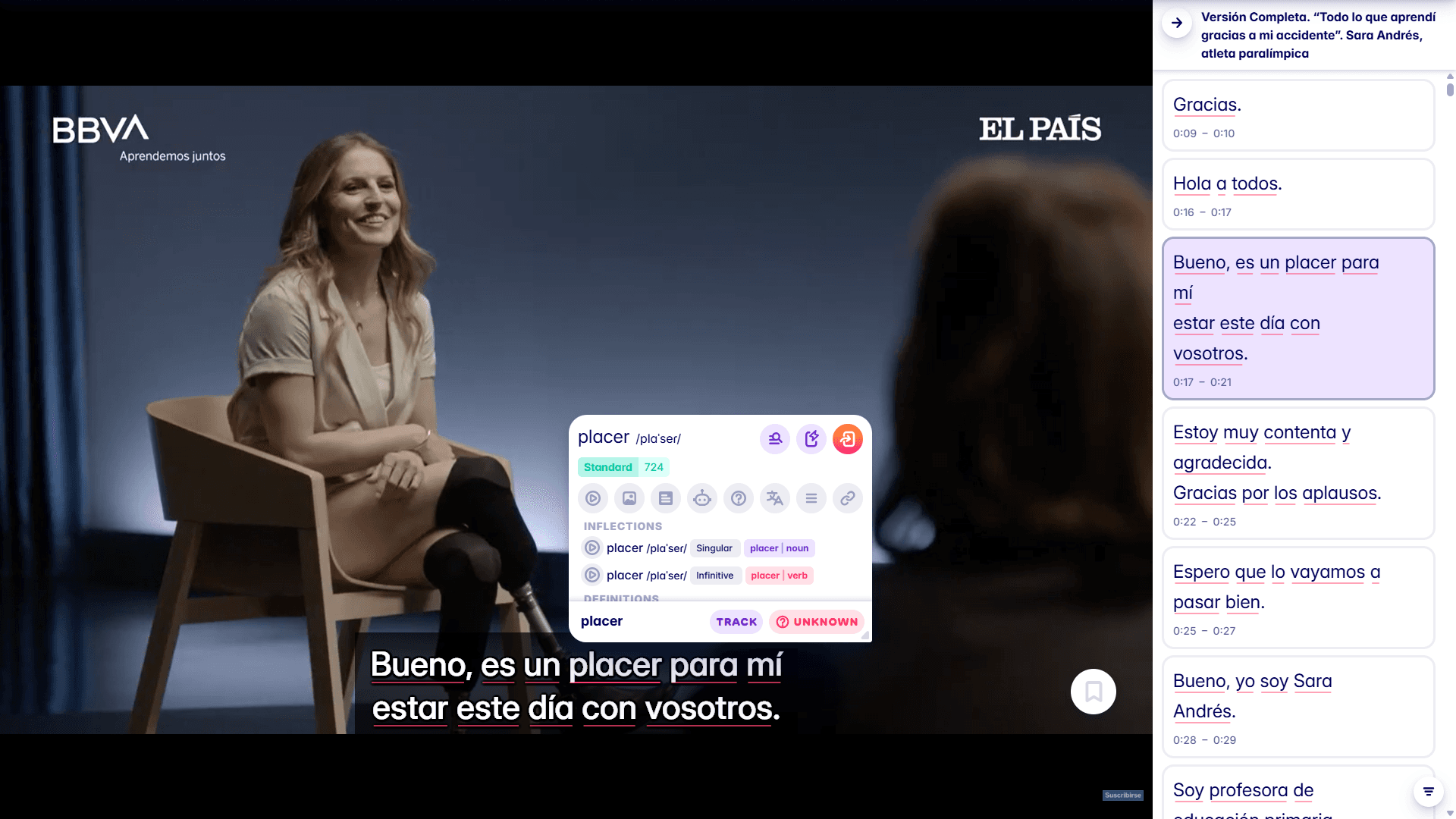
Anyway, if you want to practice recognizing imperative forms in real Spanish content, Migaku's browser extension and app let you look up verbs instantly while watching shows or reading articles. Makes it way easier to spot these patterns in context. There's a 10-day free trial if you want to check it out.
 ---
## Commands in Spanish aren't necessarily aggressive or rude
They're just the grammatically correct way to tell someone to do something. Context, tone, and added politeness markers like "por favor" determine whether a command sounds harsh or friendly. Immersing in Spanish content gives you first-hand experience on how to adjust the tone grammatically according to the real life situation, preparing you to actually use the Spanish imperative mood in the future.
> If you consume media in Spanish, and you understand at least some of the messages and sentences within that media, you will make progress. _Period_.
Don't stop at textbook learning!📓
---
## Commands in Spanish aren't necessarily aggressive or rude
They're just the grammatically correct way to tell someone to do something. Context, tone, and added politeness markers like "por favor" determine whether a command sounds harsh or friendly. Immersing in Spanish content gives you first-hand experience on how to adjust the tone grammatically according to the real life situation, preparing you to actually use the Spanish imperative mood in the future.
> If you consume media in Spanish, and you understand at least some of the messages and sentences within that media, you will make progress. _Period_.
Don't stop at textbook learning!📓