# Spanish Travel Phrases: Essential Phrases to Travel Spanish-Speaking Countries
> Would you like to visit Spain? Practical guide with Spanish phrases: greetings, directions, food, and emergency.
**URL:** https://migaku.com/blog/spanish/spanish-travel-phrases-essential-guide
**Last Updated:** 2026-02-02
**Tags:** fundamentals, vocabulary, culture, phrases, discussion
---
Planning a trip to Spain, Mexico, or any of the 20 Spanish-speaking countries around the world?🌎 Spanish is spoken by over 500 million native speakers globally, making it the second most spoken language by native speakers. [Learning even a handful of essential Spanish](https://migaku.com/learn-spanish) travel phrases can transform your experience from awkward pointing and frustrated gestures to actual conversations with locals.
This guide covers the practical phrases you'll actually use, organized by real travel situations you'll encounter.
---
## Why learning basic Spanish phrases matters for travelers
Here's the thing: most travelers assume everyone speaks English or that Google Translate will save them. Wrong. In smaller towns across Latin America, rural areas of Spain, or even local restaurants in major cities, you'll find plenty of people who speak zero English. Even when people do speak some English, making the effort to use Spanish phrases shows respect and opens doors that staying monolingual simply won't.
I've traveled through Peru, Mexico, and Spain, and the difference in how locals treat you when you attempt Spanish versus just speaking louder English is night and day. A simple "buenos días" and "por favor" can turn a transaction into a friendly chat.
Plus, you'll avoid getting lost, ordering the wrong food, or missing out on local recommendations that only come when people feel comfortable talking with you.
---
## [Basic greetings](https://migaku.com/blog/spanish/learn-spanish-greetings) and politeness phrases to learn
Start here. These common Spanish phrases are your foundation for literally every interaction you'll have.
### Greetings
"Hola " (Hello) is obvious, but timing your greetings matters.
Use "buenos días " (Good morning) until around noon, "buenas tardes " (Good afternoon) from noon until evening, and "buenas noches " (Good evening/night) after dark. Locals notice when you get this right.
"Mucho gusto " (Nice to meet you) comes up constantly when locals introduce themselves. Follow it with "¿Cómo se llama? " (What's your name? formal) or "¿Cómo te llamas? " (Informal). Answer with "Me llamo (your name)."
### Expressing gratitudes
"Por favor " (Please) and "gracias " (Thank you) should become automatic. Seriously, use "por favor" with every single request. It's not optional in Spanish-speaking cultures the way English speakers sometimes skip "please." You'll sound rude without it.
"De nada " (You're welcome) or "con mucho gusto " (With pleasure) are your responses when someone thanks you.
### Excuse me
"Disculpe " or "perdón " both mean "excuse me" and work for getting someone's attention or apologizing.
One useful Spanish phrase people forget:
- No hablo mucho español
*I don't speak much Spanish.*
This sets expectations and usually makes people more patient and helpful.
---
## Getting around and understanding directions
You're going to get lost. Accept it. These phrases help you find your way back.
> "¿Dónde está...? " (Where is...?) is your most important question.
Fill in the blank:
- ¿Dónde está el baño?
*Where's the bathroom?*
- ¿Dónde está la estación de autobuses?
*Where's the bus station?*
- ¿Dónde está el hotel?
*Where's the hotel?*
When someone gives you directions, listen for these words:
| Spanish | English |
| - | - |
| derecha | Right |
| izquierda | Left |
| recto /derecho | Straight |
| cerca | Near |
| lejos | Far |
| al lado de | Next to |
| enfrente de | In front of |
### Common Spanish phrases for public transportation
"¿A qué hora sale? " (What time does it leave?) and "¿A qué hora llega? " (What time does it arrive?) are essential for buses, trains, and tours. "¿Cuánto tiempo? " (How much time?) helps you understand duration.
For taxis specifically: "Lléveme a... " (Take me to...) plus your destination. In many countries, add "¿Cuánto cuesta ir a...? " before getting in to negotiate the price upfront and avoid scams. "¿Cuánto cuesta? " (How much does it cost?) works for everything from taxi rides to market purchases. Follow up with "¿Puede escribirlo? " (Can you write it down?) if you can't understand the number they say.
---
## Ordering food and dining out in Spanish-speaking countries
Food is half the reason you're traveling, right? These Spanish travel phrases keep you fed and happy.
- "Una mesa para (number) personas, por favor " (A table for (number) people, please) gets you seated.
- "¿Tiene un menú en inglés? " (Do you have a menu in English?) is fine to ask, though many smaller places won't.
- "Quisiera... " (I would like...) is more polite than "Quiero... " (I want...) when ordering.
- "¿Qué recomienda? " (What do you recommend?) often leads to the best meals because servers will point you toward specialties.
- "La cuenta, por favor " (The check, please) signals you're ready to pay. In many Spanish-speaking countries, servers won't bring the check until you ask for it. Waiting for them to drop it off like in the US means you'll be sitting there forever.
- "¿Esto tiene...? " (Does this have...?) helps with allergies or preferences. Fill in: "carne " (Meat), "mariscos " (Seafood), "nueces " (Nuts), "gluten " (Gluten).
- "Soy vegetariano/a " (I'm vegetarian) or "Soy alérgico/a a... " (I'm allergic to...) are crucial if you have dietary restrictions.
- "Está delicioso " (It's delicious) makes your server's day.
- "Otra cerveza, por favor " (Another beer, please) or "Otra copa de vino " (Another glass of wine) keeps the good times rolling.
---
## Spanish travel phrases for emergency phrases and asking for help
Hope you never need these, but memorize them anyway.
> "¡Ayuda! " (Help!) is the universal panic word.
- "Necesito un médico " (I need a doctor) and "¿Dónde está el hospital? " (Where is the hospital?) could literally save your life.
- "Llame a la policía " (Call the police) and "Me robaron " (I was robbed) cover the unfortunate situations that sometimes happen to travelers.
- "Perdí mi pasaporte " (I lost my passport) sends you to your embassy.
- "No me siento bien " (I don't feel good) explains why you look terrible.
- "Me duele... " (My... hurts) plus [body parts](https://migaku.com/blog/spanish/spanish-body-parts-vocabulary-guide): "la cabeza " (Head), "el estómago " (Stomach), "la garganta " (Throat).
- "¿Habla inglés? " (Do you speak English?) is reasonable to ask in emergencies. Many doctors and police in tourist areas have some English, but don't count on it.
---
## Common questions and useful responses
These conversational Spanish phrases come up constantly in small talk with locals, hostel staff, and tour guides.
| Spanish | English |
| - | - |
| ¿De dónde eres? | Where are you from? (Informal) |
| ¿De dónde es? | Where are you from? (Formal) |
| Soy de... | I'm from... |
| ¿Cuánto tiempo vas a estar aquí? | How long will you be here? |
| Voy a estar aquí por (number) días/semanas | I'm going to be here for (number) days/weeks |
| ¿Es tu primera vez en (country)? | Is this your first time in (country)? |
| Sí, es mi primera vez | Yes, it's my first time |
| No, he estado aquí antes | No, I've been here before |
| ¿Qué hiciste hoy? | What did you do today? |
| ¿Qué vas a hacer mañana? | What are you going to do tomorrow? |
| No entiendo | I don't understand |
| ¿Puede hablar más despacio? | Can you speak more slowly? |
---
## Shopping and bargaining phrases
Markets, souvenir shops, and street vendors all become easier with these phrases.
- "¿Cuánto cuesta esto? " (How much does this cost?) starts the negotiation. In markets across Latin America and some parts of Spain, prices aren't always fixed. "Es muy caro" (It's very expensive) signals you want a better price.
- "¿Puede hacer un descuento? " (Can you give me a discount?) or "¿Cuál es su mejor precio? " (What's your best price?) work better than aggressive haggling. Keep it friendly.
- "Me lo llevo " (I'll take it) seals the deal.
- "¿Aceptan tarjetas? " (Do you accept cards?) or "¿Solo efectivo? " (Only cash?) clarifies payment before you commit.
- "Solo estoy mirando " (I'm just looking) gets pushy vendors to back off.
- "Voy a pensarlo " (I'm going to think about it) is your polite exit strategy.
---
## Numbers, time, and practical phrases to know
You need to understand numbers to handle money, time, and addresses. The basics:
| Spanish | English |
| - | - |
| uno | 1 |
| dos | 2 |
| tres | 3 |
| cuatro | 4 |
| cinco | 5 |
| seis | 6 |
| siete | 7 |
| ocho | 8 |
| nueve | 9 |
| diez | 10 |
| veinte | 20 |
| treinta | 30 |
| cincuenta | 50 |
| cien | 100 |
For time:
| Spanish | English |
| - | - |
| ¿Qué hora es? | What time is it? |
| Son las (number) | It's (number) o'clock |
| Mañana | Tomorrow |
| Hoy | Today |
| Ayer | Yesterday |
| Ahora | Now |
| Más tarde | Later |
Days of the week come up when booking tours or hotels:
| Spanish | English |
| - | - |
| lunes | Monday |
| martes | Tuesday |
| miércoles | Wednesday |
| jueves | Thursday |
| viernes | Friday |
| sábado | Saturday |
| domingo | Sunday |
---
## How to wish someone a great trip in Spanish
If you make local friends during your travels, you'll want to wish them well.
- "¡Buen viaje! " (Have a good trip!) is the standard phrase.
- "¡Que te vaya bien! " (May it go well for you!) works for any situation, not just travel.
- "¡Diviértete! " (Have fun! Informal) or "¡Que lo pases bien! " (Have a good time!) are more casual ways to wish someone well.
- When saying goodbye, "Hasta luego " (See you later), "Hasta mañana " (See you tomorrow), or "Hasta pronto " (See you soon) depend on when you expect to see them again.
---
## Actually learning to speak Spanish beyond the words for your trip
Look, memorizing these phrases helps you survive, but if you want to actually learn Spanish beyond tourist basics, you need real exposure to the language. Phrasebooks get you through transactions, but they won't help you understand what locals are saying back to you or follow along in actual conversations.
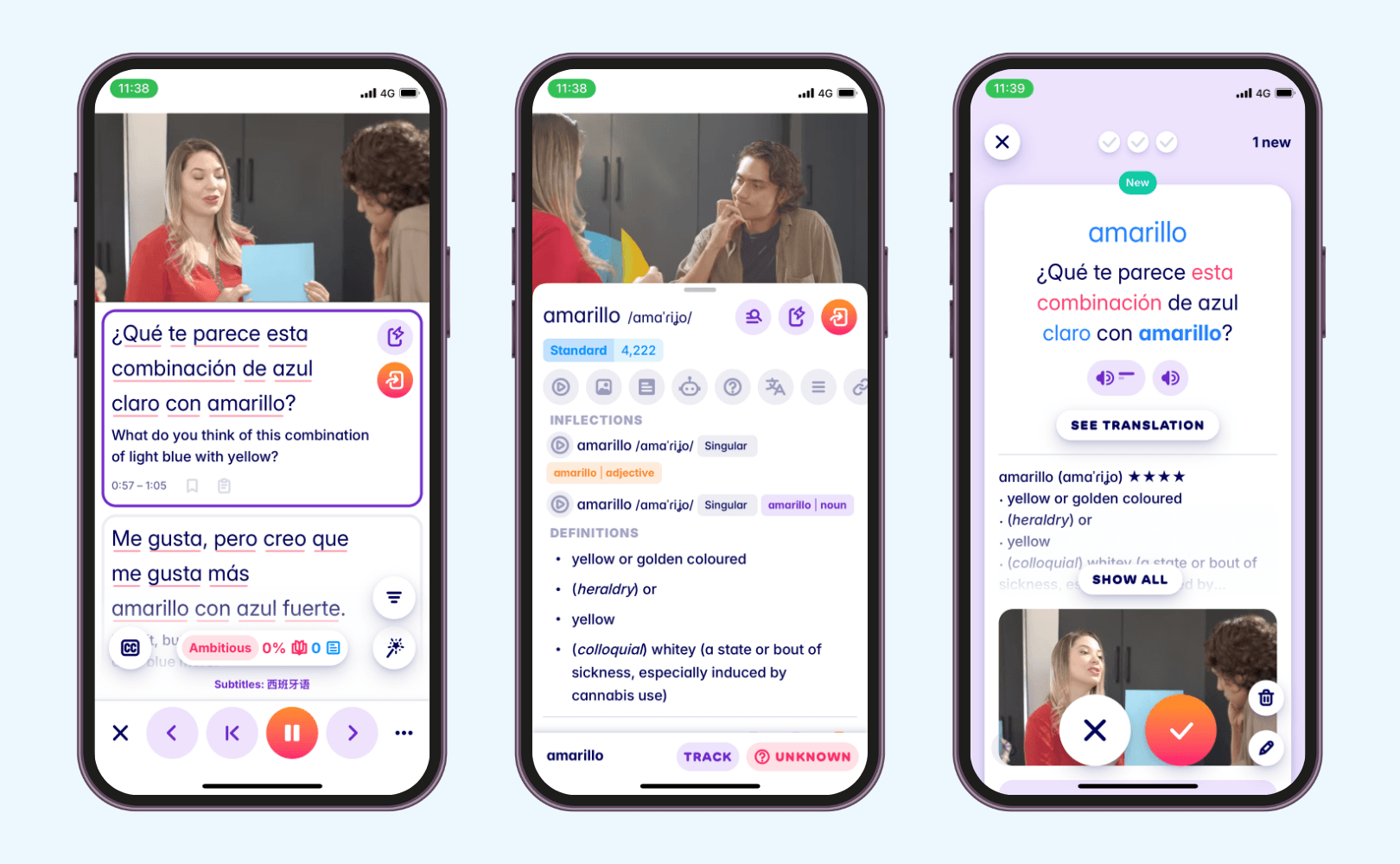
If you want to bridge that gap, Migaku's browser extension and app let you look up Spanish words instantly while watching shows or reading articles in Spanish. You can save words you encounter, see them in context, and actually build comprehension instead of just memorizing isolated phrases. There's a 10-day free trial if you want to check it out.
 ---
## When can you speak conversational Spanish?
The gap between knowing survival phrases and being conversational is huge. You need to hear Spanish in context, see how sentences are actually structured, and build vocabulary beyond the basics. That means consuming real Spanish content like shows, podcasts, news articles, and books.
> If you consume media in Spanish, and you understand at least some of the messages and sentences within that media, you will make progress. _Period_.
The journey ahead is promising.
---
## When can you speak conversational Spanish?
The gap between knowing survival phrases and being conversational is huge. You need to hear Spanish in context, see how sentences are actually structured, and build vocabulary beyond the basics. That means consuming real Spanish content like shows, podcasts, news articles, and books.
> If you consume media in Spanish, and you understand at least some of the messages and sentences within that media, you will make progress. _Period_.
The journey ahead is promising.