# Cantonese Classifiers: Practical Guide to Measure Words
> Learn how Cantonese classifiers work with numbers and nouns. Covers common measure words like 個, sortal vs mensural types, and practical usage tips.
**URL:** https://migaku.com/blog/chinese/cantonese-classifiers-guide
**Last Updated:** 2026-03-14
**Tags:** fundamentals, vocabulary, phrases, grammar
---
If you've started [learning Cantonese](https://migaku.com/learn-cantonese), you've probably noticed something weird: you can't just say "three books" or "two cats" like you would in English. You need to stick a little word between the number and the noun. These words are called classifiers or measure words, and yeah, they're absolutely essential in Cantonese. The good news? Once you understand the basic pattern, they're actually pretty logical.
----
## What are Cantonese classifiers anyway
Cantonese classifiers are words that sit **between a number (or demonstrative like "this" or "that") and a noun**. Think of them as mandatory counters that categorize nouns based on their characteristics. In English, we only use measure words occasionally, like "a sheet of paper" or "a loaf of bread." In Cantonese, you need them every single time you quantify something.
> 💡The basic pattern looks like this: **Number + Classifier + Noun**
So instead of saying "one dog," you'd say "one [classifier for animals] dog." The classifier changes depending on what you're counting. Books get one classifier, people get another, flat things get their own, and so on.
Here's the thing: Cantonese speakers can't just skip these words. Saying "three book" without a classifier sounds as wrong to them as "three sheeps" sounds to English speakers. The classifier is grammatically required, not optional.
----
## How Cantonese classifiers work in practice
Let's look at some real examples to see how this plays out. The most common classifier in Cantonese is 個 (go3), which works for people and lots of general objects.
| Cantonese | Jyutping | English |
| - | - | - |
| 一個人 | jat1 go3 jan4 | One person |
| 兩個蘋果 | loeng5 go3 ping4 gwo2 | Two apples |
| 呢個學生 | ni1 go3 hok6 saang1 | This student |
For books and other bound items, you'd use 本 (bun2):
| Cantonese | Jyutping | English |
| - | - | - |
| 三本書 | saam1 bun2 syu1 | Three books |
| 一本雜誌 | jat1 bun2 zaap6 zi3 | One magazine |
Animals get their own classifier, 隻 (zek3):
| Cantonese | Jyutping | English |
| - | - | - |
| 兩隻狗 | loeng5 zek3 gau2 | [Two dogs](https://migaku.com/blog/chinese/cantonese-animals-vocabulary) |
| 五隻雀 | ng5 zek3 zoek3 | Five birds |
The classifier system works with quantifiers beyond just numbers. You use them with demonstratives ("this," "that"), question words ("[how many](https://migaku.com/blog/chinese/cantonese-question-words)"), and other quantifying expressions. Basically, whenever you're pointing out how many of something exists, you need that classifier.
----
## Sortal vs mensural classifiers
Linguists split classifiers into two main categories, and understanding this distinction actually helps when you're learning which ones to use.
**Sortal classifiers categorize nouns based on inherent characteristics like shape, size, function, or animacy.** These are the ones you'll use most often. When you say 一本書 (one book), the classifier 本 (bun2) tells us we're talking about something bound and book-like. When you say 一張紙 (one sheet of paper), the classifier 張 (zoeng1) indicates something flat and thin.
Sortal classifiers include things like:
- 個 (go3) for general objects and people
- 隻 (zek3) for animals and one of a pair
- 條 (tiu4) for long, flexible things like roads or fish
- 粒 (nap1) for small, round objects like pills or grains
- 架 (gaa3) for vehicles and machines
**Mensural classifiers actually measure quantity or units.** These work more like English measure words. They describe containers, portions, or standard units rather than the inherent nature of the thing.
Examples include:
- 杯 (bui1) for cups/glasses of something
- 碗 (wun2) for bowls of something
- 磅 (bong6) for pounds (weight)
- 對 (deoi3) for pairs
So "一杯水" (jat1 bui1 seoi2) means "one cup of water." The classifier 杯 measures the quantity, not the water itself. You could also say "一滴水" (jat1 dik1 seoi2) for "one drop of water" using a different mensural classifier.
----
## The universal classifier 個
Let me tell you about 個 (go3), because this classifier is going to save you constantly when you're starting out. It's the generic, all-purpose classifier that works for tons of nouns, especially people and general objects.
Can't remember the specific classifier for something? Using 個 will usually get your point across, even if it's not the most precise choice. Native speakers might use a more specific classifier, but they'll understand you perfectly fine.
That said, you can't just use 個 for everything. It sounds off with certain nouns that have very established classifiers. You wouldn't use 個 for books (use 本), vehicles (use 架), or animals (use 隻). But for everyday objects, people, and abstract concepts, 個 works great.
Common uses of 個:
- People: 一個人 (one person), 三個學生 (three students)
- Fruits: 兩個橙 (two oranges), 五個蘋果 (five apples)
- General objects: 一個杯 (one cup), 四個袋 (four bags)
- Abstract ideas: 一個方法 (one method), 兩個問題 (two problems)
----
## Common classifiers you'll actually use
Instead of overwhelming you with every classifier that exists, here are the ones you'll genuinely use all the time.
| Measure Word | Usage | Example (Cantonese) | English |
| - | - | - | - |
| 本 (bun2) | Bound items: books, magazines, notebooks | 三本書 (saam1 bun2 syu1) | Three books |
| 隻 (zek3) | Animals, also individual items from pairs (e.g., one shoe, one hand) | 兩隻狗 (loeng5 zek3 gau2) | [Two dogs](https://migaku.com/blog/chinese/cantonese-animals-vocabulary) |
| 張 (zoeng1) | Flat things: paper, tables, tickets, photographs, beds | 一張檯 (jat1 zoeng1 toi4) | One table |
| 條 (tiu4) | Long, flexible objects: roads, rivers, fish, snakes, pants, ropes | 一條魚 (jat1 tiu4 jyu4) | One fish |
| 架 (gaa3) | Vehicles and machinery: cars, planes, cameras, computers | 一架車 (jat1 gaa3 ce1) | One car |
| 間 (gaan1) | Buildings and rooms: houses, shops, classrooms, offices | 一間房 (jat1 gaan1 fong4) | One room |
| 件 (gin6) | Clothing items (shirts, jackets, dresses); also matters or affairs (abstract) | 一件衫 (jat1 gin6 saam1) | One shirt |
| 啲 (di1) | "Some" or plural marker for unspecified quantities | 啲書 (di1 syu1) | Some books |
----
## Using classifiers with quantifiers and demonstratives
Classifiers don't just appear with numbers. You'll use them with demonstrative pronouns like "this" (呢 , ni1) and "that" (嗰 , go2).
| Cantonese | Jyutping | English |
| - | - | - |
| 呢本書 | ni1 bun2 syu1 | This book |
| 嗰個人 | go2 go3 jan4 | That person |
| 呢啲狗 | ni1 di1 gau2 | These dogs |
When asking "how many," you use 幾 (gei2) plus the appropriate classifier:
| Cantonese | Jyutping | English |
| - | - | - |
| 幾本書? | gei2 bun2 syu1? | How many books? |
| 幾個人? | gei2 go3 jan4? | How many people? |
With "every" or "each," you double the classifier:
| Cantonese | Jyutping | English |
| - | - | - |
| 個個人 | go3 go3 jan4 | Every person |
| 本本書 | bun2 bun2 syu1 | Every book |
----
## Tips for learning these classifiers
1. Start with the big five: 個, 本, 隻, 張, and 條. These cover a huge portion of daily conversation. Drill them until they're automatic.
2. Learn classifiers together with nouns, never separately. Don't memorize "本 means books," memorize "本書" as a unit. Your brain needs to link them together from the start.
3. Pay attention to patterns. When you learn that 張 works for paper, actively notice that it also works for tickets, photos, and tables. The "flat surface" connection helps you remember and generalize.
4. Listen to native speakers and notice which classifiers they choose. [Watching Cantonese shows](https://migaku.com/blog/chinese/best-cantonese-shows-for-language-learners) or listening to podcasts gives you natural exposure to the most common combinations.
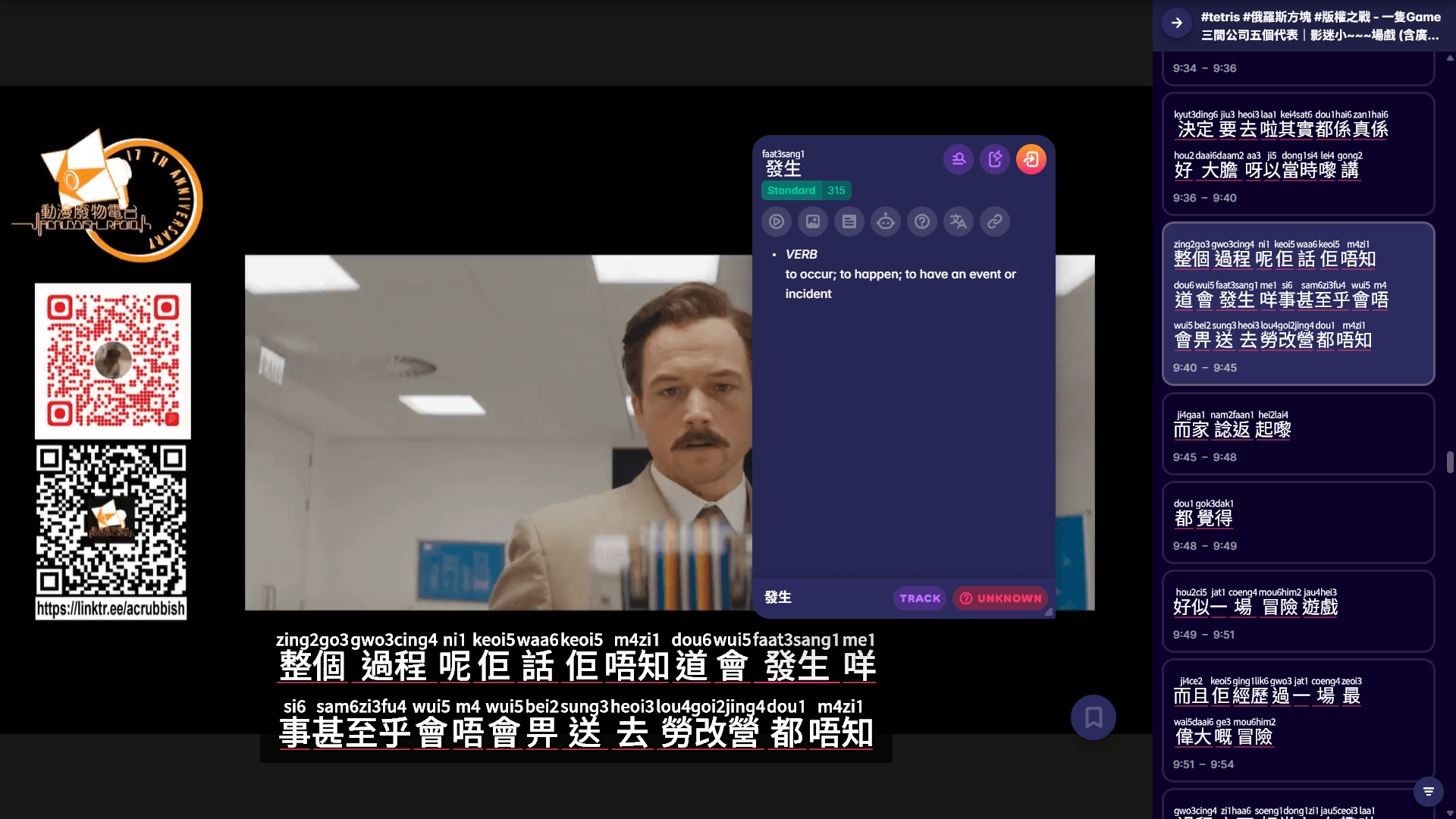
Anyway, if you want to practice Cantonese with real content, Migaku's browser extension and app let you look up words and phrases instantly while watching videos or reading articles. You can see classifiers used in natural context, which honestly beats memorizing lists. There's a 10-day free trial if you want to check it out.
 ----
## FAQs
Yeah, actually. Native speakers sometimes pause or hesitate when they're dealing with less common nouns. They might default to 個 when they can't immediately recall the proper classifier, especially for specialized vocabulary they don't use often.
Honestly? They're challenging at first, especially if you're coming from English where we barely use measure words. Your brain needs to build a completely new habit: never say a number and noun together without that classifier in between. The initial learning curve feels steep because you're memorizing both vocabulary and grammatical patterns simultaneously. You can't just learn the word for "dog," you need to remember it's 隻狗, not just 狗.
----
## It takes practice and exposure, but your brain adapts
After enough repetition, the correct classifier starts to feel automatic rather than something you consciously construct. You'll definitely mess up classifiers regularly at first. Native speakers will still understand you, especially if you're using 個 as a fallback. The more you consume Cantonese media content and practice actively, the more natural it becomes.
> If you consume media in Cantonese, and you understand at least some of the messages and sentences within that media, you will make progress. _Period_.
Make mistakes and keep going.
----
## FAQs
Yeah, actually. Native speakers sometimes pause or hesitate when they're dealing with less common nouns. They might default to 個 when they can't immediately recall the proper classifier, especially for specialized vocabulary they don't use often.
Honestly? They're challenging at first, especially if you're coming from English where we barely use measure words. Your brain needs to build a completely new habit: never say a number and noun together without that classifier in between. The initial learning curve feels steep because you're memorizing both vocabulary and grammatical patterns simultaneously. You can't just learn the word for "dog," you need to remember it's 隻狗, not just 狗.
----
## It takes practice and exposure, but your brain adapts
After enough repetition, the correct classifier starts to feel automatic rather than something you consciously construct. You'll definitely mess up classifiers regularly at first. Native speakers will still understand you, especially if you're using 個 as a fallback. The more you consume Cantonese media content and practice actively, the more natural it becomes.
> If you consume media in Cantonese, and you understand at least some of the messages and sentences within that media, you will make progress. _Period_.
Make mistakes and keep going.