# Choosing Japanese Language Schools: Consider Your Best Choice to Learn Japanese Language
> Honest guide to picking Japanese language schools in Tokyo, Kyoto, and Fukuoka. Covers costs, visas, program types, and what matters for learning Japanese.
**URL:** https://migaku.com/blog/japanese/choosing-japanese-language-schools
**Last Updated:** 2026-01-22
**Tags:** fundamentals, resources, culture, discussion
---
You're ready to [learn Japanese](https://migaku.com/learn-japanese), and you want to do it right by going to Japan. Smart move. But here's the thing: there are hundreds of Japanese language schools across the country. The application process varies wildly, and costs can range from surprisingly affordable to eye-wateringly expensive. This guide breaks down what you actually need to know about choosing a Japanese language school that fits your goals.
---
## Understanding Japanese language schools
Japanese language schools come in different flavors. You've got your intensive programs that run for 6 months to 2 years, short-term courses lasting a few weeks, and everything in between. Most schools cater to international students who want to study Japanese seriously, often with student visa support included.
The typical setup involves morning classes (usually 9 AM to 1 PM) five days a week. You'll study grammar, kanji () - Chinese characters, vocabulary, and conversation skills. Class sizes matter here. The best language schools keep groups small, around 8-12 students, so you get actual speaking practice instead of just sitting there taking notes.
Here's something people don't always realize: not all schools accept beginners at every intake. Many Japanese language school programs start in April and October, aligning with Japan's academic calendar. Some offer January and July starts too, but your options narrow.
---
## Language schools in Tokyo
[Tokyo](https://migaku.com/blog/japanese/japanese-travel-phrases) has the highest concentration of Japanese language schools in the country. Makes sense since it's the capital and where most international students want to be. The competition between schools here is fierce, which generally works in your favor.
Shinjuku is packed with language schools. The area is convenient as hell, with multiple train lines and everything you need nearby. Schools here tend to attract a diverse mix of students from all over the world. You'll find options ranging from mega-schools with hundreds of students to boutique operations with maybe 50-100 total enrollment.
**Coto Academy** is one of the well-known schools in Tokyo. They offer both short-term and long-term programs, but the academy itself does not sponsor a visa. Their focus leans toward practical conversation skills rather than just exam cramming. Classes run in the Iidabashi and other areas, as well as online.
**KCP International Japanese Language School** has been around since 1983 and sits in Shinjuku. They offer intensive programs with strong university pathway support if you're planning to continue education in Japan. Their curriculum is pretty structured, following the traditional grammar-translation method mixed with communicative practice.
**ISI Japanese Language School** operates multiple campuses across Tokyo. They're known for having solid facilities and experienced teachers. The school offers cultural activities like tea ceremony and kimono wearing, which sounds touristy but actually gives you conversation practice in real contexts.
---
## Top schools in Kyoto, Fukuoka, and other cities
Kyoto offers a completely different vibe from Tokyo. The city moves slower, has more traditional culture visible in daily life, and honestly, the Japanese people here tend to speak more standard Japanese without as much slang. If you want cultural [immersion](https://migaku.com/blog/japanese/japanese-immersion-learning) alongside language study, Kyoto makes sense.
**Kyoto Japanese Language School (KJLS)** is centrally located and offers intensive courses with visa supporting job hunting in Japan after successful graduation. The school emphasizes cultural activities heavily, organizing regular trips to temples, traditional craft workshops, and seasonal festivals. Their class sizes stay small, usually under 10 students.
**GenkiJACS** operates in Fukuoka (And also has a campus in Tokyo). Fukuoka is way more affordable than Tokyo or Kyoto for living costs, which matters when you're budgeting for months of study. The school offers flexible short-term courses perfect if you can't commit to a full year. They mix classroom learning with practical activities around the city.
Fukuoka has several advantages people overlook. The city is compact and easy to navigate, rent is cheaper, and you're close to other parts of Kyushu for weekend trips. The local dialect exists but schools teach standard Japanese (, hyōjungo). Plus, Fukuoka has a growing international community without being overwhelming.
Other cities worth considering: Osaka for that Kansai energy and business opportunities, Sapporo if you like cold weather and want a different perspective on Japanese culture, and Yokohama for proximity to Tokyo without the Tokyo price tag.
---
## How to choose the right Japanese language school
Start by figuring out your actual goals. Are you learning Japanese for work? Planning to take the JLPT (Japanese Language Proficiency Test)? Want to attend a Japanese university? Just interested in anime and manga culture? Your answer determines which school fits best.
1. **Program length matters.** Short-term courses (2-12 weeks) work if you currently live in Japan or can take extended vacation time. You won't need a student visa for stays under 90 days, typically. But if you're serious about fluency, you need at least 6 months, preferably a year or more.
2. **Location affects your learning.** Tokyo and Osaka expose you to fast-paced urban Japanese with lots of English fallback options (which can be both helpful and a crutch). Smaller cities force you to use Japanese more but offer fewer international communities for support. Think about whether you want English-speaking friends readily available or prefer total immersion.
3. **Check teacher qualifications.** Good schools employ teachers with proper certification, usually the 420-hour Japanese Language Teaching Competency Test or equivalent. This actually matters because teaching Japanese to foreigners requires specific skills beyond just being a native speaker.
4. **Facilities and resources** vary wildly. Some schools have modern buildings with computer labs, libraries, and student lounges. Others operate out of older buildings with basic classrooms. Neither is necessarily better, it depends on what you value. Do you need accommodation too? Some schools offer dormitories or homestay arrangements, others leave you to find your own place.
---
## Understanding costs and the application process of the language academy
### Learn Japanese in Japan costs: Tuition and accommodation
How much does it cost to study in Japan language school? Tuition for a year-long intensive program typically runs 700,000 to 1,000,000 yen (roughly $4,000 to $6,000 USD). That's just tuition. Add living expenses of about 100,000 to 150,000 yen monthly for rent, food, transportation, and other costs. Tokyo and Kyoto sit at the higher end, Fukuoka and smaller cities at the lower end.
Short-term courses cost more per week but less overall. Expect around 30,000 to 50,000 yen per week for intensive programs. Private lessons run 3,000 to 6,000 yen per hour depending on the school and teacher.
### Application process of the language school in Japan
The application process usually requires these documents:
- Completed application form
- Passport copy
- Educational background documents (Graduation certificates)
- Proof of financial support (Bank statements showing you can afford tuition and living expenses)
- A statement of purpose explaining why you want to study Japanese. Do you currently live in Japan or are you applying from outside of the country? This affects timeline and requirements.
If you need a student visa, apply at least 6 months before your intended start date. Schools have specific deadlines for each intake period. Missing the deadline means waiting for the next intake, potentially 3-6 months later.
Some schools charge application fees (20,000 to 30,000 yen typically), which are usually non-refundable even if you're rejected or change your mind. Read the refund policy carefully before paying anything.
---
## Student visas and work opportunities
A **student visa** for language study typically gets approved for 6 months to 2 years depending on your course length. The school acts as your sponsor and handles most paperwork with immigration. You'll need to maintain good attendance (Usually 80% or higher) to keep your visa valid.
Student visa holders can work **part-time** up to 28 hours per week during school terms, 40 hours during official breaks. This helps offset living costs. Common jobs include convenience store work, restaurant service, English teaching, and translation work if your Japanese gets good enough. Pay ranges from 1,000 to 1,500 yen per hour typically.
Working while studying helps your Japanese improve faster than just classroom learning. You'll pick up casual speech, workplace vocabulary, and get comfortable with real-world interactions. Plus, you know, money.
---
## Program types and learning approaches
1. **Intensive programs** mean 15-20 hours of classroom instruction weekly, usually mornings Monday through Friday. This pace works if you can dedicate serious time to homework and review. Expect 2-3 hours of self-study daily to keep up.
2. **Long-term courses** (1-2 years) take you from beginner to intermediate or advanced levels systematically. These programs prepare students for the JLPT N2 or N1 levels, which are required for most Japanese universities and professional jobs.
3. **Short-term courses** offer flexibility but less structure. You might focus on specific skills like [business Japanese](https://migaku.com/blog/japanese/japanese-business-vocabulary) (, bijinesu nihongo), anime/manga Japanese, or just survival conversation. These work better if you already have some foundation.
---
## Cultural activities and real immersion at Japanese language academy
The best Japanese language schools don't just teach in classrooms. They organize cultural activities that put your Japanese into practice. Tea ceremony (, sadō) classes, calligraphy (, shodō) workshops, cooking classes for traditional foods, seasonal festival visits, and company tours all provide context for language learning.
These activities matter more than they seem. You learn vocabulary in context, practice listening in real situations, and meet Japanese people outside the classroom. School students often form study groups and social circles that continue after classes end.
Some schools partner with local community centers for language exchange events where you can practice with native speakers who want to learn English or other languages. These exchanges give you conversation practice without the pressure of a classroom setting.
---
## Which Japanese language school is the best
There's no single "best" school because it depends on your specific situation. Are you itching to take language courses in Japan? Here's how to narrow it down:
1. **Best for beginners with limited time:** GenkiJACS in Fukuoka offers flexible short-term programs and a supportive environment for new learners. The city is less overwhelming than Tokyo.
2. **Best for serious long-term study:** KCP International in Tokyo provides structured intensive programs with strong university pathway support and experienced teachers.
3. **Best for cultural immersion:** Schools in Kyoto generally offer more traditional cultural activities and exposure to classical Japanese culture alongside language study.
4. **Best for budget-conscious students:** Schools in Fukuoka or smaller cities offer similar quality education at lower tuition with significantly cheaper living costs.
5. **Best for working professionals:** Coto Academy in Tokyo offers evening and weekend classes alongside their regular programs, plus flexible private lessons that fit busy schedules.
Visit school websites, read actual student reviews (Not just the testimonials schools post), and contact schools directly with questions. Most offer virtual tours or information sessions now. If possible, visit Japan first on a tourist visa and check out schools in person before committing to a long-term program.
---
## Making your decision to study in Japan
Start researching at least 6-8 months before you want to begin classes.
1. Create a spreadsheet comparing schools on factors that matter to you: location, cost, program length, class size, cultural activities, visa support, and accommodation options.
2. Contact multiple schools with specific questions. How they respond tells you a lot about their student support quality. Do they answer thoroughly? How long does it take? Can you speak with current or former students?
3. Consider your learning style. Do you prefer structured grammar-focused teaching or more conversational approaches? Small intimate classes or larger diverse groups? Urban excitement or quieter cultural immersion?
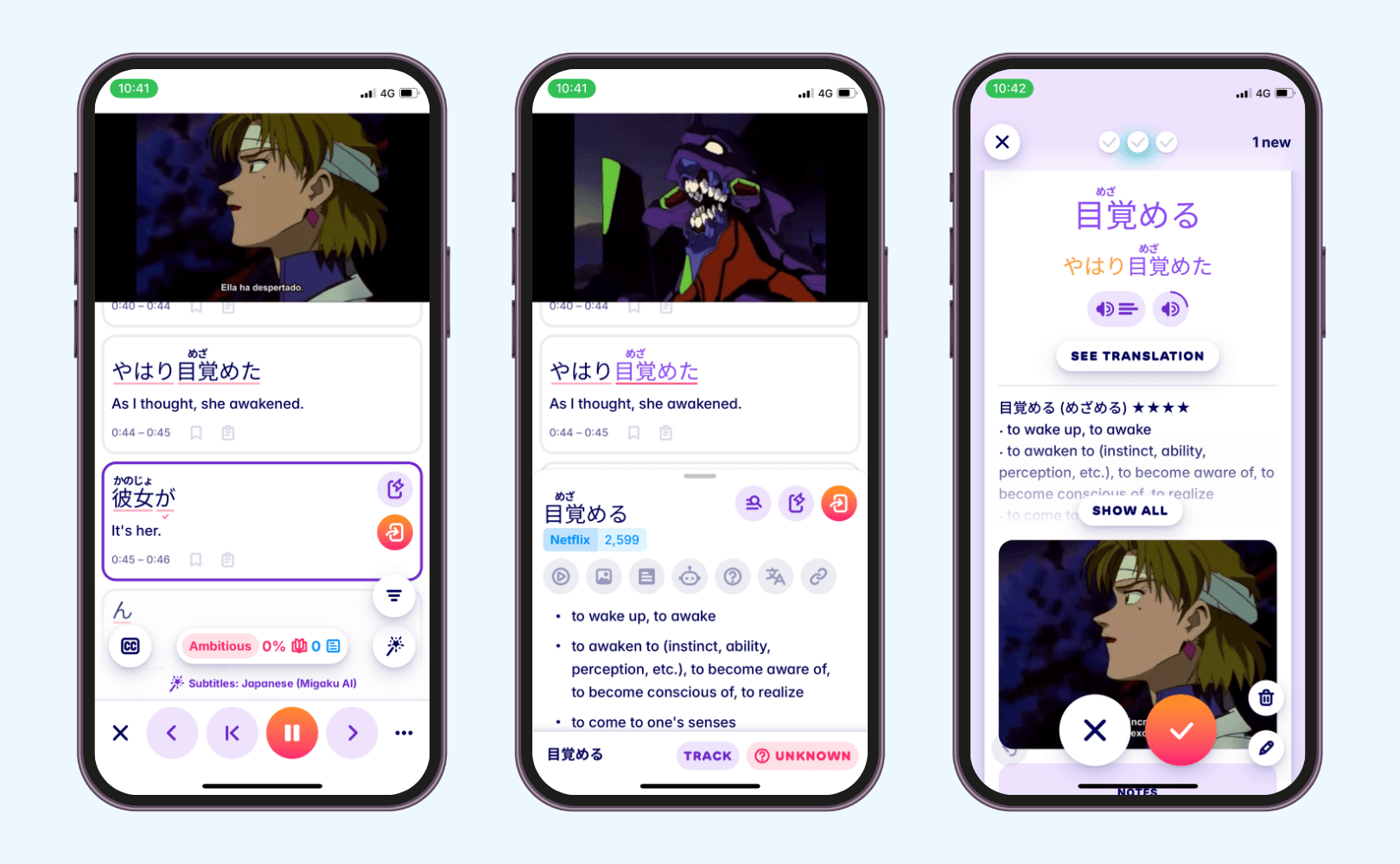
If you want to supplement your classroom learning with real content immersion, Migaku's browser extension and app let you look up Japanese words instantly while watching shows or reading articles. Makes the whole immersion thing way more practical than constantly stopping to check dictionaries. There's a 10-day free trial if you want to check it out.
 ---
## Extracurricular efforts are crucial as well...
Remember that the school is just one piece. Your progress depends mostly on your effort outside class. The best Japanese language school in Tokyo won't make you fluent if you spend all your free time with English-speaking friends watching Netflix. Choose a school that fits your goals and budget, then commit to using Japanese and immersing yourself in Japanese media whenever you can!
> If you consume media in Japanese, and you understand at least some of the messages and sentences within that media, you will make progress. _Period_.
Teachers open the door, but you must enter by yourself.
---
## Extracurricular efforts are crucial as well...
Remember that the school is just one piece. Your progress depends mostly on your effort outside class. The best Japanese language school in Tokyo won't make you fluent if you spend all your free time with English-speaking friends watching Netflix. Choose a school that fits your goals and budget, then commit to using Japanese and immersing yourself in Japanese media whenever you can!
> If you consume media in Japanese, and you understand at least some of the messages and sentences within that media, you will make progress. _Period_.
Teachers open the door, but you must enter by yourself.