# How to Learn Hiragana Fast: The Best Way to Learn Hiragana and Memorize the Chart
> Is it possible to learn hiragana in 3 days? With mnemonics and active recall, you can memorize and learn hiragana and katakana fast as well!
**URL:** https://migaku.com/blog/japanese/how-to-learn-hiragana-fast
**Last Updated:** 2026-02-08
**Tags:** fundamentals, vocabulary
---
So you want to [learn Japanese](https://migaku.com/learn-japanese) hiragana fast? Good news: it's totally doable. I've seen people memorize all 46 characters in a single day, and honestly, with the right approach, you can too. The key is using mnemonics and actually practicing recall instead of just staring at a chart hoping the characters will magically stick. In this guide, I'll walk you through the fastest method to get hiragana down solid, usually within a few hours to a couple days max. No months of grinding required.😉
---
## But first, what is hiragana
Hiragana is one of three writing systems used in Japanese. Think of it as the fundamental alphabet you absolutely need to know before diving into anything else. There are 46 basic characters, and each one represents a sound (mostly syllables like "ka", "ki", "ku", rather than individual letters).
1. Japanese uses hiragana for native words, grammatical [particles](https://migaku.com/blog/japanese/japanese-particles-guide), and verb endings. You'll see it everywhere once you start reading Japanese content.
2. The other two systems are katakana (Used mainly for foreign words) and [kanji](https://migaku.com/blog/japanese/japanese-handwriting) (The complex characters borrowed from Chinese). But hiragana comes first because it's your foundation.
Here's the thing: hiragana is actually pretty logical compared to English spelling. Each character makes one consistent sound. No weird exceptions like "tough" vs "though". Once you know that あ makes an "ah" sound, it always makes that sound. Pretty straightforward.
---
## The hiragana chart and how it's organized
Before jumping into memorization techniques, you need to understand how hiragana is structured. The characters are organized into rows based on their consonant sounds, with five vowel columns.
### The vowels: あ, い, う, え, お
The five basic vowels are: あ (a), い (i), う (u), え (e), お (o). These are your foundation. Every other row follows the same vowel pattern but adds a consonant at the start.
### The ka row and others: か, き, く, け, こ
The ka row goes: か (ka), き (ki), く (ku), け (ke), こ (ko). See the pattern? Same vowel sounds, just with a "k" sound added.
You've got the sa row, ta row, na row, ha row, ma row, ya row, ra row, and wa row. Plus the standalone ん (n). The ya row only has three characters because Japanese doesn't use "yi" or "ye" sounds in hiragana.
Understanding this grid structure helps because you're not memorizing 46 random characters. You're learning a logical system with repeating patterns.
---
## Mnemonic stories to learn hiragana fast
Here's where the magic happens. Instead of drilling characters through repetition, you create vivid mental images that link each character's shape to its sound. These stick in your memory instantly.
Let me give you some examples.
1. For あ (a), imagine the character looks like a person with their mouth wide open saying "ahhhh" at the dentist. The cross stroke is their arm reaching up.
2. For き (ki), picture it as a key. The shape kind of looks like an old-fashioned key, and "ki" sounds like "key". Boom, connected.
3. The character ね (ne) looks like a snail with an antenna, and you can imagine it saying "neh" in a lazy voice as it slowly crawls along.
You don't have to use my mnemonics. In fact, creating your own often works better because they're personal to you. The goal is making each character memorable through association, not just visual repetition.
Some characters are trickier than others. For つ (tsu), which is a tough sound for English speakers anyway, you might imagine a tsunami wave. The character has that curved shape, and "tsu" is the start of "tsunami".
Spend about 2-3 minutes on each character, creating and visualizing your mnemonic. Then immediately test yourself. Can you recall the sound when you see the character? Can you write the character when you hear the sound?
---
## How to memorize and practice hiragana chart systematically
The process is simple but requires focus.
1. Start with the five basic vowels. Create mnemonics for each one, then quiz yourself until you can recall all five instantly. This should take maybe 10 minutes.
2. Next, tackle one consonant row at a time. Learn the ka row (か, き, く, け, こ), quiz yourself, then move to the next row. Don't try to memorize all 46 at once. Your brain handles chunks better than massive dumps of information.
3. After you finish each row, review all the previous rows you've learned. This spaced repetition keeps earlier characters fresh while you add new ones.
Here's a timeline that works well:
1. Spend 2-3 hours on your first session getting through all the basic characters using mnemonics.
2. Take breaks every 30 minutes. Your brain needs processing time.
3. Then, before bed, do a quick review quiz. Sleep helps consolidate memories, so you'll often wake up remembering things better than when you went to sleep.
4. The next day, spend another hour or two doing practice quizzes and reading simple words.
5. By day three, you should be able to recognize all hiragana characters, even if you're still a bit slow.
---
## Make use of extra quiz practice
Mnemonics get the characters into your brain, but quizzes cement them there. This combination is the best way to learn hiragana. You need active recall practice where you're forced to retrieve the information, not just recognize it passively.
1. Start with recognition quizzes. You see a hiragana character and have to recall its sound. There are tons of free online quiz tools for this. Do these in short bursts: 5-10 minutes at a time, multiple times per day.
2. Then move to production quizzes where you hear or see a sound (Like "ka") and have to write the correct hiragana character. This is harder but builds stronger memories.
Worksheets are useful for handwriting practice, though honestly, you can memorize hiragana without writing them by hand if you want. Reading recognition is more immediately useful. But if you do use worksheets, focus on stroke order. Japanese characters have a specific order for drawing each stroke, and following it makes writing faster and more natural.
Mix up your quiz formats. Use flashcard apps, online games, worksheets, and even try reading simple Japanese words you find online. Variety keeps your brain engaged and tests your knowledge from different angles.
---
## Dakuten and handakuten marks in Japanese language
Once you've got the basic 46 characters down, you need to learn dakuten and handakuten. These are small marks that modify certain characters to create new sounds.
Dakuten looks like two small quotation marks (゛) in the upper right of a character. It voices the consonant. So か (ka) becomes が (ga), さ (sa) becomes ざ (za), and so on. This applies to the ka, sa, ta, and ha rows.
Handakuten is a small circle (゜) that only applies to the ha row, turning it into the pa row. So は (ha) becomes ぱ (pa).
These aren't separate characters to memorize from scratch. You already know the base character, so you just need to remember that the marks change the sound in a predictable way. Spend maybe 30 minutes practicing these variations, and you'll have them down.
---
## Learn to read combination characters (youon)
Combination characters let you create sounds like "kya", "shu", and "cho". They're made by pairing a character from the i-column (Like き, し, ち) with a smaller version of や (ya), ゆ (yu), or よ (yo).
For example, き (ki) plus small ゃ (ya) becomes きゃ (kya). し (shi) plus small ゅ (yu) becomes しゅ (shu).
There are about 33 of these combinations, but again, you're not learning totally new characters. You're just combining ones you already know. Practice reading words that use these combinations, and they'll become second nature pretty quickly.
---
## Learning katakana fast alongside the set of hiragana
Should you learn katakana at the same time as hiragana? Honestly, I'd say finish hiragana first. Trying to learn both simultaneously can cause confusion because some characters look similar but represent different sounds.
That said, once you've got hiragana solid (Give it a week of practice), jump into katakana using the exact same mnemonic method. Katakana follows the same organizational structure as hiragana, so you already understand the system. You're just learning new shapes.
Katakana is used for foreign loanwords, onomatopoeia, and emphasis. You'll need it pretty quickly once you start consuming Japanese content. Words like コーヒー (koohii, coffee) and レストラン (resutoran, restaurant) are everywhere.
The good news is that learning katakana goes faster than hiragana did because you've already trained your brain on the kana learning process.
---
## Resources and tools that help you remember hiragana: Tofugu and others
You don't need to spend money to learn hiragana. There are plenty of free resources that work great.
1. For mnemonic-based learning, [Tofugu's hiragana guide](https://www.tofugu.com/japanese/learn-hiragana/) is excellent. They provide mnemonic stories for each character and the whole thing is free. Their approach is basically what I've described here.
2. For quizzes, try Kana Quiz apps or websites like Realkana.com. These let you practice recognition and production with immediate feedback.
3. If you want physical practice, print out hiragana charts and worksheets. Writing by hand does help some people remember better, even though it's not strictly necessary.
4. For reading practice, find simple Japanese children's books or graded readers. NHK News Web Easy is great once you're a bit more advanced. Seeing hiragana in real contexts beats isolated character practice.
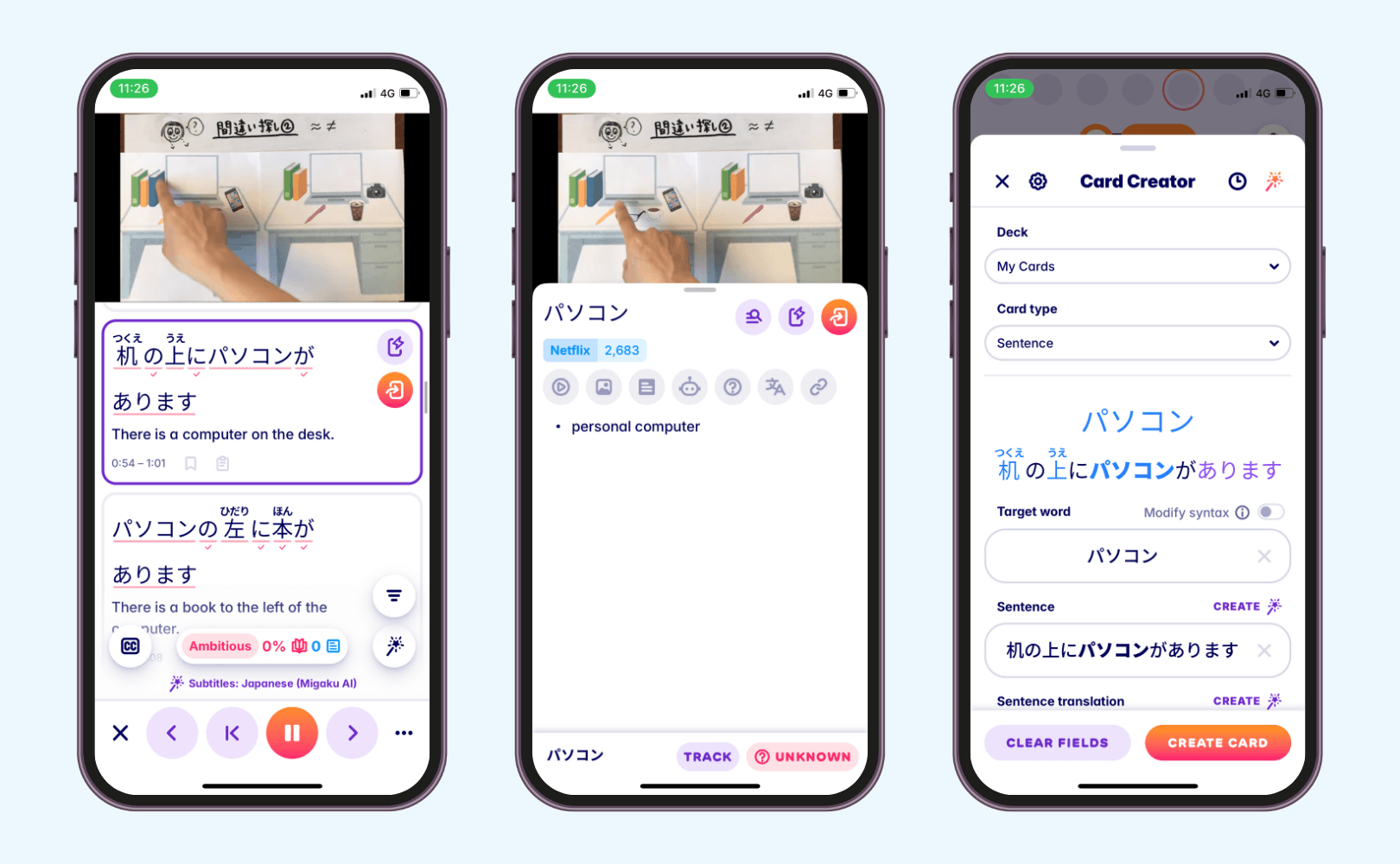
Anyway, once you've got hiragana down and you're ready to start immersing in actual Japanese content, Migaku's browser extension and app let you hover over words for instant definitions while watching shows or reading articles. Makes the jump from learning kana to consuming real content way smoother. There's a 10-day free trial if you want to check it out.
 ---
## FAQs
Yeah, it's genuinely one of the easier parts of learning Japanese. The characters follow predictable patterns, and there are only 46 basic ones to memorize. Compare that to learning thousands of kanji later, and hiragana feels like a breeze.
Absolutely. I've done it, and I've watched plenty of other learners do it too. With focused effort (Maybe 3-4 hours total), you can get all 46 characters memorized in one day. You won't be reading at lightning speed yet, but you'll recognize each character and recall its sound.
Let me be real with you: no, you can't become fluent in Japanese in 3 months. Anyone telling you otherwise is selling something. Japanese is genuinely one of the harder languages for English speakers, with estimates around 2,200 hours of study to reach proficiency.
---
## Hiragana and katakana are the very first barrier to overcome in Japanese learning...
Hiragana is just your first step. Getting it done in a few days means you can move on to the actually challenging parts of Japanese without wasting time on the writing system. The difficult part of the writing system is kanji and its pronunciation. Yet, media consumption can gradually train your brain to memorize these characters and sounds.
> If you consume media in Japanese, and you understand at least some of the messages and sentences within that media, you will make progress. _Period_.
Don't give up on your first try!🫵
---
## FAQs
Yeah, it's genuinely one of the easier parts of learning Japanese. The characters follow predictable patterns, and there are only 46 basic ones to memorize. Compare that to learning thousands of kanji later, and hiragana feels like a breeze.
Absolutely. I've done it, and I've watched plenty of other learners do it too. With focused effort (Maybe 3-4 hours total), you can get all 46 characters memorized in one day. You won't be reading at lightning speed yet, but you'll recognize each character and recall its sound.
Let me be real with you: no, you can't become fluent in Japanese in 3 months. Anyone telling you otherwise is selling something. Japanese is genuinely one of the harder languages for English speakers, with estimates around 2,200 hours of study to reach proficiency.
---
## Hiragana and katakana are the very first barrier to overcome in Japanese learning...
Hiragana is just your first step. Getting it done in a few days means you can move on to the actually challenging parts of Japanese without wasting time on the writing system. The difficult part of the writing system is kanji and its pronunciation. Yet, media consumption can gradually train your brain to memorize these characters and sounds.
> If you consume media in Japanese, and you understand at least some of the messages and sentences within that media, you will make progress. _Period_.
Don't give up on your first try!🫵