# Japanese Animals: Learn Names of Pets, Unique Animals, and Wild Animals of Japan
> Japan's rabbit island is quite the place to feel the fluff! Learn Japanese animal vocabulary from pets to wildlife like red-crowned cranes.
**URL:** https://migaku.com/blog/japanese/japanese-animals-vocabulary-guide
**Last Updated:** 2026-01-21
**Tags:** fundamentals, vocabulary, pronunciation, grammar
---
[Learning Japanese](https://migaku.com/learn-japanese) animal names is one of those topics that sounds simple at first, but once you dig in, you realize there's way more to it than just memorizing a few words. Whether you're planning to visit Japan or you're just building your vocabulary through language study, knowing how to say different animal names gives you a surprising amount of conversational power. Let me walk you through everything you need to know about Japanese animals vocabulary, from your everyday pets to the unique creatures you'll only find in Japan.
---
## Common pets in Japanese
Let's start with the animals you'll probably talk about most often. If you're chatting with Japanese friends or watching slice-of-life anime, these words come up constantly.
- Inu () means dog, and it's one of the first animal words most learners pick up. You'll see this [kanji](https://migaku.com/blog/japanese/anki-vs-wanikani) everywhere in Japan.
- Neko () is cat, equally common and equally important. These two are your bread and butter.
For smaller pets, you've got **hamster** which is actually hamusutaa (ハムスター), borrowed straight from English. Same deal with usagi ( or うさぎ) for **rabbit**, though this one is actually a native Japanese word. **Guinea pigs** are morumouto (モルモット), which comes from the Dutch word "marmot" (Even though guinea pigs aren't marmots, but that's a whole other story).
**Bird** lovers need to know tori () for bird in general, but if you're talking about pet birds specifically, inko (インコ) means parakeet and buncho () refers to Java sparrows, which are super popular pets in Japan.
**Fish** are huge in Japanese pet culture. The general word is sakana (), but kingyo () specifically means goldfish. Those fancy koi you see in gardens? That's koi (), written with its own specific kanji.
---
## Farm animals you should know
Farm animal vocabulary comes up more than you'd think, especially if you're reading children's books or talking about food origins. The animal kanji plus niku () for meat.
- Ushi () means cow or cattle. You'll see this kanji in gyuuniku (), which is beef.
- Buta () is pig, and similarly shows up in butaniku () for pork. See the pattern?
- Niwatori () means chicken. It's literally "garden bird" if you break down the kanji, which is pretty cool.
- Hitsuji () is sheep, and yagi () is goat. Notice that goat is literally "mountain sheep" in kanji. Japanese does this a lot, building animal names from combinations of other words.
- Uma () means horse, and it's a kanji you'll see in lots of compound words. Horses have been culturally significant in Japan for centuries, so this one's worth memorizing early.
- Ahiru () means duck, specifically domestic duck. Wild ducks use a different word, kamo (). This distinction between domestic and wild versions of animals is something Japanese does more explicitly than English.
---
## Mammals and wild animals of Japan: Tanuki, sika deer, black bear, etc.
Here's where things get interesting. Japan has some unique wildlife, and learning these names gives you insight into the country's ecosystem.
- The tanuki () is probably Japan's most culturally significant wild mammal. It's often translated as "raccoon dog" in English, and while it looks like a raccoon, it's actually more closely related to foxes. You'll see tanuki statues outside restaurants and shops all over Japan.
- Speaking of foxes, kitsune () is the word you need. Foxes have massive cultural and spiritual significance in Japanese folklore, appearing in countless stories and associated with Inari shrines.
- Shika () means deer. The sika deer is a species native to East Asia, and you can see them roaming freely in places like Nara, where they're considered sacred. These deer have become one of Japan's most photographed animals.
- Up in Hokkaido and mountainous regions, you'll find kuma (), which means bear. Japan has two bear species: the Asian black bears in Honshu and the larger brown bears in Hokkaido. The brown bear is called higuma (ヒグマ) specifically.
- The nihonzaru (ニホンザル) or Japanese macaque is famous worldwide as the "snow monkey" because of those iconic photos of them bathing in hot springs. The word saru () means monkey in general, but macaque (マカク) refers specifically to this species. These mammals are the northernmost-living non-human primates in the world, found throughout Honshu and in parts of northern Japan.
- Inoshishi () means wild boar, and these animals are still common in rural and mountainous areas of Japan. They're one of the twelve animals in Japan's zodiac system, which cycles through twelve animals each year.
- Risu () means squirrel (Literally "chestnut mouse"), and nezumi () is the general word for mouse or rat.
---
## Birds of Japan: Crane, red-crowned crane, etc.
Japan has incredible bird diversity, from common city birds to rare species that birdwatchers [travel](https://migaku.com/blog/japanese/japanese-travel-phrases) across the world to see.
- The tsuru () or crane holds special cultural significance. The red-crowned crane, called tanchouzuru () in Japanese, is particularly iconic. These red-crowned birds are considered symbols of longevity and good fortune. The crane appears in origami, art, and literature throughout Japanese culture. You might know about the tradition of folding 1,000 paper cranes for good luck.
- Suzume () means sparrow, one of the most common birds you'll see in Japanese cities.
- Karasu () is crow, and Japanese crows are notably large and intelligent. They're everywhere in urban Japan.
- Fukurou () means owl. Owl cafes have become popular in Japan over the past decade, where you can interact with various owl species.
- Taka () means hawk or falcon. Falconry has historical significance in Japan, and you'll sometimes see demonstrations at castles or cultural festivals.
- Kiji () or pheasant is actually Japan's national bird, though most people outside Japan don't know this. The green pheasant is endemic to Japan.
---
## Sea animals and fish
As an island nation, Japan has extensive vocabulary for marine life. You could write an entire book just on fish names.
- Kujira () means whale.
- Iruka () is dolphin, literally "sea pig" in kanji.
- Same () means shark.
- Maguro () is tuna.
- Sake () is salmon.
- Saba () is mackerel.
- Tai () refers to sea bream, which is considered an auspicious fish in Japanese culture.
- Ika () means squid, and tako () is octopus. Both are staples in Japanese cuisine.
- Kani () is crab, and ebi () covers both shrimp and lobster, though ise-ebi () specifically refers to spiny lobster.
- The kame () is turtle, and Japan has both sea turtles and freshwater species. The word covers both turtle varieties and tortoises, though you can specify umigame () for sea turtle.
- Azarashi (アザラシ) means seal, and seiuchi (セイウチ) is walrus, though you won't find wild walruses in Japanese waters.
---
## Reptiles and amphibians: Japanese giant salamander, snakes, and others
Japan has fewer reptile and amphibian species than some countries, but they're still worth knowing.
- Hebi () means snake. Japan has several snake species, including the venomous mamushi (マムシ) or pit viper.
- Tokage () is lizard.
- The yamori (ヤモリ) is specifically a gecko, literally "house guard" because they eat insects around homes.
- Kaeru () means frog. This word is considered lucky in Japanese culture because it sounds like the verb "to return," so you'll see frog charms sold to travelers for safe return.
- Sanshōuo () or Japanese giant salamander is one of the world's largest amphibian species, growing up to 1.5 meters long. These incredible creatures have been around for millions of years and are found in clean, cold rivers in parts of Honshu and Kyushu.
- Imori (イモリ) means newt, as opposed to yamori which is gecko. The similar pronunciation trips up learners sometimes.
---
## Insects and bugs
Japanese has specific words for tons of insects, many of which are culturally significant. Mushi () is the general word for bug or insect.
- Chō () means butterfly, while ga () is moth.
- Semi () means cicada, and if you've ever been to Japan in summer, you know these insects create an absolutely deafening soundtrack. Different cicada species have different calls, and Japanese people can identify them by sound.
- Tonbo () is dragonfly. Dragonflies appear in samurai imagery and traditional art.
- Hotaru () means firefly. Firefly viewing is a traditional summer activity in Japan, and certain areas are famous for their firefly populations.
- Kumo () is spider.
- Ka () is mosquito.
- Hae () is fly.
- Kabuto-mushi (カブトムシ) literally means "helmet bug" and refers to the Japanese rhinoceros beetle. Kids collect these beetles in summer, and they're sold at pet stores. Similarly, kuwagata () means stag beetle, another popular insect for children to catch and keep.
---
## Tips for learning Japanese animal vocabulary
1. Here's the thing about memorizing all these words: context matters way more than raw memorization. You'll remember neko way faster if you're watching videos about cats in Japanese than if you're just drilling flashcards.
2. Group animals by category like I've done here. Your brain naturally creates connections between related words, so learning all the farm animals together makes more sense than random order.
3. Pay attention to the kanji. Many animal names use pictographic or logical combinations. Kirin () means giraffe and uses the same characters as the mythical qilin creature. Zou () means elephant and the kanji literally developed from a pictograph of an elephant.
4. Notice the patterns in compound words. Once you know umi () means sea and yama () means mountain, you can decode lots of animal names that use these components.
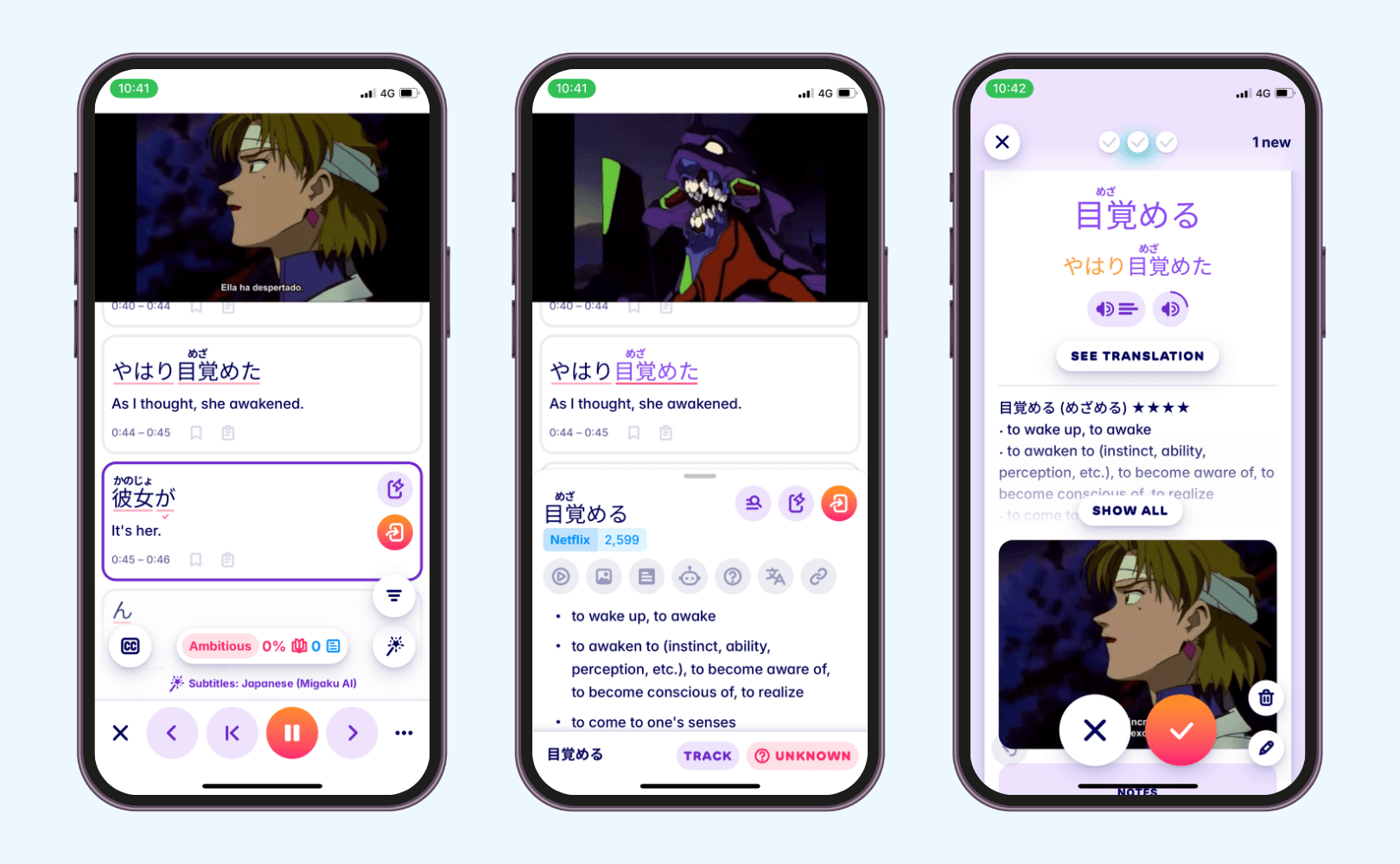
5. If you want to actually use these animal names while reading Japanese content or watching shows, Migaku's browser extension and app let you look up words instantly and save them for review later. Makes learning vocabulary from real content way more practical. There's a 10-day free trial if you want to check it out.
 ---
## FAQs
Japan's isolated island geography has created a unique ecosystem with several endemic species. The Japanese macaque I mentioned earlier is found only in Japan. The red-crowned crane breeds primarily in Hokkaido, though some populations exist in mainland Asia. The sika deer is native to East Asia including Japan. The Japanese serow, called kamoshika (カモシカ), is a goat-antelope found in mountainous regions. The Iriomote cat, or iriomote-yamaneko (イリオモテヤマネコ), is a critically endangered wild cat found only on Iriomote Island in Okinawa prefecture.
Internationally, the snow monkey (Japanese macaque) is probably Japan's most famous animal thanks to those photos of them relaxing in hot springs. The image of monkeys bathing in steaming pools with snow all around has become iconic.
Japan uses the Chinese zodiac system, which cycles through twelve animals. In order, they are: nezumi () rat, ushi () ox, tora () tiger, usagi () rabbit, tatsu () dragon, hebi () snake, uma () horse, hitsuji () sheep, saru () monkey, tori () rooster, inu () dog, and inoshishi () boar.
---
## Feel tempted to visit Japanese wildlife?
If you're learning Japanese and interested in animals, visiting Japan's wildlife spots is pretty awesome. Seeing those deer in Nara, watching the macaque monkeys in hot springs, or visiting one of Japan's excellent aquariums gives you real-world context for all this vocabulary. Before embarking on this adventure, you can also watch Japanese wildlife documentaries to practice your vocab!
> If you consume media in Japanese, and you understand at least some of the messages and sentences within that media, you will make progress. _Period_.
Get ready and book that flight!
---
## FAQs
Japan's isolated island geography has created a unique ecosystem with several endemic species. The Japanese macaque I mentioned earlier is found only in Japan. The red-crowned crane breeds primarily in Hokkaido, though some populations exist in mainland Asia. The sika deer is native to East Asia including Japan. The Japanese serow, called kamoshika (カモシカ), is a goat-antelope found in mountainous regions. The Iriomote cat, or iriomote-yamaneko (イリオモテヤマネコ), is a critically endangered wild cat found only on Iriomote Island in Okinawa prefecture.
Internationally, the snow monkey (Japanese macaque) is probably Japan's most famous animal thanks to those photos of them relaxing in hot springs. The image of monkeys bathing in steaming pools with snow all around has become iconic.
Japan uses the Chinese zodiac system, which cycles through twelve animals. In order, they are: nezumi () rat, ushi () ox, tora () tiger, usagi () rabbit, tatsu () dragon, hebi () snake, uma () horse, hitsuji () sheep, saru () monkey, tori () rooster, inu () dog, and inoshishi () boar.
---
## Feel tempted to visit Japanese wildlife?
If you're learning Japanese and interested in animals, visiting Japan's wildlife spots is pretty awesome. Seeing those deer in Nara, watching the macaque monkeys in hot springs, or visiting one of Japan's excellent aquariums gives you real-world context for all this vocabulary. Before embarking on this adventure, you can also watch Japanese wildlife documentaries to practice your vocab!
> If you consume media in Japanese, and you understand at least some of the messages and sentences within that media, you will make progress. _Period_.
Get ready and book that flight!