# Japanese Body Parts: Basic Words From Head to Toe for Learners
> Learn essential Japanese body parts vocabulary from head to toe. Complete guide with romaji, kanji, and English for all skill levels.
**URL:** https://migaku.com/blog/japanese/japanese-body-parts
**Last Updated:** 2026-01-02
**Tags:** fundamentals, vocabulary, phrases, pronunciation
---
When you're [learning Japanese](https://migaku.com/learn-japanese), body part vocabulary shows up everywhere. You'll hear it in anime when characters get injured, in conversations about health, and even in everyday expressions. The thing is, Japanese has some interesting quirks when it comes to talking about the human body that make it pretty different from English. I'm going to walk you through the essential body parts in Japanese, organized by region, with all the readings you need. We'll cover everything from basic terms like meaning hand to more specific vocabulary for internal organs and joints.
---
## Head and face parts
Let's start from the top. The head in Japanese is and this is one of those words you'll use constantly. The [kanji](https://migaku.com/blog/japanese/how-many-kanji-to-learn) actually shows up in lots of compounds related to thinking and leadership.
Here are the essential face and head terms:
| Japanese | English |
| - | - |
| 顔 | Face |
| 目 | Eye (One thing that tripped me up when I started learning was that can mean both a single eye or eyes in general, depending on context. Japanese doesn't always distinguish singular and plural the way English does.) |
| 耳 | Ear |
| 鼻 | Nose |
| 口 | Mouth |
| 歯 | Tooth/Teeth (The word ha in Japanese body parts specifically refers to teeth. You'll see this in words like , which means toothbrush or tooth-brushing.) |
| 舌 | Tongue |
| 唇 | Lips |
| 髪 | Hair (on head) When people ask about kami in Japanese body parts, they're usually asking about hair. The kanji is specifically for hair on your head, which is different from that refers to body hair or fur in general. Pretty specific, right? |
| 額 | Forehead |
| 頬 | Cheek |
| 顎 | Chin/Jaw |
| 瞼 | Eyelid |
| 眉毛 | Eyebrow |
---
## Upper body vocabulary
Moving down from the head, the upper body has some terms that are super common in everyday conversation.
**Torso and Chest:**
| Japanese | English |
| - | - |
| 体/身体 | Body (The whole thing - The word is your go-to word for talking about the body as a whole. You'll hear it in phrases like , meaning "good for your body/health.") |
| 胸 | Chest/Breast |
| お腹 | Stomach/Belly (The stomach area has two main words. is the [polite](https://migaku.com/blog/japanese/japanese-keigo-honorific-language-guide), everyday term you'd use in normal conversation.) |
| 腹 | Abdomen/Belly (More casual or in compounds - is more direct and shows up in expressions and idioms. For example, means "I'm hungry," literally "my belly has decreased.") |
| 背中 | Back |
| 腰 | Lower back/Waist/Hips |
**Arms and Shoulders:**
| Japanese | English |
| - | - |
| 肩 | Shoulder |
| 腕 | Arm |
| 肘 | Elbow |
| 手 | Hand |
| 手首 | Wrist |
Here's where it gets interesting. The kanji appears in tons of compound words. When someone asks what Japanese body parts is found at the end of each te, they're asking a bit of a trick question because itself means hand. But you'll find related terms like:
| Japanese | English |
| - | - |
| 指 | Finger |
| 親指 | Thumb |
| 人差し指 | Index finger |
| 中指 | Middle finger |
| 薬指 | Ring finger |
| 小指 | Pinky finger |
| 爪 | Fingernail |
| 手のひら | Palm |
---
## Lower body terms
The legs and feet have their own set of vocabulary that you'll need for basic conversations.
**Legs and Feet:**
| Japanese | English |
| - | - |
| 足/脚 | Leg/Foot (Context dependent - One confusing thing: can mean either leg or foot depending on context. If you need to be specific, you can say for the sole of the foot.) |
| 腿 | Thigh |
| 膝 | Knee |
| ふくらはぎ | Calf |
| 足首 | Ankle |
| 踵 | Heel |
| つま先 | Toes/Tip of foot |
---
## Internal organs and body systems
Once you get past the basic external body parts, learning the internal organs becomes useful for medical situations or more advanced conversations.
**Major Organs:**
| Japanese | English |
| - | - |
| 心臓 | Heart |
| 肺 | Lungs |
| 肝 | Liver |
| 胃 | Stomach (The organ - Notice how the stomach organ is , which is different from that refers to your belly area. This distinction matters when you're talking about medical issues.) |
| 腸 | Intestines |
| 腎臓 | Kidneys |
| 脳 | Brain |
**Other Internal Parts:**
| Japanese | English |
| - | - |
| 血 | Blood |
| 骨 | Bone |
| 筋肉 | Muscle |
| 皮/皮膚 | Skin |
| 喉 | Throat |
**Skeletal and Muscular:**
| Japanese | English |
| - | - |
| 骨 | Bone |
| 脊髄 | Spine/Spinal cord |
| 肋骨 | Rib |
| 頭蓋骨 | Skull |
| 筋肉 | Muscle |
| 腱 | Tendon |
| 関節 | Joint |
These words show up all the time in sports anime and manga, so if you're into that kind of content, you'll start recognizing them pretty quickly.
---
## Common expressions using body parts
Japanese has tons of idioms and expressions that use body part vocabulary. Learning these gives you insight into how Japanese speakers think about the body.
Some examples:
1.
*Smart* (Literally "head is good")
2.
*Have good taste* (Literally "eyes are high")
3.
*Can keep a secret* (Literally "mouth is hard")
4.
*Quick with hands/Skilled*
These expressions are part of everyday conversation, so knowing the basic body part vocabulary opens up understanding of these phrases naturally.
---
## Tips for learning body part vocabulary
Here's what actually works when you're trying to memorize these terms:
1. Start with the basics. Focus on the most common words first: , , , , . These show up constantly, so they'll stick faster through exposure.
2. Learn in context. Don't just memorize lists. Watch Japanese content where people talk about bodies, like cooking shows, sports, or medical dramas. You'll hear the same vocabulary repeated in natural situations.
3. Pay attention to kanji. The kanji for body parts often make logical sense. For example, (Eye) kind of looks like an eye turned sideways. These visual connections help with memory.
4. Practice with real situations. When you're at the gym, name body parts in Japanese. When you're cooking, think about the vocabulary. This active recall beats passive studying every time.
5. The word frequency matters too. You'll use , , and way more often than specific terms for internal organs, so prioritize accordingly.
---
## Cultural context for body language
In Japan, body language and physical space work differently than in many Western countries. Understanding body part vocabulary connects to understanding these cultural differences.
Japanese people tend to use less physical contact in greetings compared to cultures that kiss cheeks or hug. The bow uses the upper body, particularly the back and neck. When someone talks about their neck being stiff (), it's often from all that bowing in formal situations.
Personal space is also different. In crowded trains, physical contact becomes unavoidable, but people will often apologize or try to minimize it. Knowing how to say - [excuse me](https://migaku.com/blog/japanese/excuse-me-in-japanese), you stepped on my foot) can be useful in Tokyo rush hour.
---
## Making it stick
The best way to actually remember Japanese body parts vocabulary is through immersion and repetition in context. Reading manga where characters get injured, watching sports commentary, or following Japanese fitness content on YouTube will expose you to these words naturally.
Label things in your house if that helps. Put sticky notes with Japanese terms on mirrors, or practice naming body parts while you're getting ready in the morning. The more you connect the word to the actual physical thing, the better it sticks.
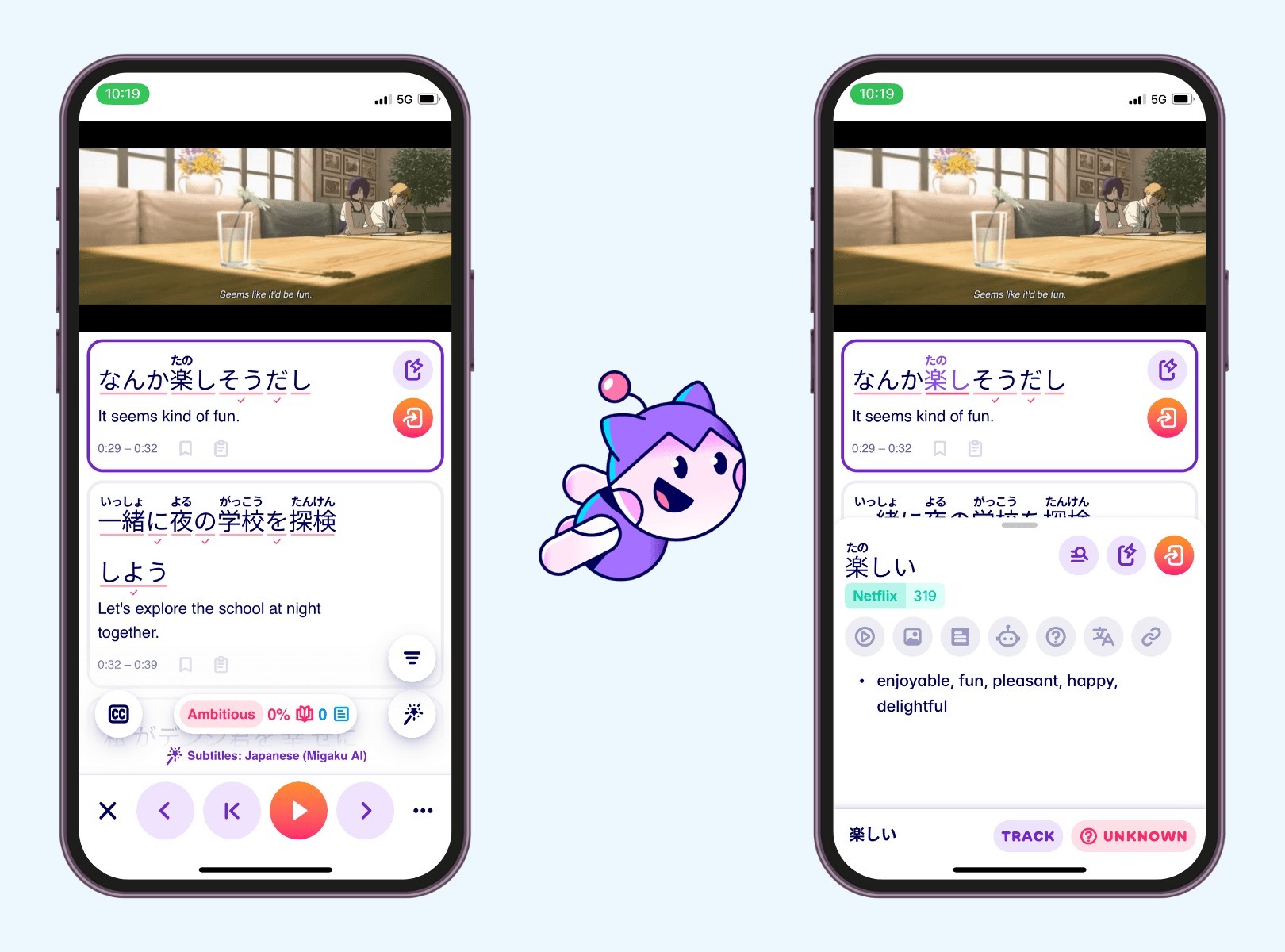
If you want to learn Japanese through actual content you enjoy, Migaku's browser extension and app let you look up words instantly while watching shows or reading articles. You can save vocabulary like these body part terms directly from native content. There's a 10-day free trial if you want to check it out.
 ---
## Level up your Japanese immersion experience with body parts phrases
Learning body part vocabulary in Japanese gives you a foundation for so many other conversations. You'll understand more anime, be able to discuss health and fitness, and handle practical situations when traveling or living in Japan. The vocabulary builds on itself, with compounds and expressions using the basic terms you learn first. As you watch more videos extensively, more terms start to make sense if you have some basic knowledge of the body parts!
> If you consume media in Japanese, and you understand at least some of the messages and sentences within that media, you will make progress. _Period_.
Know thyself, and know your body.
---
## Level up your Japanese immersion experience with body parts phrases
Learning body part vocabulary in Japanese gives you a foundation for so many other conversations. You'll understand more anime, be able to discuss health and fitness, and handle practical situations when traveling or living in Japan. The vocabulary builds on itself, with compounds and expressions using the basic terms you learn first. As you watch more videos extensively, more terms start to make sense if you have some basic knowledge of the body parts!
> If you consume media in Japanese, and you understand at least some of the messages and sentences within that media, you will make progress. _Period_.
Know thyself, and know your body.