# Japanese Colors: Modern and Traditional Colors of Japan
> Learn all Japanese color words with kanji, hiragana, and romaji. Covers traditional terms, loanwords, grammar, and cultural meanings for language learners.
**URL:** https://migaku.com/blog/japanese/japanese-colors
**Last Updated:** 2026-01-02
**Tags:** fundamentals, vocabulary, phrases, grammar
---
Learning color words when [studying Japanese](https://migaku.com/learn-japanese) opens up a whole new dimension of language ability. You'll finally understand what people mean when they describe their favorite shirt, talk about seasonal changes, or discuss traditional art. Here's the thing: Japanese has two main ways to express color. You've got traditional Japanese color terms that have been around for centuries, plus loanwords borrowed from English that get written in katakana. Both are used regularly in modern Japan, so you need to know both systems if you want to sound natural.
---
## The basic colors in Japanese and their meanings
Let's start with the foundation. The word for color in Japanese is いろ/. You'll see this term pop up everywhere when discussing colors, and it combines with other words to create specific color names.
Japanese traditionally had only four true color adjectives: for red, for blue, for white, and for black. These four colors hold special status in the language because they're the only ones that conjugate as true [i-adjectives](https://migaku.com/blog/japanese/japanese-adjective-conjugation). Every other color in Japanese works differently grammatically.
### The core four colors in the Japanese language
1. means red, and it's probably the most culturally significant color in Japan. You'll see red everywhere during celebrations, on shrine gates, and in traditional design. The adjective form is , which means "is red."
2. covers both blue and green, which confuses the hell out of English speakers at first. Traffic lights in Japan are called ao , even though the "go" light looks green to us. This reflects how Japanese color perception traditionally grouped these shades together. The adjective form is .
3. means white. The adjective form describes anything white or pale. White carries associations with purity and cleanliness in Japanese culture, which is why you see it so much in traditional ceremonies and religious contexts.
4. means black. The adjective form describes black objects. Black hair, , is considered the standard natural hair color in Japan, which is why other hair colors get special attention.
---
## Primary colors and common shades
Beyond the core four, Japanese has plenty of other color words. Most of these use the noun + no pattern instead of conjugating as adjectives.
1. means yellow. You'd say for "yellow car." The ki part actually comes from an old word for yellow that's related to trees and wood.
2. specifically means green, as opposed to ao which can mean blue or green. Modern Japanese uses midori when they want to be crystal clear about green. You'll hear midori used for things like green tea (though that's actually called ryokucha using a different reading of the same [kanji](https://migaku.com/blog/japanese/how-many-kanji-to-learn) ).
3. means purple. This color was historically associated with nobility and high status in Japan, similar to how purple was reserved for royalty in Europe.
4. literally means "tea color" and refers to brown. The part is the same character used for tea, which makes sense when you think about the brown color of brewed tea.
5. is orange, borrowed from English and written in katakana. Japanese does have a traditional word, , but most people just use the loanword orenji in everyday conversation.
6. means pink. Again, this is a loanword from English written in katakana. There's a traditional Japanese term, , which literally means "peach color," but pinku is more common in casual speech.
7. means gray, literally "ash color." The character means ash, which perfectly describes that grayish color.
---
## Traditional Japanese color names
Japan has an incredibly rich vocabulary of traditional color names that you'll encounter in art, fashion, and cultural contexts. These terms often reference natural elements and have deep cultural significance.
1. means light blue, literally "water color." This pale blue shade evokes clear water and spring skies.
2. means sky blue, literally "sky color." Pretty straightforward, and it describes that perfect blue you see on clear days.
3. refers to a bright golden yellow, named after the yamabuki flower. This color appears frequently in traditional Japanese design.
4. is a deep red or crimson color. The name comes from a type of red pigment historically used in cosmetics and dyes.
5. means navy blue or deep indigo. This dark blue color has strong associations with traditional Japanese textiles and clothing.
6. is a yellowish green color, literally meaning "budding green." It represents the fresh green of new spring growth.
These traditional color names show up constantly in Japanese fashion, design, and art. You'll see them on paint swatches, in clothing descriptions, and when people discuss interior design.
---
## Loanwords vs traditional color terms
Modern Japanese uses tons of English loanwords for colors, especially in casual conversation and commercial contexts. Walk through any store in Japan and you'll see katakana color words everywhere.
Common loanword colors include:
1. for green
2. for blue
3. for red
4. for white
5. for black
6. for gray
7. for beige
8. for gold
9. for silver
You might wonder which version to use. Here's the deal: loanwords often sound more modern, casual, or trendy. Traditional terms carry more cultural weight and formality. A fashion brand might advertise a pinku dress to sound cute and contemporary, while a traditional kimono shop would use momoiro to emphasize classical elegance.
Both are correct. You'll hear both in everyday Japanese. The choice depends on context, personal preference, and the specific situation.
---
## Color adjectives and [grammar](https://migaku.com/blog/japanese/japanese-word-order-basic-to-advanced-guide)
Understanding how to actually use these color words matters just as much as memorizing the vocabulary. The grammar differs depending on which type of color word you're using.
The four traditional colors conjugate as i-adjectives:
- means "red car"
- means "blue sky"
- means "white paper"
- means "black cat"
All other Japanese color words work as nouns and need the particle no:
- means "yellow flower"
- means "green tree"
- means "brown dog"
Loanwords in katakana also use the no particle:
- means "pink dress"
- means "orange juice"
You can also use the suffix っぽい to say something is "kind of" a certain color:
- means "reddish" or "kind of red"
- means "bluish" or "kind of blue"
---
## Describing shades and variations
Japanese has specific vocabulary for describing different shades and intensities of color. These modifiers help you get more precise about exactly what color you mean.
1. means light or pale. is light pink. is pale blue.
2. means dark or deep. is dark green. is deep brown.
3. means vivid or bright. is vivid red.
4. Kuroi can combine with other colors to mean dark: means "blue close to black" or very dark blue.
5. You can also double color words for emphasis or to describe patterns: emphasizes redness; means "black and white"
---
## Cultural significance of colors in Japan
Colors carry specific cultural meanings in Japanese society that affect how and when people use them. Understanding these associations helps you appreciate why certain colors appear in specific contexts.
1. Red (aka) represents celebration, vitality, and protection against evil. You'll see red at festivals, on shrine gates called torii, and during celebrations. Red also appears on the Japanese flag as the rising sun symbol.
2. White (shiro) symbolizes purity, cleanliness, and mourning. Japanese brides traditionally wear white kimono, and white is also used at funerals. This dual association might seem contradictory, but both contexts relate to purity and new beginnings.
3. Black (kuro) can represent formality, elegance, or mourning depending on context. Black formal wear is standard for serious occasions.
4. Blue and green (ao) traditionally represented youth, vitality, and nature. The overlap between blue and green in the word ao reflects how Japanese culture historically viewed these as variations of the same natural color family.
5. Purple (murasaki) historically indicated high rank and nobility. Even today, purple carries associations with refinement and sophistication.
6. Gold (kin/gōrudo) and silver (gin/shirubā) represent wealth, value, and celebration. You'll see these metallic colors during festive occasions.
---
## Building your Japanese color vocabulary
Learning all these color words takes time, but you can build your vocabulary systematically. Start with the basic colors you'll use most often: aka, ao, kiiro, midori, shiro, kuro, and the common loanwords like pinku and orenji.
Practice describing objects around you using color words. Look at your clothes, furniture, food, and nature, then practice saying the colors in Japanese. This practical application helps the vocabulary stick way better than just memorizing lists.
Pay attention to which color terms you encounter in real Japanese content. Watch Japanese shows, read manga, or browse Japanese websites and notice which color words appear most frequently in different contexts. You'll start recognizing patterns in when people use traditional terms versus loanwords.
Create associations between the Japanese color words and their kanji. The characters often contain clues about meaning. For example, looks like fire, which makes sense for red. contains the character for thread (糸), which connects to green plant fibers.
Don't stress about memorizing every traditional color name immediately. Focus on the practical vocabulary you'll actually use, then gradually expand into the more specialized traditional terms as you encounter them.
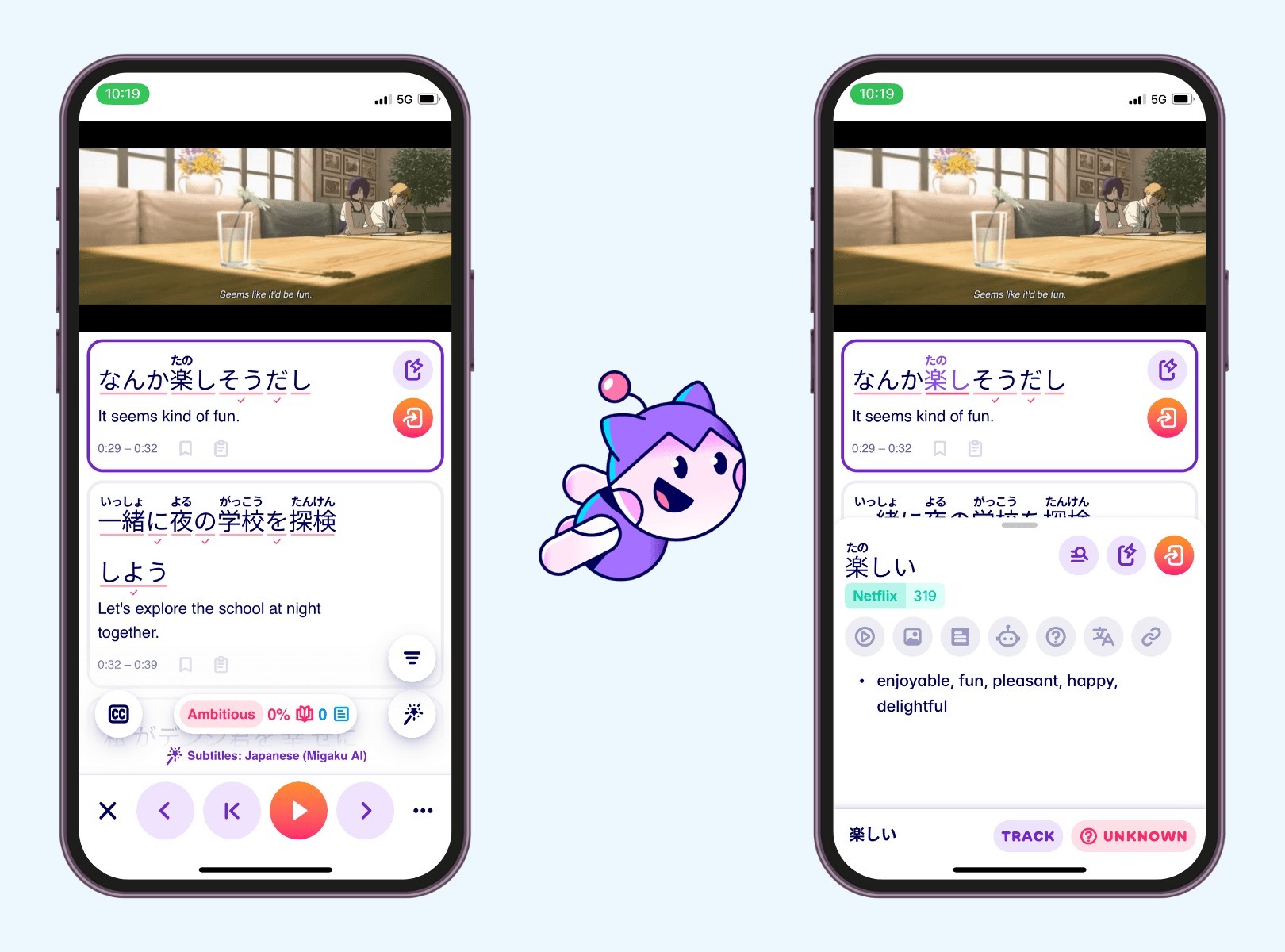
Anyway, if you want to actually practice these color words with real Japanese content, Migaku's browser extension and app let you look up vocabulary instantly while watching shows or reading articles. You can save color words you encounter naturally and review them with spaced repetition. There's a 10-day free trial if you want to check it out.
 ---
## FAQs
The Japanese passport is dark blue for 5 years and dark red for 10 years. The cover features gold (gōrudo) text and the chrysanthemum seal.
---
## Explore the colors in Japanese culture
Colors connect deeply to Japanese culture, history, and aesthetics. Learning color vocabulary means learning about seasonal awareness, traditional arts, fashion sensibilities, and cultural symbolism. Each color word carries associations and meanings beyond just the visual shade. It takes time to learn, yet you can also make this process enjoyable by learning via extensive watching and reading.
> If you consume media in Japanese, and you understand at least some of the messages and sentences within that media, you will make progress. _Period_.
Color your language learning journey!
---
## FAQs
The Japanese passport is dark blue for 5 years and dark red for 10 years. The cover features gold (gōrudo) text and the chrysanthemum seal.
---
## Explore the colors in Japanese culture
Colors connect deeply to Japanese culture, history, and aesthetics. Learning color vocabulary means learning about seasonal awareness, traditional arts, fashion sensibilities, and cultural symbolism. Each color word carries associations and meanings beyond just the visual shade. It takes time to learn, yet you can also make this process enjoyable by learning via extensive watching and reading.
> If you consume media in Japanese, and you understand at least some of the messages and sentences within that media, you will make progress. _Period_.
Color your language learning journey!