# Japanese Te-Form: Complete Conjugation Guide to Use Te Form
> Conjugate Japanese verbs into te-form with clear rules for all verb groups, plus practical examples for requests, progressive tense, and more.
**URL:** https://migaku.com/blog/japanese/japanese-te-form-conjugation
**Last Updated:** 2025-12-29
**Tags:** fundamentals, vocabulary, phrases, grammar
---
The te-form () is basically the Swiss Army knife when [learning Japanese](https://migaku.com/learn-japanese). You'll use it to connect actions, make requests, talk about ongoing situations, ask for permission, and a whole bunch of other stuff. Pretty much every conversation you have in Japanese will involve the te-form in some way. Think of it as the duct tape holding your Japanese sentences together, and let me introduce how to use it!
---
## What is the Japanese te form: A form to connect
> The te-form is a verb conjugation pattern that ends in て or で depending on the verb you're conjugating.
In Japanese, verbs change their endings based on what you want to express, and the te-form is one of the most versatile conjugations you'll learn.
When you conjugate a verb into Japanese te-form, you're creating a form that can:
- Link multiple actions in sequence
- Form the present progressive tense when combined with いる
- Make polite requests
- Ask for or give permission
- Express the state resulting from a past action
The actual conjugation rules depend on which verb group you're working with. Japanese verbs fall into three main categories, and each one follows different conjugation rules.
---
## The three verb groups in Japanese dictionary form
Before we dive into how to [conjugate verbs](https://migaku.com/blog/japanese/japanese-verb-conjugation-complete-guide) into te-form, you need to understand the three verb groups. This is crucial because each group conjugates differently.
1. **Group 1 verbs** (Also called u-verbs or godan verbs) are verbs that end in う (u) in their dictionary form. These include verbs ending in う, つ, る, く, ぐ, ぬ, ぶ, む, and す. Most Japanese verbs belong to this group.
2. **Group 2 verbs** (Also called ru-verbs or ichidan verbs) end in る in their dictionary form, but the syllable before る must be in the i-sound or e-sound column. Examples include (taberu, to eat) and (miru, to see).
3. **Group 3 verbs** are the irregular verbs. There are only two: する (suru, to do) and (kuru, to come). You just have to memorize how these conjugate.
---
## How to convert Japanese verbs to te-form
Alright, let's get into the actual conjugation rules. This is where a lot of learners get stuck, but once you practice enough, it becomes second nature.
### Conjugate group 1 verbs in Japanese grammar
Group 1 verbs have the most complex te-form conjugation rules because the ending changes based on what sound the verb ends with in dictionary form.
**Verbs ending in う, つ, or る** change to って:
- (kau, to buy) becomes (katte)
- (matsu, to wait) becomes (matte)
- (noru, to ride) becomes (notte)
**Verbs ending in む, ぶ, or ぬ** change to んで:
- (yomu, to read) becomes (yonde)
- (asobu, to play) becomes (asonde)
- (shinu, to die) becomes (shinde)
**Verbs ending in く** change to いて:
- (kaku, to write) becomes (kaite)
- (kiku, to listen) becomes (kiite)
Exception: (iku, to go) becomes (itte), which breaks the pattern.
**Verbs ending in ぐ** change to いで:
- (oyogu, to swim) becomes (oyoide)
- (isogu, to hurry) becomes (isoide)
**Verbs ending in す** change to して:
- (hanasu, to speak) becomes (hanashite)
- (kasu, to lend) becomes (kashite)
### Group 2 (Ru-verbs) conjugation rules to Japanese te-form
Group 2 verbs are way simpler.
**You just drop the る and add て**:
- (taberu, to eat) becomes (tabete)
- (miru, to see) becomes (mite)
- (okiru, to wake up) becomes (okite)
- (neru, to sleep) becomes (nete)
### Group 3 (Irregular verbs) conjugation rules
The two irregular verbs have their own unique conjugations:
- する (suru, to do) becomes して (shite)
- (kuru, to come) becomes (kite)
---
## Te-form with [adjective](https://migaku.com/blog/japanese/japanese-adjective-conjugation)s and nouns conjugation patterns
While we've focused mainly on verbs, the te-form concept extends to adjectives and nouns too, though the formation is different.
**I-adjectives** drop the い and add くて:
- (takai, expensive) becomes (takakute)
- (oishii, delicious) becomes (oishikute)
**Na-adjectives** add で:
- (shizuka, quiet) becomes (shizuka de)
- (benri, convenient) becomes (benri de)
**Nouns** also use で to connect:
- 。
*I am a university student, and my younger sister is a high school student.*
---
## When to use te-form in Japanese conjugation
The te-form shows up in tons of different grammatical structures. Let me break down the main uses you'll encounter.
### Connecting sequential actions
One of the most basic uses of te-form is connecting two or more actions that happen in sequence. In English, we might use "and then" or just "and."
- 。
*I wake up in the morning, take a shower, and eat breakfast.*
The te-form creates a smooth flow between actions. The tense of the entire sentence is determined by the final verb, so all the te-form verbs just follow along with that tense.
### Present progressive tense with いる
When you add いる (iru, to exist) after a verb in te-form, you create the present progressive tense. This expresses an ongoing action or state.
- 。
*I am studying now.*
- 。
*He is running.*
You can also use the past tense of いる to show something was ongoing in the past:
- 。
*Last night, I was watching TV.*
### Making requests
Adding ください (kudasai) after a verb in te-form creates a polite request. This is super common in everyday Japanese.
- 。
*Please wait a moment.*
- 。
*Please write your name here.*
- 。
*Please open the window.*
### Asking for permission
The pattern te-form + もいいですか (mo ii desu ka) lets you ask if something is okay to do.
- 。
*May I take a photo?*
- 。
*May I sit here?*
When someone asks you this, you can respond with the te-form + もいいです (mo ii desu) to give permission, or te-form + はいけません (wa ikemasen) to refuse.
### Giving instructions or prohibitions
You can use te-form + はいけません (wa ikemasen) or te-form + はだめです (wa dame desu) to say something is not allowed.
- 。
*You must not swim here.*
- 。
*You can't use your phone during class.*
### Expressing cause and reason from the past tense
Sometimes the te-form can show that one action is the reason or cause for another.
- 。
*It rained, so the game was canceled.*
- 。
*I forgot my wallet and was in trouble.*
### Describing a state resulting from past action
When you use te-form + いる with certain verbs, it describes a state that resulted from a past action and continues to the present.
- 。
*I am married.* (I got married and am still married.)
- 。
*I'm fat.* (I gained weight and am still heavy.)
- 。
*I know.* (I came to know and still know.)
---
## Common te verb form expressions you’ll use all the time
Once you've got the basic conjugation down, these expressions will become part of your daily Japanese:
**〜てみる (te miru)** means "to try doing something":
- 。
*I'll try eating this dish.*
**〜ておく (te oku)** means "to do something in advance" or "to do something and leave it that way":
- 。
*I'll prepare in advance for tomorrow.*
**〜てしまう (te shimau)** expresses completion or regret:
- 。
*I ended up forgetting my homework.* (With regret)
**〜てくる (te kuru)** means "to do something and come back" or indicates a change happening over time:
- 。
*I'll go [shopping](https://migaku.com/blog/japanese/japanese-shopping-phrases) and come back.*
**〜ていく (te iku)** means "to do something and go" or indicates a continuing change:
- 。
*It will get colder from now on.*
---
## How to memorize て form in Japanese
Honestly, memorizing all these conjugation rules takes practice. Here are some tips that actually help:
1. **Practice with common verbs first.** Don't try to learn every possible verb conjugation at once. Start with the 20-30 most common verbs you use daily. Once those become automatic, add more.
2. **Group verbs by their ending pattern.** Make flashcards or lists that group verbs by how they conjugate. All the verbs that become って together, all the ones that become んで together, and so on.
3. **Write sentences, not just conjugations.** Conjugating verbs in isolation is boring and doesn't stick as well. Write actual sentences using the te-form so you see it in context.
4. **Pay attention when reading or listening.** Once you know the te-form exists, you'll start noticing it everywhere in Japanese content. That natural exposure helps reinforce the patterns.
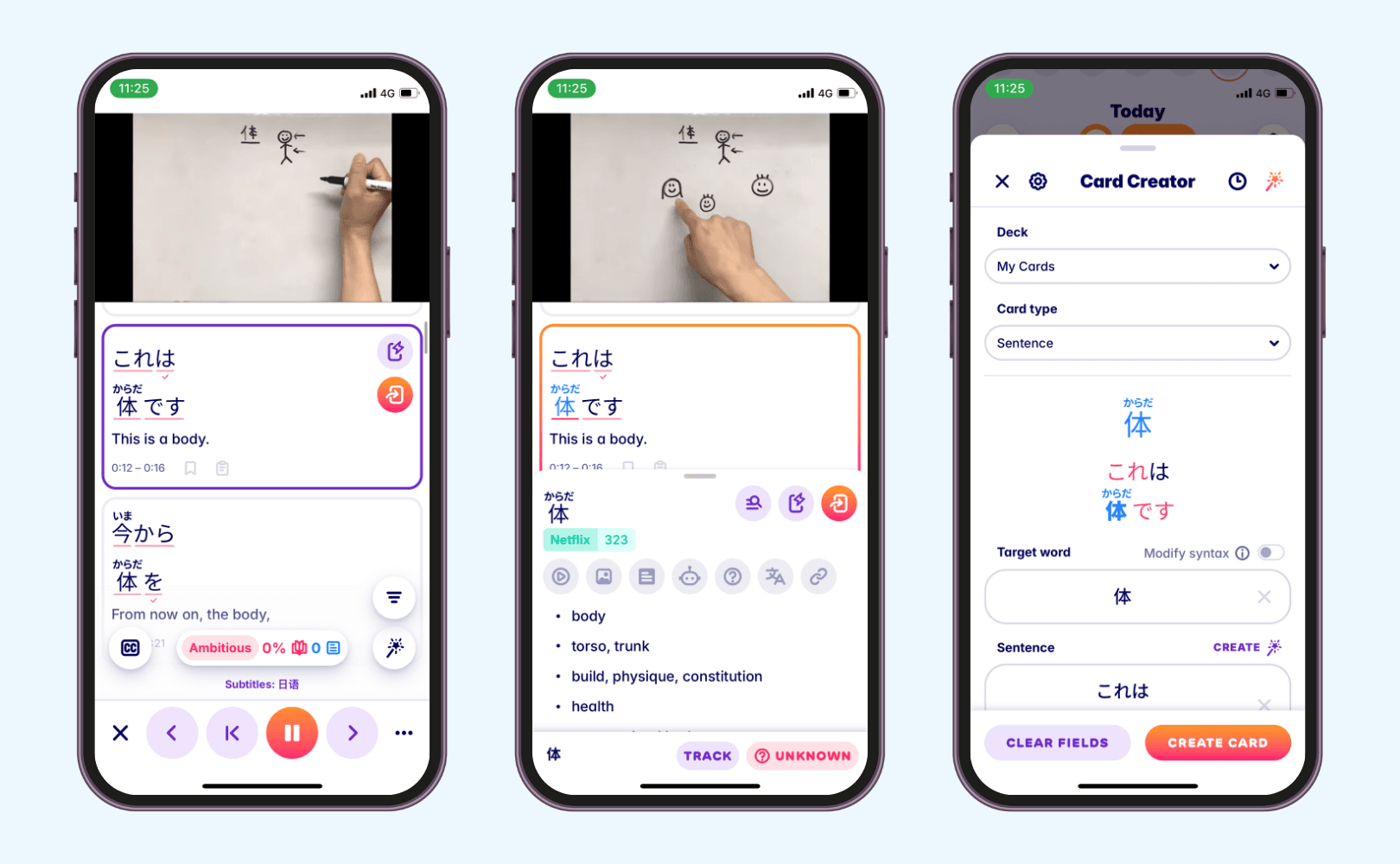
If you want to practice recognizing te-form and other grammar patterns in real Japanese content, Migaku's browser extension and app let you look up words and grammar instantly while watching shows or reading articles. Makes learning from native content way more practical. There's a 10-day free trial if you want to check it out.
 ---
## The key to learning Japanese verb conjugation
The key is consistent practice and exposure to use the te form. Conjugate a few verbs every day, write sentences using different te-form patterns, and consume Japanese content where you can see these structures in action.
> If you consume media in Japanese, and you understand at least some of the messages and sentences within that media, you will make progress. _Period_.
Rules are dry, but learning from immersion is fun!
---
## The key to learning Japanese verb conjugation
The key is consistent practice and exposure to use the te form. Conjugate a few verbs every day, write sentences using different te-form patterns, and consume Japanese content where you can see these structures in action.
> If you consume media in Japanese, and you understand at least some of the messages and sentences within that media, you will make progress. _Period_.
Rules are dry, but learning from immersion is fun!