# Japanese Tongue Twisters: Practice Pronunciation Fast With 早口言葉
> Master Japanese pronunciation with tongue twisters (hayakuchi kotoba) - from easy beginner phrases to the hardest twisters.
**URL:** https://migaku.com/blog/japanese/japanese-tongue-twisters
**Last Updated:** 2026-01-22
**Tags:** fundamentals, vocabulary, phrases, grammar
---
Japanese tongue twisters, or hayakuchi kotoba (), are one of the most fun ways to level up your pronunciation game. They're basically phrases designed to trip you up when you say them fast, forcing you to nail those tricky sound combinations that normally slip past unnoticed. Whether you're just starting to [learn Japanese](https://migaku.com/learn-japanese) or you've been at it for a while, these twisters will show you exactly which sounds you're fumbling. Plus, they're genuinely entertaining to practice, which beats drilling pronunciation charts any day.
---
## What are Japanese tongue twisters
Hayakuchi kotoba () literally means "fast mouth words" in Japanese. They work the same way English tongue twisters do, repeating similar sounds in quick succession to challenge your pronunciation. The difference is that Japanese tongue twisters focus on the specific sound patterns and syllable structures unique to the Japanese language.
Japanese uses a syllable-based [writing system](https://migaku.com/blog/japanese/japanese-writing-practice), so most tongue twisters play with combinations of consonants and vowels that sound similar but require different mouth positions. You'll find lots of repetition with [particles](https://migaku.com/blog/japanese/japanese-particles-guide) like wa (は), ni (に), and ga (が), which can blend together when you're speaking quickly.
These aren't just party tricks either. Japanese kids grow up practicing tongue twisters in school, and voice actors use them as warm-up exercises. They're a legitimate tool for improving articulation and speech clarity.
---
## Easy Japanese tongue twisters for beginners
Let's start with some beginner-friendly options that won't destroy your confidence right away.
### Nama mugi nama gome nama tamago
> Romaji: Nama mugi, nama gome, nama tamago
>
Japanese: 、、
>
English: Raw wheat, raw rice, raw egg
This is probably the most famous Japanese tongue twister. It's perfect for beginners because it uses simple vocabulary and focuses on the "nama" sound repetition. The challenge comes from switching between the different consonants (m, g, t) while keeping the "nama" prefix clear.
Try saying it slowly first, then gradually speed up. You'll notice your tongue wants to skip sounds or blend them together.
### Tonari no kyaku wa yoku kaki kuu kyaku da
> Romaji: Tonari no kyaku wa yoku kaki kuu kyaku da
>
Japanese:
>
English: The customer next door is a customer who eats a lot of persimmons
This one drills the "k" sound variations. The particle wa (は) appears here, and you need to keep it distinct from the "yoku" and "kyaku" sounds around it. The repetition of "kyaku" at the beginning and end trips people up constantly.
### Basu gasu bakuhatsu
> Romaji: Basu gasu bakuhatsu
>
Japanese:
>
English: Bus gas explosion
Short and punchy. This phrase focuses on the "ba" and "ga" sounds, which require slightly different mouth positions. Beginners often struggle to keep these consonants crisp when speeding up.
---
## Practice Japanese tongue twisters at intermediate level
Once you've got the basics down, these intermediate twisters will push your skills further.
### Kaeru pyoko pyoko mi pyoko pyoko
> Romaji: Kaeru pyoko pyoko, mi pyoko pyoko, awasete pyoko pyoko, mu pyoko pyoko
>
Japanese:
>
English: Frog jump jump, three jump jump, together jump jump, six jump jump
The "pyoko" repetition here is relentless. You're also working with numbers (mi for three, mu for six), which adds another layer of complexity. This twister teaches you to maintain the same sound quality even when your mouth is tired from repetition.
### Sumomo mo momo, momo mo momo, sumomo mo momo mo momo no uchi
> Romaji: Sumomo mo momo, momo mo momo, sumomo mo momo mo momo no uchi
>
Japanese:
>
English: Plums are peaches, peaches are peaches, plums and peaches are both types of peaches
This phrase is a masterclass in the particle mo (も), which means "also" or "too." You'll say "momo" (Peach) and "sumomo" (Plum) so many times they start to blur together. The challenge is keeping each "mo" particle distinct from the "mo" sounds within the fruit names.
### Akamaki gami, aomaki gami, kimaki gami
> Romaji: Akamaki gami, aomaki gami, kimaki gami
>
Japanese:
>
English: Red rolled paper, blue rolled paper, yellow rolled paper
Color words plus "maki gami" (Rolled paper) create a rhythm that's easy to mess up. The "ka," "ga," and "ki" sounds all require precise tongue placement, and speeding through them reveals any lazy articulation habits.
---
## What is the hardest Japanese tongue twister
The Tokyo twister takes the crown for difficulty.
### Tokyo tokkyo kyokakyoku
> Romaji: Tokyo tokkyo kyokakyoku
>
Japanese:
>
English: Tokyo patent approval office
This beast combines similar sounds in rapid succession with almost no variation to give your mouth a break. The "kyo" and "kyo" sounds repeat with slight modifications, and the double consonants (tokkyo) require you to pause briefly mid-word, which throws off your rhythm when speaking fast.
Even native Japanese speakers struggle with this one. It's commonly used as a vocal warm-up for professional speakers and actors because if you can nail this, you can handle pretty much any Japanese phrase clearly.
The trick is to over-articulate each syllable when you're starting out. Don't try to speed through it until you can say it perfectly at a moderate pace. Are you forgetting to articulate certain sounds? This twister will expose that immediately.
### Niwa ni wa niwa niwatori ga iru
> Romaji: Niwa ni wa niwa niwatori ga iru
>
Japanese:
>
English: There are two [chickens](https://migaku.com/blog/japanese/japanese-animals-vocabulary-guide) in the garden
Another seriously challenging one. You've got "niwa" (Garden), the particle ni (に), the particle wa (は), "niwa" (Two birds), and "niwatori" (Chicken) all crammed together. The particle ga (が) appears too, adding another sound to keep distinct.
The difficulty comes from context switching. Your brain knows these are different words with different meanings, but your mouth wants to blend them into one continuous "niwaniwaniwa" sound.
---
## How tongue twisters improve your pronunciation
Here's the thing about pronunciation practice: you need feedback. Tongue twisters give you instant feedback because you'll hear yourself mess up in real time.
1. When you're having normal conversations, you can often get away with slightly sloppy pronunciation. Context helps people understand you even if your sounds aren't perfect. But tongue twisters remove that safety net. Every sound matters, and any laziness in articulation becomes immediately obvious.
2. They also train your mouth muscles. Japanese uses different mouth positions than English for many sounds. The Japanese "r" sound, for instance, is somewhere between an English "r," "l," and "d." You won't develop the muscle memory for that sound through casual speaking alone. Repetitive practice with tongue twisters builds the physical coordination you need.
3. Another benefit: they reveal your specific weak points. Maybe you're nailing the "k" sounds but fumbling every time "wa" and "ga" appear close together. Once you know what you're struggling with, you can focus your practice time more effectively.
---
## Tips for practicing Japanese tongue twisters for language learners
1. Start ridiculously slow. Seriously, slower than you think you need to. Say each syllable clearly and deliberately. Only speed up once you can maintain perfect clarity at that slower pace.
2. Record yourself. This is uncomfortable but incredibly useful. You'll hear mistakes you didn't notice while speaking. Compare your recording to native speaker versions (You can find tons on YouTube) and note the differences.
3. Break longer twisters into chunks. Master the first half before adding the second half. The "niwa ni wa niwa" twister becomes much more manageable when you practice "niwa ni wa" separately from "niwa niwatori ga iru."
4. Practice in short bursts. Your mouth gets tired faster than you'd expect. Five minutes of focused practice beats twenty minutes of increasingly sloppy repetition. Do multiple short sessions throughout the day instead of one long grind.
5. Pay attention to pitch accent too. Japanese is a pitch-accent language, meaning the pitch pattern of a word affects its meaning. Tongue twisters often play with words that have different pitch patterns, so getting these right adds another layer to your practice.
6. Use them as warm-ups before speaking practice or language exchange sessions. You'll notice your overall articulation improves when you start with a few tongue twisters.
---
## Learning Japanese tongue twisters as a study method
Adding tongue twisters to your study routine gives you a break from the usual flashcard grinding while still improving your skills. They're particularly useful for fixing specific pronunciation issues that keep showing up in your speaking.
1. The key is to learn Japanese through multiple methods, and tongue twisters fill a specific niche. They won't teach you grammar or expand your vocabulary much, but they'll make you sound way more natural when speaking.
2. Try learning one new tongue twister per week. Really master it before moving on. You'll build a collection of phrases that drill different sound patterns, giving you a comprehensive pronunciation workout.
3. Pair them with [immersion](https://migaku.com/blog/japanese/japanese-immersion-learning) learning. After practicing tongue twisters, watch Japanese content and pay attention to how native speakers articulate similar sounds in natural speech. You'll start noticing the same patterns you've been drilling.
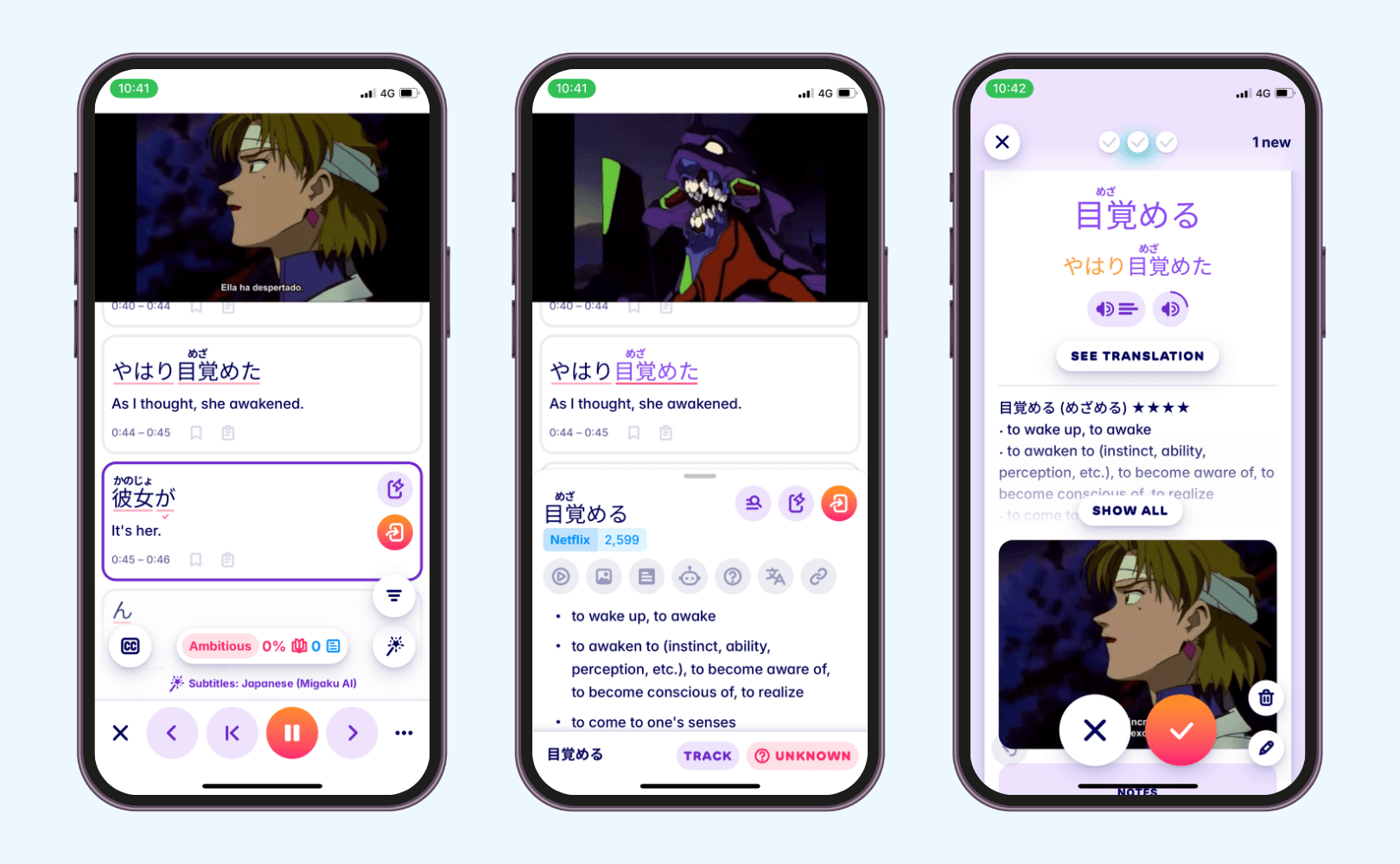
Anyway, if you want to actually use these pronunciation skills with real Japanese content, Migaku's browser extension and app let you look up words instantly while watching shows or reading articles. Makes immersion learning way more practical. There's a 10-day free trial if you want to check it out.
 ---
## FAQs
Absolutely. Japan has a rich tradition of tongue twisters that goes back generations. They're used in educational settings, especially in elementary schools where teachers use them to help kids develop clear speech patterns. You'll also find them in drama classes, voice acting training, and even corporate communication workshops.
Yes, they're a standard part of Japanese education. Elementary school teachers use them to help kids develop clear speech patterns. You'll find them in Japanese language [textbooks](https://migaku.com/blog/japanese/best-japanese-textbooks), speech therapy materials, and communication skills courses.
---
## BONUS | Can't get enough of practicing tongue twisters?
If you're hooked on tongue twisters, there's a whole world to explore beyond the classics. You can find modern tongue twisters that play with contemporary slang or technical terms. Some Japanese YouTube channels create new ones regularly, challenging viewers to master them.
> If you consume media in Japanese, and you understand at least some of the messages and sentences within that media, you will make progress. _Period_.
Make your language learning fun!
---
## FAQs
Absolutely. Japan has a rich tradition of tongue twisters that goes back generations. They're used in educational settings, especially in elementary schools where teachers use them to help kids develop clear speech patterns. You'll also find them in drama classes, voice acting training, and even corporate communication workshops.
Yes, they're a standard part of Japanese education. Elementary school teachers use them to help kids develop clear speech patterns. You'll find them in Japanese language [textbooks](https://migaku.com/blog/japanese/best-japanese-textbooks), speech therapy materials, and communication skills courses.
---
## BONUS | Can't get enough of practicing tongue twisters?
If you're hooked on tongue twisters, there's a whole world to explore beyond the classics. You can find modern tongue twisters that play with contemporary slang or technical terms. Some Japanese YouTube channels create new ones regularly, challenging viewers to master them.
> If you consume media in Japanese, and you understand at least some of the messages and sentences within that media, you will make progress. _Period_.
Make your language learning fun!