Korean Alphabet Guide: Learn Hangul Fast (Complete Breakdown)
Last updated: April 12, 2026
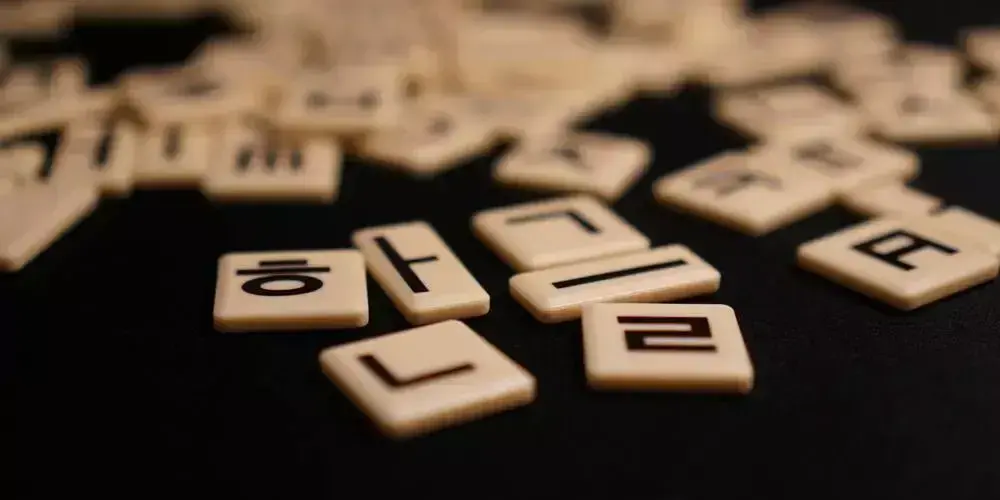
So you want to learn the Korean alphabet? Good news: Hangul is probably the easiest writing system you'll ever learn. I'm talking seriously easy. Most people can learn to read Korean in about 90 minutes, and I've seen some dedicated learners do it even faster. The Korean alphabet was literally designed to be simple. Back in 1443, King Sejong the Great created Hangul because he wanted regular people to be able to read and write. Before that, Koreans used Chinese characters, which took years to master. King Sejong wanted something better, something anyone could learn quickly. Let me walk you through the alphabet and give you some tips on how to learn it fast!
What makes the Korean alphabet special
The modern Korean alphabet we use today has 24 basic letters: 14 consonants and 10 vowels. When you combine these with some double consonants and compound vowels, you get a total system of 40 characters. That's still way less than the thousands of Chinese characters or even the 46 characters in Japanese hiragana.
Hangul works completely differently from alphabets like English. Instead of writing letters in a straight line, you stack them into syllable blocks. Each block represents one syllable and takes up the same amount of space, whether it has two letters or four.
Think of it like building with Lego blocks. Each syllable block needs at least one consonant and one vowel. Sometimes you'll add a final consonant at the bottom. The blocks always follow specific rules about where each letter goes.
For example, the word for "person" is written as 사람 (saram). That's two syllable blocks: 사 (sa) and 람 (ram). The first block has the consonant ㅅ (s) and the vowel ㅏ (a). The second block has the consonant ㄹ (r/l), the vowel ㅏ (a), and a final consonant ㅁ (m) at the bottom.
Basic Korean consonants
Let's start with the 14 basic consonants. The cool part about Korean consonants is that their shapes actually represent how your mouth looks when you make the sound. King Sejong based the letter shapes on the position of the tongue and lips. Genius, right?
- ㄱ (g/k) looks like the back of your tongue blocking your throat. It sounds like "g" at the beginning of a syllable and "k" at the end.
- ㄴ (n) represents your tongue touching the roof of your mouth.
- ㄷ (d/t) shows your tongue against your teeth.
- ㄹ (r/l) is a flap sound, like a soft "r" or "l" depending on position.
- ㅁ (m) represents your closed mouth.
- ㅂ (b/p) shows your lips pressed together.
- ㅅ (s) makes an "s" sound.
- ㅇ (ng/silent) is silent at the beginning of syllables but makes an "ng" sound as a final consonant.
- ㅈ (j) sounds like the "j" in "jump."
- ㅊ (ch) is like "ch" in "church."
- ㅋ (k) is an aspirated "k" with more air.
- ㅌ (t) is an aspirated "t."
- ㅍ (p) is an aspirated "p."
- ㅎ (h) makes an "h" sound.
Korean consonants: Tensed and double forms
Korean also has five tensed consonants, sometimes called double consonants. These are pronounced with more tension in your throat and no aspiration. Native Korean speakers can hear the difference immediately, but it takes practice for learners.
- ㄲ (kk) is a tense version of ㄱ.
- ㄸ (tt) is a tense version of ㄷ.
- ㅃ (pp) is a tense version of ㅂ.
- ㅆ (ss) is a tense version of ㅅ.
- ㅉ (jj) is a tense version of ㅈ.
The pronunciation difference between regular and tensed consonants matters. The word 밥 (bap) means "rice," but 빱 (ppap) isn't a word. Getting these sounds right helps you sound more natural.
Basic Korean vowels
The 10 basic vowels in Hangul are built from three elements: a horizontal line (representing Earth), a vertical line (representing humans), and dots (representing heaven). The dots became short lines over time, but the principle stayed the same.
- ㅏ (a) sounds like "ah" in "father."
- ㅓ (eo) is like "uh" in "fun."
- ㅗ (o) sounds like "oh" in "go."
- ㅜ (u) is like "oo" in "food."
- ㅡ (eu) has no direct English equivalent. Put your lips flat and say "uh."
- ㅣ (i) sounds like "ee" in "feet."
- ㅐ (ae) sounds like "eh" in "bed."
- ㅔ (e) also sounds like "eh." Honestly, most modern speakers pronounce ㅐ and ㅔ the same way.
- ㅚ (oe) is supposed to sound like "we" but many people just say "eh."
- ㅟ (wi) sounds like "wee."
Compound vowels and complex combinations
You can combine basic vowels to create compound vowels. There are 11 of these:
- ㅑ (ya) adds a "y" sound to ㅏ.
- ㅕ (yeo) adds a "y" sound to ㅓ.
- ㅛ (yo) adds a "y" sound to ㅗ.
- ㅠ (yu) adds a "y" sound to ㅜ.
- ㅒ (yae) sounds like "yeh."
- ㅖ (ye) also sounds like "yeh."
- ㅘ (wa) combines ㅗ and ㅏ to make "wa."
- ㅙ (wae) sounds like "weh."
- ㅝ (wo) combines ㅜ and ㅓ.
- ㅞ (we) sounds like "weh."
- ㅢ (ui) is tricky. It sounds like "ui" at the beginning of words but often becomes just "i" in other positions.
The vowel combinations follow visual logic. When you see ㅘ, you're literally seeing ㅗ (o) plus ㅏ (a) stacked together. Once you understand the basic vowels, the compound ones make sense.
Understanding final consonants (Batchim)
The final consonant in a syllable block is called 받침 (batchim), which literally means "supporting platform." When a consonant appears in the final position, its pronunciation sometimes changes.
Here's where things get interesting. Korean only allows seven sounds in the final consonant position, even though you can write many different consonants there. This is called the "seven final consonant rule."
- Final ㄱ, ㄲ, ㅋ all sound like k.
- Final ㄴ sounds like n.
- Final ㄷ, ㅅ, ㅆ, ㅈ, ㅊ, ㅌ all sound like t.
- Final ㄹ sounds like l.
- Final ㅁ sounds like m.
- Final ㅂ, ㅍ sound like p.
- Final ㅇ sounds like ng.
So the word 밖 (bakk) meaning "outside" and 박 (bak) meaning "gourd" sound identical because both end with a k sound. Context tells you which word is meant.
How Korean syllable blocks work
Every Korean syllable follows a block structure. You can't just write letters in a line like English. The blocks can have two, three, or four letters arranged in specific patterns.
Pattern 1: Consonant + Vowel (CV)
Example: 가 (ga) has ㄱ on the left and ㅏ on the right.
Pattern 2: Consonant + Vowel + Final Consonant (CVC)
Example: 강 (gang) has ㄱ on the left, ㅏ on the right, and ㅇ at the bottom.
Pattern 3: Consonant + Compound Vowel (CV)
Example: 교 (gyo) has ㄱ on top and ㅛ below.
Pattern 4: Consonant + Compound Vowel + Final Consonant (CVC)
Example: 공 (gong) has ㄱ on top, ㅗ in the middle, and ㅇ at the bottom.
The position of letters depends on the vowel shape. Vertical vowels like ㅏ, ㅓ, ㅣ go to the right of the consonant. Horizontal vowels like ㅗ, ㅜ, ㅡ go below the consonant.
Pronunciation tips for reading Korean
Learning to read Korean means understanding how letters interact. Korean pronunciation has some rules that trip up beginners.
- When a syllable ending in a consonant meets a syllable starting with ㅇ, the consonant sound moves to the next syllable. For example, 한국어 (hangugeo) meaning "Korean language" is pronounced more like "han-gu-geo" with the ㄱ sound sliding into the next syllable.
- Consonants change sounds depending on what's around them. ㄱ, ㄷ, ㅂ, ㅈ become voiced (closer to g, d, b, j) when they appear between vowels or after ㄴ, ㄹ, ㅁ, ㅇ. The word 가구 (gagu) meaning "furniture" sounds more like "ga-gu" than "ka-ku."
- Some consonants and vowels blend together in natural speech. Native Korean speakers don't pronounce every sound distinctly. The more you listen to actual Korean, the more these patterns become automatic.
How to learn Korean Hangul
You can memorize all the letters in a day, but reading fluently takes practice. Here's what actually works.
- Start by learning the basic consonants and vowels. Don't try to memorize all 40 characters at once. Get comfortable with the 24 basic letters first. Write them out by hand. Seriously, writing helps your brain remember the shapes way better than just looking at charts.
- Practice reading syllable blocks, not individual letters. Your brain needs to recognize the blocks as units. Start with simple two-letter blocks like 가, 나, 다, then move to three-letter blocks like 강, 남, 달.
- Use real Korean words for practice. Learning random syllables is boring. Instead, learn words you actually want to know. Korean words like 김치 (gimchi), 한국 (hanguk), 사랑 (sarang) meaning "love," and 친구 (chingu) meaning "friend" give you practical vocabulary while you practice reading.
- Read everything you see in Korean. Street signs, product labels, K-pop lyrics, Korean drama subtitles. The more you read, the faster you get. Your brain starts recognizing common patterns automatically.
- Don't rely on romanization. Romanized Korean (writing Korean with English letters) teaches you bad pronunciation habits. The romanization systems don't accurately represent Korean sounds. Learn to read Hangul directly.
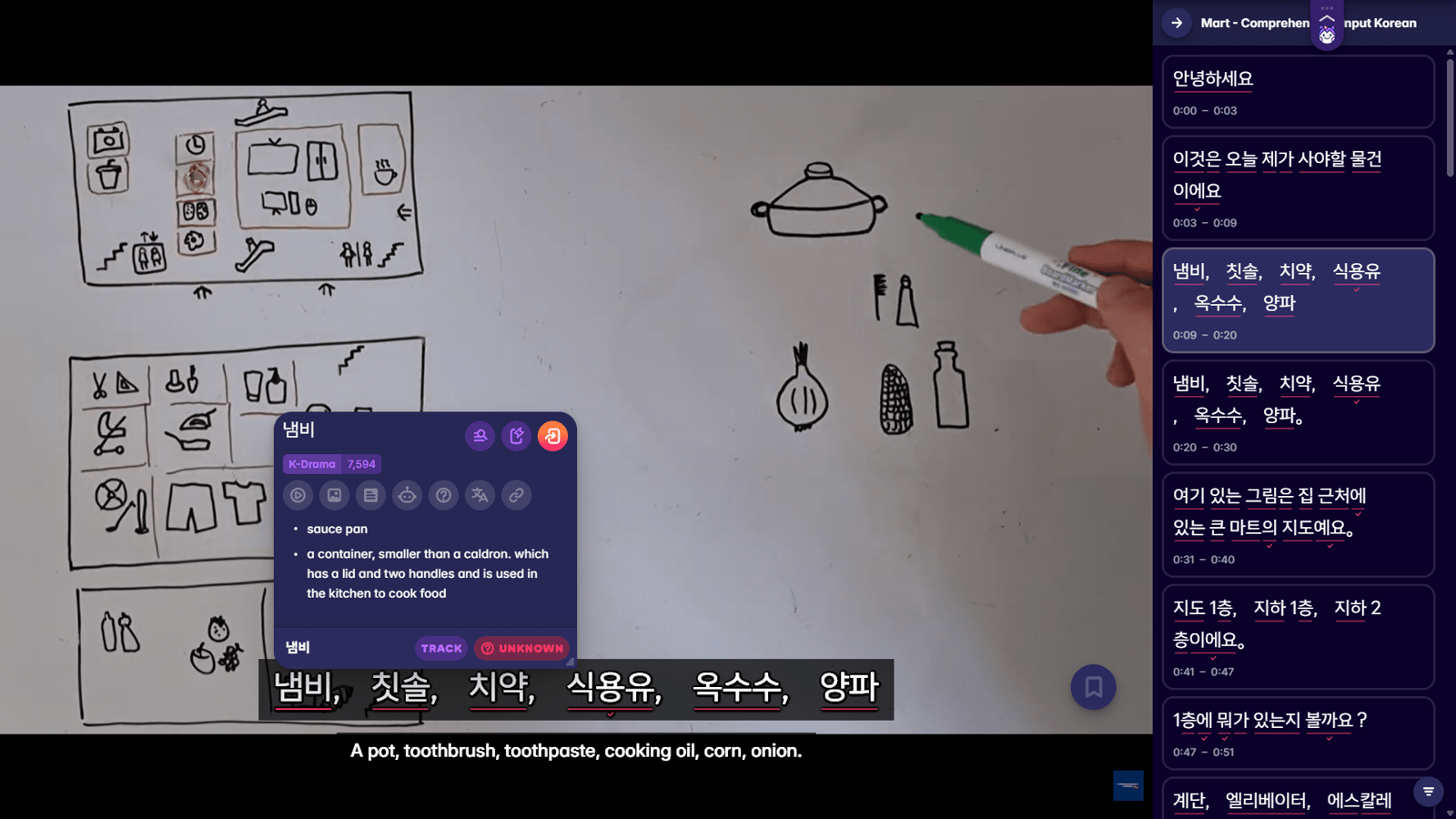
Anyway, once you can read Hangul, the next step is building vocabulary and getting massive input from real Korean content. Migaku's browser extension and app let you look up Korean words instantly while watching Korean shows or reading Korean websites. You can save words directly to flashcards and learn them with spaced repetition. There's a 10-day free trial if you want to check it out.
The best way to learn the Korean alphabet is to just start!
Grab a chart of the consonants and vowels. Spend 30 minutes writing them out. Then find some simple Korean words and practice reading them. Use Korean content you actually enjoy. If you like K-pop, read the Korean titles and lyrics. If you watch Korean dramas, try reading the opening credits in Hangul.
If you consume media in Korean, and you understand at least some of the messages and sentences within that media, you will make progress. Period.
Make it fun!