# Korean Professions Vocabulary: Start to Talk About Your Jobs
> From doctor to office worker, master the terms you'll use in conversations and K-dramas. Learn Korean professions vocabulary for jobs and careers.
**URL:** https://migaku.com/blog/korean/korean-professions-vocabulary
**Last Updated:** 2026-04-03
**Tags:** vocabulary, phrases
---
Learning how to talk about jobs and careers in Korean opens up a whole new dimension of conversation. Whether you're networking in Seoul, [watching K-dramas](https://migaku.com/blog/korean/best-korean-shows-for-learning) where characters discuss their work lives, or just trying to explain what you do for a living to your Korean friends, [learning Korean](https://migaku.com/learn-korean) profession vocabulary is super practical. This guide covers everything from common occupations to specialized careers, plus the grammar patterns you'll actually need to use these words in real conversations.
----
## Why Korean profession vocabulary matters for learners
Here's the thing: job-related vocabulary comes up constantly in everyday Korean conversations. When you meet someone new, one of the first questions you'll hear is **"무슨 일 하세요?" ** (What do you do?). Being able to answer and ask follow-up questions makes you sound way more natural.
Plus, if you're consuming Korean media, profession vocabulary is everywhere. Korean dramas love their workplace settings. You've got medical dramas with doctors and nurses, legal shows with lawyers and prosecutors, office comedies with 회사원 (office workers), and romantic comedies where someone's always a teacher or artist. Understanding these job titles helps you follow plot lines and character relationships better.
The vocabulary itself also gives you insight into Korean work culture. The language has specific words for company roles and hierarchies that don't always translate directly to English. Learning these terms teaches you about how Korean society views different professions.
----
## Basic Korean job vocabulary you'll use all the time
Let's start with the most common professions you'll encounter. These are the jobs that come up in casual conversation pretty much every week.
- The word for teacher is **선생님 ** (seonsaengnim). You'll hear this one constantly because Koreans use it as both a profession and a respectful way to address teachers. In schools, you've got 교사 (gyosa), which is the more formal term for a schoolteacher specifically.
- For doctor, the Korean word is **의사 ** (uisa). If you're intrigued by the medical field and have always wanted to know how to say "Doctor" in another language, there you go. Medical dramas use this word non-stop, so you'll pick it up fast from context.
- Office worker translates to **회사원 ** (hoesawon), and this is probably one of the most common professions you'll hear about. Korea has a huge office work culture, and many people identify as 회사원 even if they have more specific job titles.
- Student is **학생 ** (haksaeng). Technically, an occupation category rather than a profession, but you'll use this word constantly when talking about what someone does.
- Engineer in Korean is **엔지니어 ** (enjinieo) or **기술자 ** (gisulja). The first is a direct loan word from English, while the second is the pure Korean term meaning "technical person."
----
## Professional careers and specialized jobs
Moving beyond the basics, let's cover some professional careers that require specific education or training.
- In the medical field, you've got **간호사 ** (ganhosa) for nurse and **약사 ** (yaksa) for pharmacist. The medical profession vocabulary in Korean is pretty straightforward once you learn the patterns.
- Legal professions include **변호사 ** (byeonhosa) for lawyer and **판사 ** (pansa) for judge. Korean legal dramas have made these terms pretty recognizable to anyone who watches K-dramas regularly.
- For business and finance jobs, you'll want to know **회계사 ** (hoegyesa) for accountant, **은행원 ** (eunhaengwon) for bank employee, and **사업가 ** (saeopga) for businessperson or entrepreneur.
- Scientists and researchers are called **과학자 ** (gwahakja), with the 자 (ja) suffix meaning "person who does" something. This pattern shows up in lots of profession words.
----
## Creative and artistic professions in Korean vocabulary lists
Art-related jobs have their own vocabulary set that's super useful if you're into Korean entertainment or creative industries.
- The word for artist is **예술가 ** (yesulga) or **미술가 ** (misulga), depending on whether you mean artist in general or visual artist specifically.
- For actor, you use **배우 ** (baeu), which you'll hear constantly if you follow Korean entertainment news.
- Singer is **가수 ** (gasu), and musician is **음악가 ** (eumakga). The pattern here is similar to other professions: the activity plus 가 (ga) meaning "person who does that thing."
- Writer translates to **작가 ** (jakga), and this covers novelists, screenwriters, and other writing professions. If you want to be more specific, you can say **소설가 ** (soseolga) for novelist.
- Photographer is **사진작가 ** (sajinjjakga), literally "photograph artist." Pretty straightforward once you know 사진 (sajin) means photograph.
- Designer is **디자이너 ** (dijaineo), another English loan word that's been adopted into Korean. You'll see this in fashion, graphic design, and other creative fields.
----
## Service industry and everyday Korean jobs
Not everyone works in an office or creative field. Service jobs are a huge part of any economy, and Korean has specific vocabulary for these occupations.
- For restaurant workers, you've got **요리사 ** (yorisa) for chef or cook, and **웨이터 ** (weiteo) or **종업원 ** (jongeopwon) for waiter or server. The second term literally means "service employee" and is more commonly used in Korean.
- Sales clerk or shop employee is **점원 ** (jeomwon). You'll use this when talking about people who work in retail stores.
- Police officer is **경찰 ** (gyeongchal) or **경찰관 ** (gyeongchalgwan). The first is shorter and more casual, while the second is the full official title.
- Firefighter translates to **소방관 ** (sobangwan).
- Soldier is **군인 ** (gunin). Given Korea's mandatory military service, you'll definitely encounter 군인 in conversations.
- Driver is **운전사 ** (unjeonsa), whether that's a taxi driver, bus driver, or chauffeur.
----
## How to use Korean jobs vocabulary in sentences
Knowing the vocabulary is one step. Using it correctly in conversation is another. Korean has specific grammar patterns for talking about jobs and professions.
> 💡The most basic pattern uses **이에요/예요 (ieyo/yeyo)**, which means "is." If the profession word ends in a consonant, you use 이에요. If it ends in a vowel, you use 예요.
For example: "저는 선생님이에요" (jeoneun seonsaengnimieyo) means "I am a teacher." The word 선생님 ends in ㅁ (m), a consonant, so you use 이에요.
Another example: "제 친구는 의사예요" (je chinguneun uisayeyo) means "My friend is a doctor." Since 의사 ends in a vowel, you use 예요.
When asking someone about their job, you'd say **"무슨 일 하세요?" ** (museun il haseyo?) or **"직업이 뭐예요?" ** (jigeobi mwoyeyo?). The first literally asks "What work do you do?" and the second asks "What is your occupation?"
To say you work as something, you can use the verb **하다 (hada)** meaning "to do": "저는 간호사 일을 해요" (jeoneun ganhosa ireul haeyo) means "I work as a nurse."
----
## Common patterns and word formation in Korean job titles
Once you learn the patterns, Korean profession vocabulary becomes way easier to remember. Many job titles follow predictable formations.
**The suffix 가 (ga) or 자 (ja)** often indicates "person who does" something. You saw this with 예술가 (artist), 과학자 (scientist), and 음악가 (musician). When you encounter a new profession word with these endings, you can often guess the meaning.
**The suffix 사 (sa)** appears in many professional titles, especially licensed professions: 의사 (doctor), 변호사 (lawyer), 회계사 (accountant), 약사 (pharmacist). This suffix has roots in Chinese characters and carries a sense of expertise or certification.
**The suffix 원 (won)** means "member" or "employee" and shows up in workplace titles: 회사원 (office worker), 공무원 (government employee), 은행원 (bank employee). This tells you the person works at a particular type of organization.
Some Korean professions use pure Korean words instead of Chinese-based terms. 장사꾼 (jangsakkun) is an old-fashioned word for merchant or trader that uses native Korean vocabulary.
----
## How to learn the list of occupations in Korean
Memorizing random vocabulary lists honestly sucks. Here's what actually helps this stuff stick.
1. Learn professions in context by watching Korean dramas or variety shows. Medical dramas will teach you hospital vocabulary naturally. Office dramas give you business terms. Variety shows where celebrities talk about their careers expose you to entertainment industry language.
2. Create example sentences about people you know. Instead of just memorizing "의사 means doctor," make it personal: "제 삼촌은 의사예요" (My uncle is a doctor). Connecting vocabulary to real people in your life makes it way more memorable.
3. Group professions by category in your [flashcard decks](https://migaku.com/blog/korean/best-korean-anki-decks). Put all medical jobs together, all creative jobs together, all service jobs together. Your brain remembers information better when it's organized by theme.
4. Pay attention to the word-formation patterns I mentioned earlier. Once you recognize that 가 (ga) means "person who does something," you can decode new profession words even if you've never seen them before.
5. Use the vocabulary in actual conversations as soon as possible. Even if you're just practicing with a language partner online, talking about what you and your friends do for work reinforces the vocabulary way better than passive study.
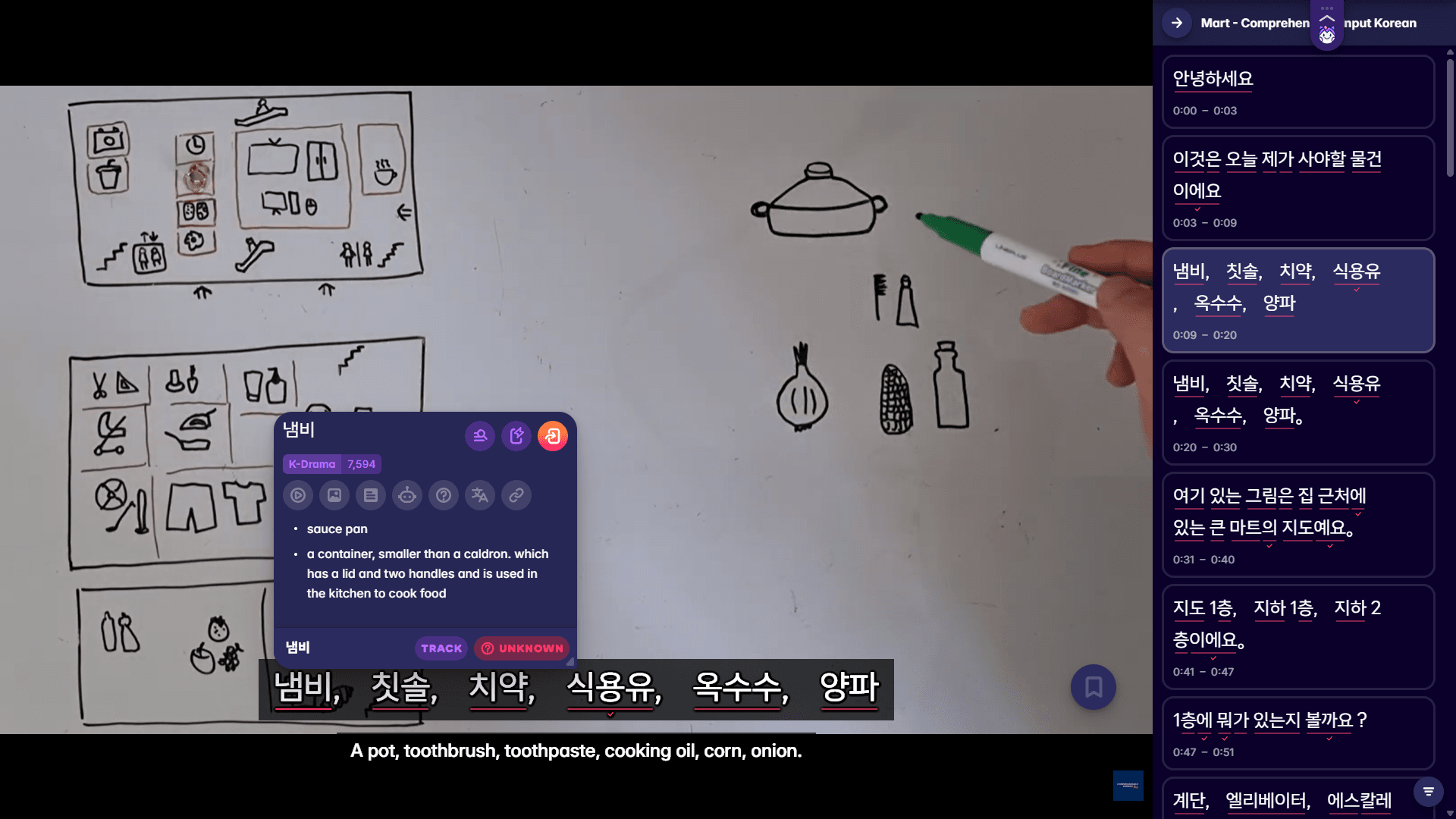
Anyway, if you want to actually use these strategies with real Korean content, Migaku's browser extension and app let you look up words instantly while watching shows or reading articles. Makes immersion learning way more practical. There's a 10-day free trial if you want to check it out.
 ----
## These useful phrases are the foundation for talking about jobs
Whether you go with 의사, 선생님, or 회사원 when describing what you do, you've got the vocabulary foundation to talk about professions in Korean. The best way to make this vocabulary stick? Definitely immersion. Watch a workplace K-drama and save all the job-related expressions to your flashcards as they come up naturally in dialogue.
> If you consume media in Korean, and you understand at least some of the messages and sentences within that media, you will make progress. *Period*.
When we talk about careers, we are telling stories about ourselves.💼💻
----
## These useful phrases are the foundation for talking about jobs
Whether you go with 의사, 선생님, or 회사원 when describing what you do, you've got the vocabulary foundation to talk about professions in Korean. The best way to make this vocabulary stick? Definitely immersion. Watch a workplace K-drama and save all the job-related expressions to your flashcards as they come up naturally in dialogue.
> If you consume media in Korean, and you understand at least some of the messages and sentences within that media, you will make progress. *Period*.
When we talk about careers, we are telling stories about ourselves.💼💻