How to Congratulate Someone in Portuguese (Parabéns + More)
Last updated: March 15, 2026

Learning Portuguese congratulations opens up a whole world of ways to celebrate with native speakers. Whether you're cheering on a friend who just landed a new job, celebrating someone's birthday, or congratulating a colleague on a promotion, knowing the right expressions makes all the difference. Portuguese has tons of ways to express congratulations, from the super common "parabéns" to slang expressions that'll make you sound like a local. Let's break down exactly how to congratulate someone in Portuguese, when to use each phrase, and how to pronounce them correctly.
The basic word for congratulations: Parabéns
Here's your go-to word: parabéns . This is the most common and versatile way to say congratulations in Portuguese, and you'll hear it constantly in both Brazil and Portugal. The word literally translates to "congratulations" and works in pretty much any situation where you want to celebrate someone's achievement or special occasion.
Parabéns covers everything from birthdays to graduations, promotions to weddings. You can shout it at a birthday party, write it in a card, or say it when someone tells you good news.
The pronunciation is "pah-rah-BAYNSH" with the stress on the last syllable. That final "s" sounds like "sh" in Brazilian Portuguese, which trips up a lot of learners at first.
The cool thing about parabéns is that it's already plural, so you don't need to worry about making it agree with anything. It's the same whether you're congratulating one person or a whole group.
How to use parabéns in different contexts
You can use parabéns by itself, but adding a little more to your sentence makes it way more natural. Here are some practical examples you'll actually use:
- Parabéns pelo novo emprego!
Congratulations on the new job! - Parabéns pela formatura!
Congratulations on your graduation! - Parabéns pelo bebê!
Congratulations on the baby!
Notice how the preposition changes? You use "pelo" (por + o) for masculine nouns and "pela" (por + a) for feminine nouns. This is one of those grammatical rules that matters if you want to sound natural. The word "emprego" is masculine, so you say "pelo emprego." The word "formatura" is feminine, so you say "pela formatura."
If you're congratulating someone on their birthday specifically, you'd say "Parabéns pelo seu aniversário" but honestly, most people just say "Parabéns" or the full "Feliz aniversário" (Happy birthday).
Formal ways to congratulate someone
When you need to be more formal, maybe at work or with someone you don't know well, you have some great options beyond just parabéns. These expressions work better in professional settings or written communication.
- Meus parabéns means "my congratulations" and adds a touch of formality. You might use this when congratulating a boss or in a professional email.
- Felicitações is another formal option that's closer to "felicitations" in English. It sounds pretty fancy and works well in formal letters or speeches. You'll see this more in European Portuguese than Brazilian Portuguese, but it's understood everywhere.
- Gostaria de lhe parabenizar means "I would like to congratulate you" and is super formal. This is what you'd write in a formal letter or say at a ceremony. It's definitely overkill for casual situations.
Informal and slang expressions
Brazilian Portuguese especially has tons of informal ways to congratulate someone that you won't find in textbooks. These are what native speakers use with friends and family.
- Muito bem literally means "very good" or "very well" and works as a quick congratulations for smaller achievements. If someone tells you they finished a task or did well on something, "Muito bem!" is perfect.
- Boa is super casual and just means "good" but functions like "nice!" or "awesome!" in English. Someone tells you they got concert tickets? Just say "Boa!" and you're good.
- Mandou bem is Brazilian slang that roughly translates to "you did well" or "you nailed it." This is what you say when someone really crushed something. Passed a hard exam? Mandou bem. Gave a great presentation? Mandou bem.
- Arrasou comes from the verb "arrasar" and means something like "you killed it" or "you crushed it." It's enthusiastic and fun, perfect for celebrating someone's success. You'll hear this constantly in Brazil.
- É isso aí means "that's it" or "there you go" and works as encouragement or congratulations. It's super versatile and very Brazilian.
Regional differences between Brazilian and European Portuguese
The language varies quite a bit between Brazil and Portugal, though the basic congratulations expressions work everywhere. Parabéns is universal and you'll hear it in both countries without any issues.
- Brazilian Portuguese tends to use more informal expressions and slang. Those expressions like "arrasou" and "mandou bem" are distinctly Brazilian. You'll hear them in Portugal thanks to Brazilian media, but they're not native to European Portuguese.
- European Portuguese speakers use "felicitações" more frequently than Brazilians do. They also tend to be slightly more formal overall in their congratulations, especially in written form.
Learning Portuguese through real context
Knowing these congratulations expressions is great, but you'll learn them way faster when you encounter them in actual Portuguese content. Watching Brazilian shows or Portuguese videos, you'll hear parabéns and these other expressions used naturally in context.
The thing about language learning is that isolated vocabulary only gets you so far. When you see someone say "Parabéns!" in a video and watch how people react, when they use it, and what tone they use, you understand the word on a completely different level.
Reading Portuguese social media posts, especially around birthdays or achievements, gives you tons of examples of how people actually write congratulations messages. You'll see all the variations and creative ways people express congratulations that go beyond the basic textbook phrases.
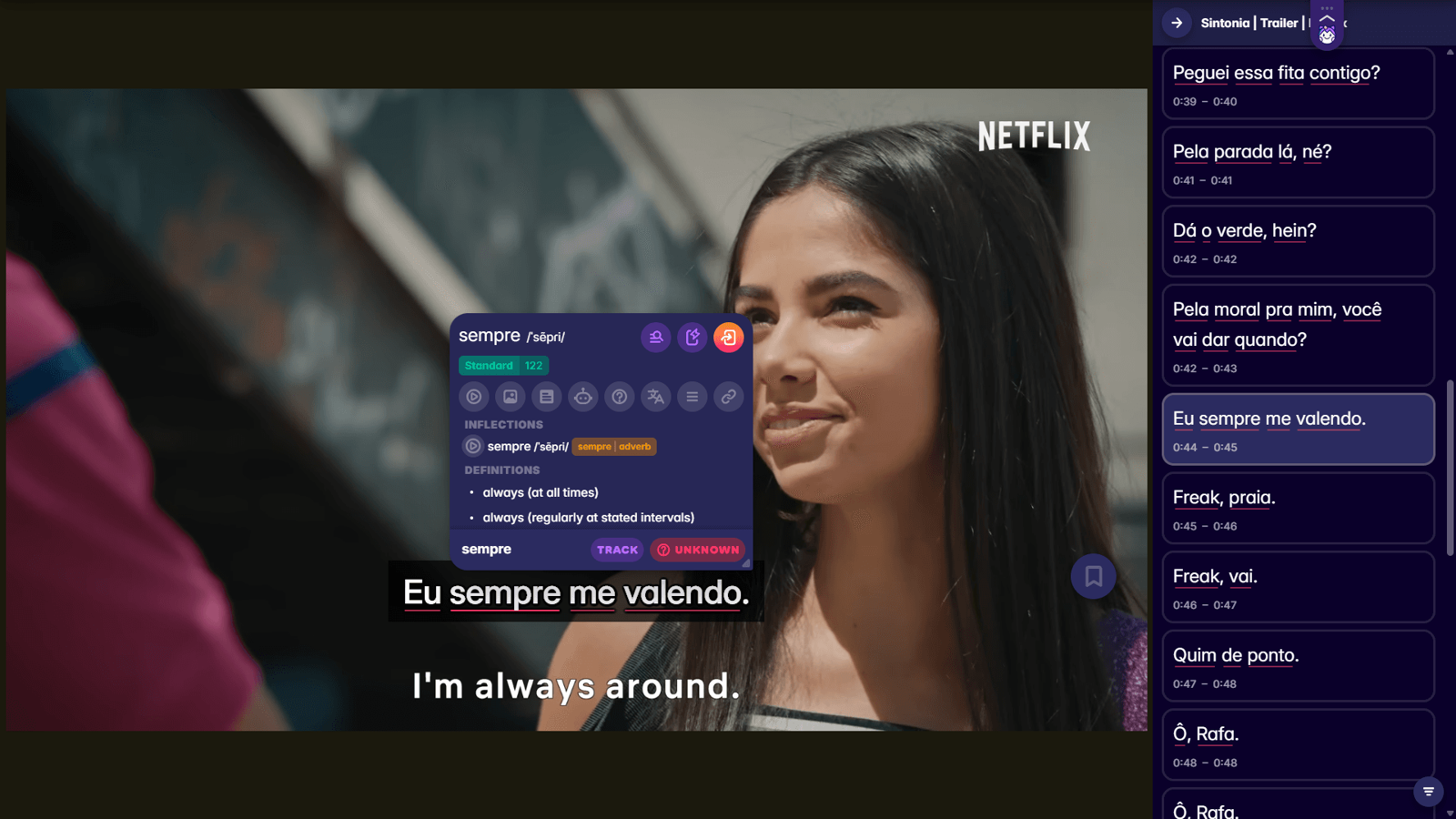
If you're serious about learning Portuguese, immersing yourself in real content while having tools to look up words you don't know makes the whole process way smoother. Migaku's browser extension and app let you click on any word in Portuguese videos or articles to get instant definitions, so you can learn from native content without constantly switching to a dictionary. Makes it pretty easy to pick up these expressions naturally. There's a 10-day free trial if you want to see how it works.
FAQs on congratulations in Portuguese
Learn simple expressions in Portuguese language from YouTube
YouTube is actually a great source to learn simple and daily expressions like congratulations. Some expressions even feature songs for children that can help you learn even faster. You don't need fancy and prolonged explanations of grammar for expressions like these, just whatever can make the words stick in your memory.
If you consume media in Portuguese, and you understand at least some of the messages and sentences within that media, you will make progress. Period.
Different knowledge requires different techniques to learn!