The 12 Months of the Year in English: Vocabulary, Pronunciation & How to Actually Remember Them
Last updated: December 14, 2025
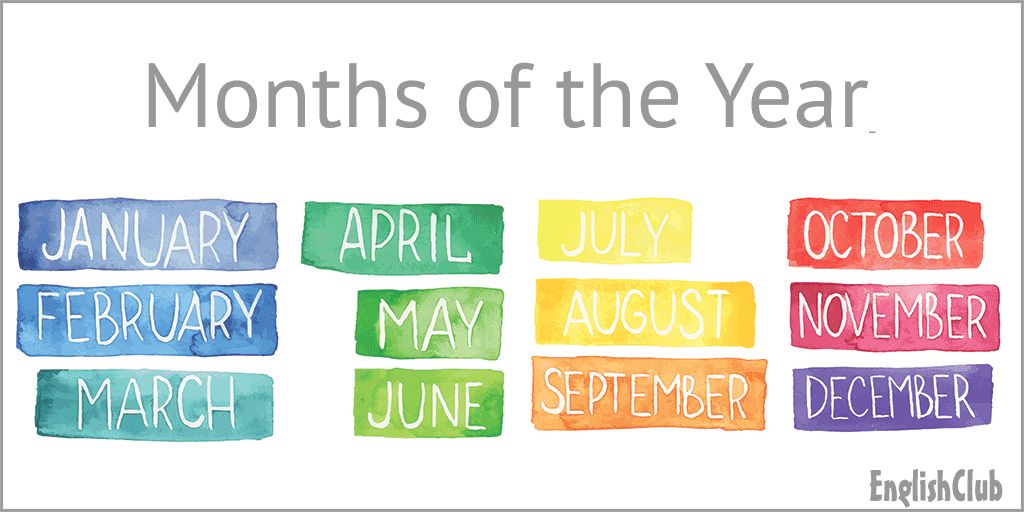
Look, if you're learning English, you're going to need to know the months. They come up constantly—scheduling appointments, talking about birthdays, making plans, understanding literally any date written anywhere. And yet, a surprising number of English learners stumble over them.
Not because they're hard, exactly. But because some of them have bizarre spellings, others have pronunciation traps, and honestly? Native English speakers say them so fast in everyday conversations that they blend into mush.
Let's fix that.
- The 12 months of the year in English (with the stuff you actually need)
- Where the month names actually came from
- Pronunciation guide: the months that trip people up
- Common spelling mistakes (and how to avoid them)
- How to write and say dates in English
- Grammar rules: prepositions and capitalization
- How to remember the months (what actually works)
The 12 months of the year in English (with the stuff you actually need)
Here's your complete English calendar vocabulary, including abbreviations and the number of days in each month:
Month | Abbreviation | Days |
|---|---|---|
January | Jan. | 31 |
February | Feb. | 28 (or 29) |
March | Mar. | 31 |
April | Apr. | 30 |
May | May | 31 |
June | Jun. | 30 |
July | Jul. | 31 |
August | Aug. | 31 |
September | Sep. or Sept. | 30 |
October | Oct. | 31 |
November | Nov. | 30 |
December | Dec. | 31 |
Quick note on February: most months have 30 or 31 days, but February is the weird one with only 28 days. Every four years during a leap year, the month of February gets an extra day—29 days total. This happens when the year is evenly divided by four (2024, 2028, 2032...).
~
Where the month names actually came from
Here's something that might help you memorize the months: they're not random. Most English month names come from Latin, and once you know the backstory, they make more sense.
Named after Roman gods and goddesses:
- January — Named after Janus, the Roman god of doorways and transitions. He had two faces (one looking backward, one forward), which is perfect for a month that sits between the old year and the new.
- March — Named after Mars, the Roman god of war. The Roman calendar originally started with March, because that's when military campaigns resumed after winter.
- May — Named after Maia, a Roman goddess associated with growth and the earth.
- June — Named after Juno, the Roman goddess of marriage (which is why June weddings are supposedly lucky).
Named after Roman emperors:
- July — Originally called Quintilis (fifth month), it was renamed after Julius Caesar in 44 BC because that's when his birthday fell.
- August — Originally Sextilis (sixth month), renamed after Emperor Augustus Caesar. July and August both have 31 days because neither emperor wanted a shorter month than the other. Seriously.
Named after Latin numbers:
This is where it gets confusing. September, October, November, and December are named after the numbers seven (septem), eight (octo), nine (novem), and ten (decem). But they're the ninth, tenth, eleventh, and twelfth months now.
Why? Because January and February were added later. The Roman calendar originally started in March, so September was the seventh month, October was the eighth, and so on. When January and February were added to the beginning of the year, nobody bothered to rename the others. Classic.
The remaining months:
- February — Named after Februa, a Roman festival of purification held during this time. It was essentially a spiritual cleanse before spring.
- April — The etymology is debated. It might come from the Latin word "aperire" (to open), referring to flowers opening in spring. Or it might be related to Aphrodite, the Greek goddess of love.
~
Pronunciation guide: the months that trip people up
Be honest—how confident are you saying "February" out loud?
Here's the thing about English pronunciation: it often has nothing to do with spelling. The months are a perfect example.
February — This is probably the trickiest one. It's written "Feb-ru-ary" but most native English speakers say "Feb-yoo-ary" or even "Feb-oo-ary." That first R is basically invisible. Don't overthink it.
January — The middle gets mushy. It sounds like "Jan-yoo-ary" in natural speech, not "Jan-oo-ary" with clear separation.
July — Stress the second syllable: ju-LY, not JU-ly.
April — Keep it crisp: "AY-pril." Some learners add an extra syllable and say "AY-per-il," but it's just two syllables.
September through December — All four stress the middle syllable, not the first. sep-TEM-ber, oc-TO-ber, no-VEM-ber, de-CEM-ber.
Wednesday (bonus) — I know this isn't a month, but since we're talking about calendar vocabulary: the D is silent. It's "WENZ-day."
~
Common spelling mistakes (and how to avoid them)
English spelling is famously terrible, and month names are no exception.
February — The most commonly misspelled month. People write "Febuary" (missing the first R) all the time. Here's a trick: think "Feb-RU-ary" and picture the word RU highlighted in the middle.
Wednesday — Again, not a month, but if you're learning days of the week alongside months, this is the one that kills people. The spelling looks nothing like the pronunciation.
August — Sometimes spelled "Agust" without the U. Remember: there's a "gust" (like a gust of wind) in August.
September, October, November, December — These are actually pretty reliable. The "-ember" ending is consistent, and "Septem-," "Octo-," "Novem-," and "Decem-" follow predictable patterns.
~
How to write and say dates in English
Here's where British English and American English speakers will fight you.
American format: Month/Day/Year
- July 4th, 2024 or 7/4/2024
- "July fourth, twenty twenty-four"
British English format: Day/Month/Year
- 4th July 2024 or 4/7/2024
- "The fourth of July, twenty twenty-four"
The same numbers mean different things depending on where you are. In the United States, 7/4/2024 is July 4th. In the United Kingdom (and most of the world), it would be the 4th of April. This causes way more confusion than it should.
For international communication, the ISO format (2024-07-04) avoids all ambiguity. But in everyday conversations, you'll need to know what English-speaking countries expect.
~
Grammar rules: prepositions and capitalization
Two things trip up English learners constantly when using months:
Capitalization: Month names ALWAYS start with a capital letter. Always. "I was born in january" is wrong. "I was born in January" is correct. No exceptions.
This is different from seasons, by the way. Seasons (winter, spring, summer, autumn/fall) don't get capitalized unless they're at the start of a sentence.
Prepositions: Use "in" with months.
- ✅ "My birthday is in October."
- ❌ "My birthday is on October."
- ❌ "My birthday is at October."
Use "on" with specific dates:
- ✅ "My birthday is on October 15th."
This is one of those patterns that becomes automatic once you see enough examples, but it takes deliberate practice to get there.
~
How to remember the months (what actually works)
Let's talk about how to master the months—not just recognize them, but actually use them fluently.
Songs help for the basics. There's a reason every English-speaking kid learns month songs. They establish the sequence. If you're just starting out, find one and listen to it a few times. It's not embarrassing; it's efficient.
Connect months to seasons and personal events. The months become easier to recall when you link them to something meaningful:
- January/February = Winter in the northern hemisphere, cold, New Year
- March/April/May = Spring, flowers, warming up
- June/July and August = Summer, vacation, heat
- September/October/November = Autumn (or fall, in North America), leaves changing, cooling down
- December = Winter again, holidays
What holidays do YOU celebrate? What's happening in your life in each month? Personal connections beat rote memorization every time.
Spaced repetition is your friend. Research consistently shows that reviewing vocabulary at increasing intervals—rather than cramming—leads to permanent memory. Review the months today, then tomorrow, then in three days, then a week, then a month. Each successful recall strengthens the memory.
Use them in context. You don't learn vocabulary by staring at lists. You learn it by encountering words in real situations. Read English content, watch shows, listen to podcasts. When you hear "I was born in February" or "We're meeting in October," your brain makes real connections instead of just storing abstract information.
~
Actually using months in everyday conversations
Here are the phrases English speakers actually say:
"What month is it?" — Asking about the current month
"When's your birthday?" / "It's in month." — Birthday questions
"I have an appointment in February." — Scheduling
"See you next October." — Future planning
"Last November was crazy." — Talking about the past
"The deadline is mid-July." — Work/school contexts
If you're working on spoken English, pay attention to how fast native speakers say these. "What month is it?" often sounds like "Wuh-munthizzit?" in casual speech. This is where immersion helps—you start recognizing the contracted, relaxed versions instead of just the textbook pronunciation.
~
If you want to get comfortable with English months—and honestly, any vocabulary—there's no substitute for hearing them in real content. That's what Migaku is built for. You can watch English shows, YouTube videos, or whatever you're into, and the browser extension lets you look up words instantly. When a character mentions a date or talks about "last February," you can click, see the meaning, and add it to your flashcards without pausing.
The flashcards use spaced repetition automatically, so the months you struggle with show up more often, and the ones you've nailed fade into the background. It's vocabulary learning that actually adapts to what you need.
If you're learning English from content you'd watch anyway, Migaku makes it useful. Try it free for 10 days and see how much faster this stuff sticks.