# French Linking Words: Link Sentences Like a Native Speaker
> Learn the essential French connectors and linking words that transform choppy sentences into smooth, natural French. Practical examples and tips included.
**URL:** https://migaku.com/blog/language-fun/french-connectors-linking-words
**Last Updated:** 2026-04-05
**Tags:** fundamentals, vocabulary, grammar
---
You know that feeling when you're [learning French](https://migaku.com/learn-french) and your sentences sound like a robot made them? "I woke up. I ate breakfast. I went to work." Yeah, that's because you're missing the magic ingredient: French connectors. These little linking words turn choppy sentences into smooth, natural French that actually sounds like how people speak. They're the glue that holds your ideas together and makes you sound way less like a textbook and way more like a real person having a conversation.
----
## What are French connectors
> 💡 Definition 💡
French connectors (also called linking words or transitional phrases) are words or phrases that **connect ideas, sentences, and paragraphs together**. Think of them as the bridges between your thoughts.
In English, we use words like "however," "therefore," "then," and "because" all the time without even thinking about it. French works the same way.
The thing is, French has a ton of these connectors, and they serve different purposes. Some show cause and effect, others show contrast, some indicate time sequence, and others add information. When you [learn French](https://migaku.com/blog/language-fun/best-french-learning-apps), mastering these connectors is what takes you from sounding like a beginner to sounding like someone who actually knows what they're doing.
Here's a basic example: "J'aime le café" (I like coffee) versus "J'aime le café parce que ça me réveille" (I like coffee because it wakes me up). That little word "parce que" (because) just made your sentence way more interesting and gave it actual meaning.
----
## How French connectors work in real sentences
French connectors work by creating logical relationships between ideas. They tell your listener or reader how different pieces of information relate to each other. This is super useful when you want to speak or write in a way that actually makes sense.
Let's break down the main categories:
1. **Time connectors** show when things happen in relation to each other. Words like "puis" (then), "ensuite" (next), "après" (after), and "avant" (before) help you tell a story or explain a sequence of events. For example: "Je me suis réveillé, puis j'ai pris mon café" (I woke up, then I had my coffee).
2. **Cause and effect connectors** explain why something happens. "Parce que" (because), "donc" (therefore/so), "car" (for/because), and "alors" (so/then) are your go-to words here. Like: "Il pleut, donc je reste à la maison" (It's raining, so I'm staying home).
3. **Contrast connectors** show opposition or difference. "Mais" (but), "cependant" (however), "pourtant" (yet/however), and "par contre" (on the other hand) help you present different sides of an idea. Example: "J'adore Paris, mais c'est trop cher" (I love Paris, but it's too expensive).
4. **Addition connectors** let you pile on more information. "Et" (and), "aussi" (also), "de plus" (moreover), and "en outre" (furthermore) help you build up your argument or description.
----
## Useful French linking words
Let me give you a practical list of connectors organized by function. These are the ones you'll hear French speakers use constantly.
### For showing time and sequence
- **"D'abord" ** means "first" or "at first" and starts off your explanation.
- **"Ensuite" ** or **"puis" ** both mean "then" or "next" and keep things moving forward.
- **"Après" ** means "after" or "afterwards."
- **"Enfin" ** means "finally" or "at last" and wraps things up.
- **"Pendant" ** means "during" or "while."
A real example:
- D'abord, j'ai étudié le vocabulaire. Ensuite, j'ai pratiqué la grammaire. Enfin, j'ai regardé un film français.
*First, I studied vocabulary. Then, I practiced grammar. Finally, I watched a French film.*
### For cause and effect
- **"Parce que" ** is your basic "because."
- **"Car" ** is a more formal "because" or "for."
- **"Donc" ** means "therefore" or "so."
- **"Alors" ** can mean "so" or "then."
- **"C'est pourquoi" ** means "that's why."
- **"Puisque" ** means "since" in the sense of "given that."
Example:
- Je veux améliorer mon français, c'est pourquoi j'étudie tous les jours.
*I want to improve my French, that's why I study every day.*
### For contrast and opposition
- **"Mais" ** is your standard "but."
- **"Cependant" ** and **"pourtant" ** both mean "however" or "yet."
- **"Par contre" ** means "on the other hand."
- **"Tandis que" ** means "while" or "whereas."
- **"Malgré" ** means "despite."
Example:
- J'aime apprendre les langues. Par contre, la grammaire m'ennuie parfois.
*I love learning languages. On the other hand, grammar bores me sometimes.*
### For adding information
- **"Et" ** is just "and."
- **"Aussi" ** means "also" or "too."
- **"De plus" ** and **"en plus" ** both mean "moreover" or "in addition."
- **"D'ailleurs" ** means "besides" or "moreover."
Example:
- Le français est utile pour voyager. De plus, c'est une belle langue.
*French is useful for traveling. Moreover, it's a beautiful language.*
----
## Should French connectors be hyphenated
This is a grammar question that trips people up. The short answer is: some are, some aren't, and you just have to learn which is which.
- Most single-word connectors don't have hyphens: "donc," "mais," "car," "puis," "alors." These are straightforward.
- Multi-word connectors usually don't get hyphenated either: "parce que," "c'est pourquoi," "par contre," "de plus." They're written as separate words.
The ones that do get hyphens are usually compound adverbs or fixed expressions. For example, "c'est-à-dire" (that is to say) has hyphens. But honestly, these are less common, and most of the connectors you'll use daily don't involve hyphens at all.
----
## Common mistakes to avoid with connectors in French
1. One big mistake learners make is overusing connectors. You don't need to every single sentence with a linking word. Sometimes just letting sentences stand on their own works fine. Use connectors when they actually clarify relationships between ideas.
2. Another mistake is using formal connectors in casual conversation. Words like "néanmoins" (nevertheless) or "toutefois" (however) sound super formal and weird in everyday chat. Save those for essays and professional writing. Stick with "mais" and "pourtant" when you're just talking with friends.
3. People also mess up the placement. Some connectors go at the beginning of a sentence, others in the middle. "Donc" usually comes after the subject: "Je donc vais..." is wrong. It should be "Je vais donc..." or "Donc, je vais..."
----
## How to learn and remember these connectors for everyday conversations
Reading a list of connectors is one thing. Actually using them when you speak is totally different. Here's what works:
1. [Listen to native French content](https://migaku.com/blog/language-fun/best-french-podcasts) and pay attention to how speakers use connectors. Podcasts, YouTube videos, TV shows, whatever. Your brain will start picking up the patterns naturally.
2. When you're watching or reading French content, highlight or note down the connectors you see. Notice which ones pop up constantly and which are rare. This gives you a sense of what's actually useful versus what's just textbook stuff.
3. Practice by writing short paragraphs about your day using different connectors. Force yourself to use at least five linking words per paragraph. It feels awkward at first, but it trains your brain to reach for these words automatically.
4. Create example sentences for each connector and save them in your [flashcard system](https://migaku.com/blog/language-fun/anki-settings-for-language-learning). Don't just memorize "donc = therefore." Memorize a full sentence like "Il pleut, donc je reste chez moi." The context makes it stick way better.
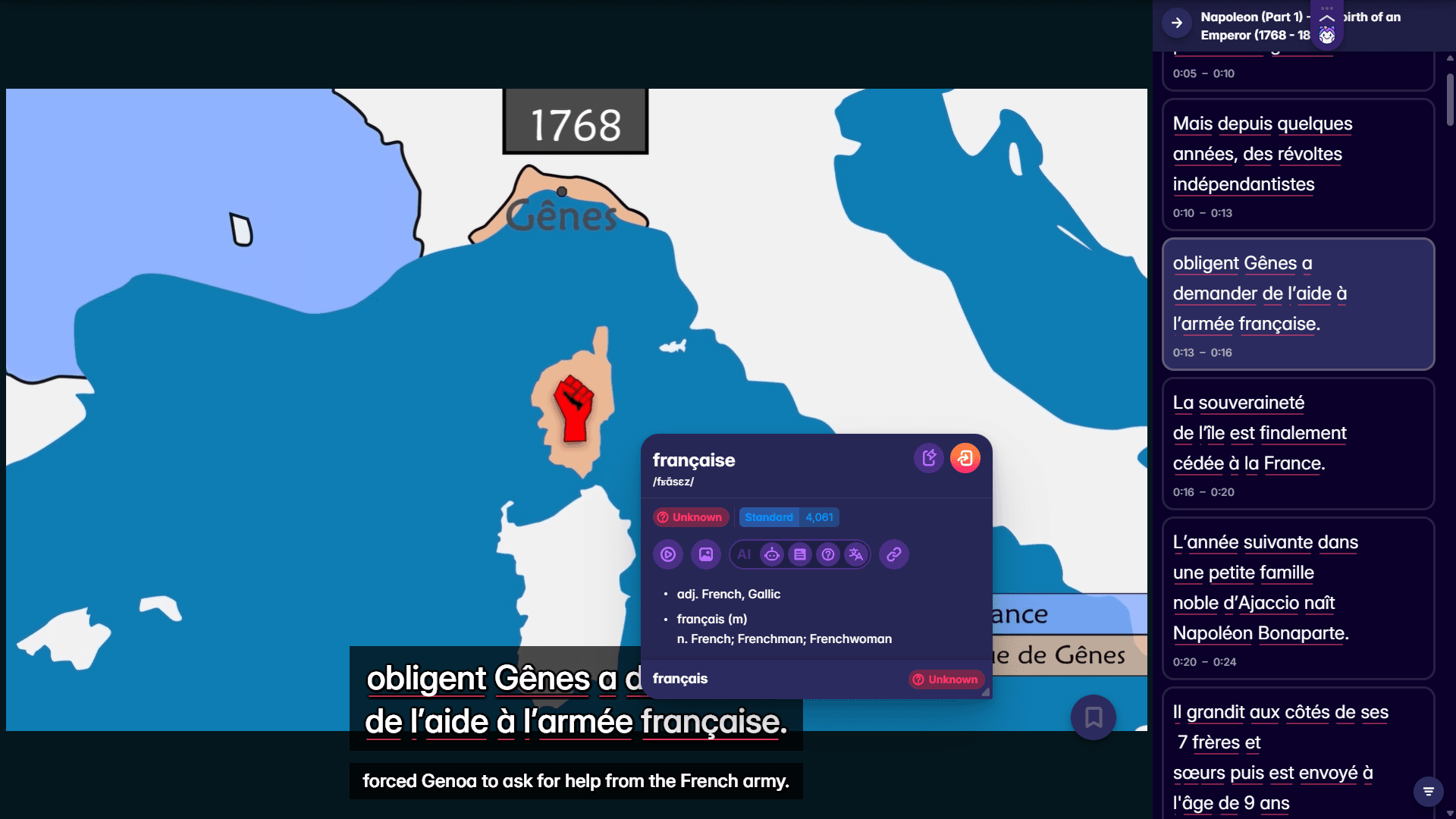
If you're serious about learning French through real content, Migaku's browser extension and app let you look up words and save sentences instantly while you're watching French shows or reading French articles. Makes the whole immersion thing way more practical. There's a 10-day free trial if you want to check it out.
 ----
## The shortcut to improve your French fluency!
French connectors transform choppy, basic sentences into smooth, natural French that actually sounds like how people speak. Start small, and consume media to observe how native speakers use the high-frequency French linking words. Then put them into your writing practice. They'll feel weird at first, but pretty soon they'll become second nature.
> If you consume media in French, and you understand at least some of the messages and sentences within that media, you will make progress. *Period*.
Make thoughts flow beautifully.
----
## The shortcut to improve your French fluency!
French connectors transform choppy, basic sentences into smooth, natural French that actually sounds like how people speak. Start small, and consume media to observe how native speakers use the high-frequency French linking words. Then put them into your writing practice. They'll feel weird at first, but pretty soon they'll become second nature.
> If you consume media in French, and you understand at least some of the messages and sentences within that media, you will make progress. *Period*.
Make thoughts flow beautifully.