# How Long Does It Take to Learn French Fluently? Timeline Explained.
> Here are the realistic timelines for learning French by CEFR level. From 60 hours to A1 up to 750+ for B2, plus factors that speed up your progress.
**URL:** https://migaku.com/blog/language-fun/how-long-to-learn-french
**Last Updated:** 2026-02-03
**Tags:** discussion, deepdive
---
So you want to know how long it takes to [learn French](https://migaku.com/learn-french)? Fair question. The internet loves throwing around numbers like 600 hours or 3 months, but here's the thing: those estimates only make sense when you understand what level you're actually aiming for. Getting to basic conversation is totally different from reading French novels or debating politics with Parisians. Let me break down the realistic timeline for each level, what those hours actually mean, and how you can speed things up without falling for overhyped promises.⏩
---
## Understanding the CEFR levels for learning French
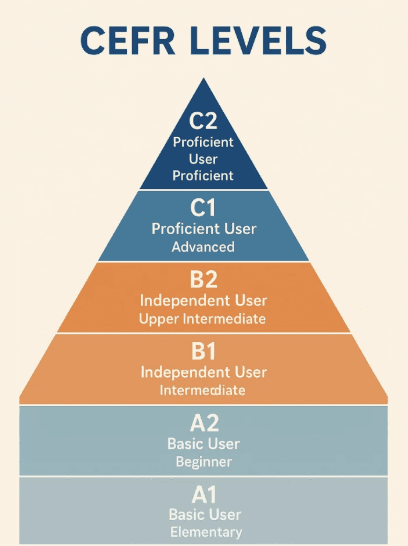
Before we talk timelines, you need to know what these levels actually mean. The Common European Framework of Reference for Languages (CEFR) breaks language proficiency into six levels: A1, A2, B1, B2, C1, and C2. Think of A1 as "I can order coffee" and C2 as "I can write literary criticism."
Here's what each level looks like in practice:
1. A1 means you can introduce yourself, ask basic questions, and handle simple interactions if people speak slowly. You'd struggle through ordering at a restaurant but could probably get your point across.
2. A2 gets you to simple conversations about familiar topics. You can talk about your job, your family, go shopping, and describe your day. Still pretty limited, but functional for basic [travel](https://migaku.com/blog/language-fun/french-travel-phrases).
3. B1 is where things get interesting. You can handle most situations while traveling in French-speaking countries, express opinions, and follow the main points of clear conversations. You'd understand a French TV show aimed at kids, maybe.
4. B2 is what most people mean when they say "fluent." You can interact with native French speakers without strain, understand complex texts, and express yourself clearly on a wide range of topics. You could watch French movies without subtitles and get most of it.
5. C1 and C2 are advanced levels where you're basically operating like an educated native speaker. We're talking reading philosophy, understanding regional accents, and catching cultural references.
### What level is considered fluent in French
People throw around "fluent" without defining it. Generally, **B2** is considered the fluency threshold. At B2, you can interact with native French speakers without strain on either side, understand most TV shows and movies, and express yourself clearly on most topics.
But fluency exists on a spectrum. B2 fluency means you're comfortable and functional. C1 means you're sophisticated and nuanced. C2 means you're basically indistinguishable from an educated native speaker.
Most learners aiming for fluency in French should target B2 as their initial goal. It's the level where French becomes genuinely useful and enjoyable rather than a struggle.
 ---
## How many hours does it take to learn French language
[The FSI (Foreign Service Institute)](https://2009-2017.state.gov/m/fsi/sls/orgoverview/languages) classifies French as a **Category I** language for English speakers. That means it's one of the easiest languages to learn if your native language is English. Their estimate? Around **600-750 hours** of active study to reach professional working proficiency.
But let's get more specific with each level:
1. A1: 60-100 hours
2. A2: 180-200 hours total (about 80-100 additional hours from A1)
3. B1: 350-400 hours total (another 150-200 hours)
4. B2: 600-750 hours total (250-350 more hours)
5. C1: 900-1,000 hours total
6. C2: 1,200+ hours total
These numbers assume structured, effective study. Not passive listening while scrolling your phone, but actual focused practice with the French language.
---
## Breaking down the daily timeline of learning the French language
Okay, so how does this translate to actual calendar time? Depends entirely on how much you study each day.
- If you study **30 minutes** daily, reaching B2 level takes about 3-4 years. Yeah, that's a long time. But it's sustainable for most people with jobs and lives.
- **One hour** daily gets you to B2 in roughly 2 years. This is probably the sweet spot for serious learners who aren't in a rush.
- **Two hours** daily means you could hit B2 in about a year. This requires real commitment but is totally doable if learning French is a priority.
- **Four hours** daily (Full immersion mode) could get you to B2 in 6 months. This is what you'd do if you moved to France or took a gap year to focus on studying French.
---
## Month by month progress expectations to master French
Let me give you a realistic roadmap assuming **one hour of daily study**.
1. Months 1-2 (A1): You're learning pronunciation, basic [grammar](https://migaku.com/blog/language-fun/french-grammar-guide), and essential vocabulary. You can introduce yourself, order food, ask for directions. It feels slow but you're building the foundation.
2. Months 3-6 (A2): Conversations about familiar topics become possible. You're watching French content with subtitles and catching words. Grammar is starting to click. You feel like you're actually learning a language now.
3. Months 7-12 (B1): This is where it gets fun. You can express opinions, tell stories about your day, and follow conversations between native speakers (if they're not talking too fast). You're watching French shows and understanding the plot without subtitles.
4. Months 13-24 (B2): You're solidly conversational. Most interactions with French speakers feel natural. You can read French news articles, watch French movies, and participate in discussions about complex topics. You'd call yourself fluent at this point.
5. Beyond 24 months: You're refining, expanding vocabulary, and moving toward true proficiency where French feels almost as comfortable as your native language.
---
## Factors that affect you to learn French quickly
Here's where it gets personal. Those hour estimates assume average conditions, but your mileage will vary based on several factors.
1. Your native language matters a lot. English speakers have a huge advantage learning French because about 30% of English vocabulary comes from French. Words like "restaurant," "police," and "attention" are basically the same. If you speak [Spanish](https://migaku.com/learn-spanish), [Italian](https://migaku.com/learn-italian), or [Portuguese](https://migaku.com/learn-portuguese), you've got even more overlap with vocabulary and grammar structures.
2. Previous language learning experience speeds things up. If French is your third or fourth language, you already know how to learn a new language efficiently and your brain is better at pattern recognition.
3. Study methods make a massive difference. One hour of active practice (Speaking with a tutor, participating in French lessons, doing exercises, watching French content with focused attention) beats three hours of passive review any day.
4. Immersion is the big one. Living in France or another French-speaking country can cut your timeline in half because you can get input and speak French all day long. Even partial immersion, like changing your phone to French and watching French shows, helps improve language skills.
Age isn't the barrier people think it is. Is 30 too late to learn French? Absolutely not. Adults actually have advantages in understanding grammar rules and staying disciplined. Kids pick up pronunciation easier, but adults can learn faster overall if they're motivated.
---
## Common mistakes that waste time in French language learning
People studying French make the same errors that add months to their timeline.
1. Spending too long on grammar before practicing. You need both simultaneously. Learn a grammar concept, then use it immediately in conversation or writing.
2. Avoiding speaking because you're not ready. You'll never feel ready. Start speaking at A1, even if it's just describing your room to yourself.
3. Only using one method. Textbooks alone won't work. Neither will apps alone. You need variety: reading, listening, speaking, writing.
4. Translating everything in your head. This becomes a crutch. Train yourself to think in French, even if it's simple thoughts at first.
5. Not tracking your progress. When you can't see improvement, motivation dies. Keep a journal or record yourself speaking monthly to see how far you've come.
---
## How to learn French faster without burning out
Want to speed things up? Here are strategies that actually work.
1. Use spaced repetition apps for vocabulary. [Anki](https://migaku.com/blog/japanese/anki-language-learning-guide) and similar tools ensure you review words right before you'd forget them. Way more efficient than random review.
2. Get a tutor or language partner early. Speaking from day one feels awkward but accelerates progress dramatically. You can find affordable tutors online or language exchange partners for free.
3. Immerse yourself in content you actually enjoy. Forcing yourself to watch boring French news won't work long-term. Find French YouTube channels, podcasts, or shows that match your interests. If you like cooking, watch French cooking channels. Into gaming? Find French gamers.
4. Change your environment to French. Phone settings, social media, everything. Those tiny exposures add up to hundreds of extra practice moments per week.
5. Focus on input before output at first. You need to hear and read tons of French before you can produce it naturally. Don't stress about speaking perfectly in month one.
6. Study consistently rather than in massive chunks. Thirty minutes daily beats a 3-hour weekend session. Your brain needs regular exposure to build those neural pathways.
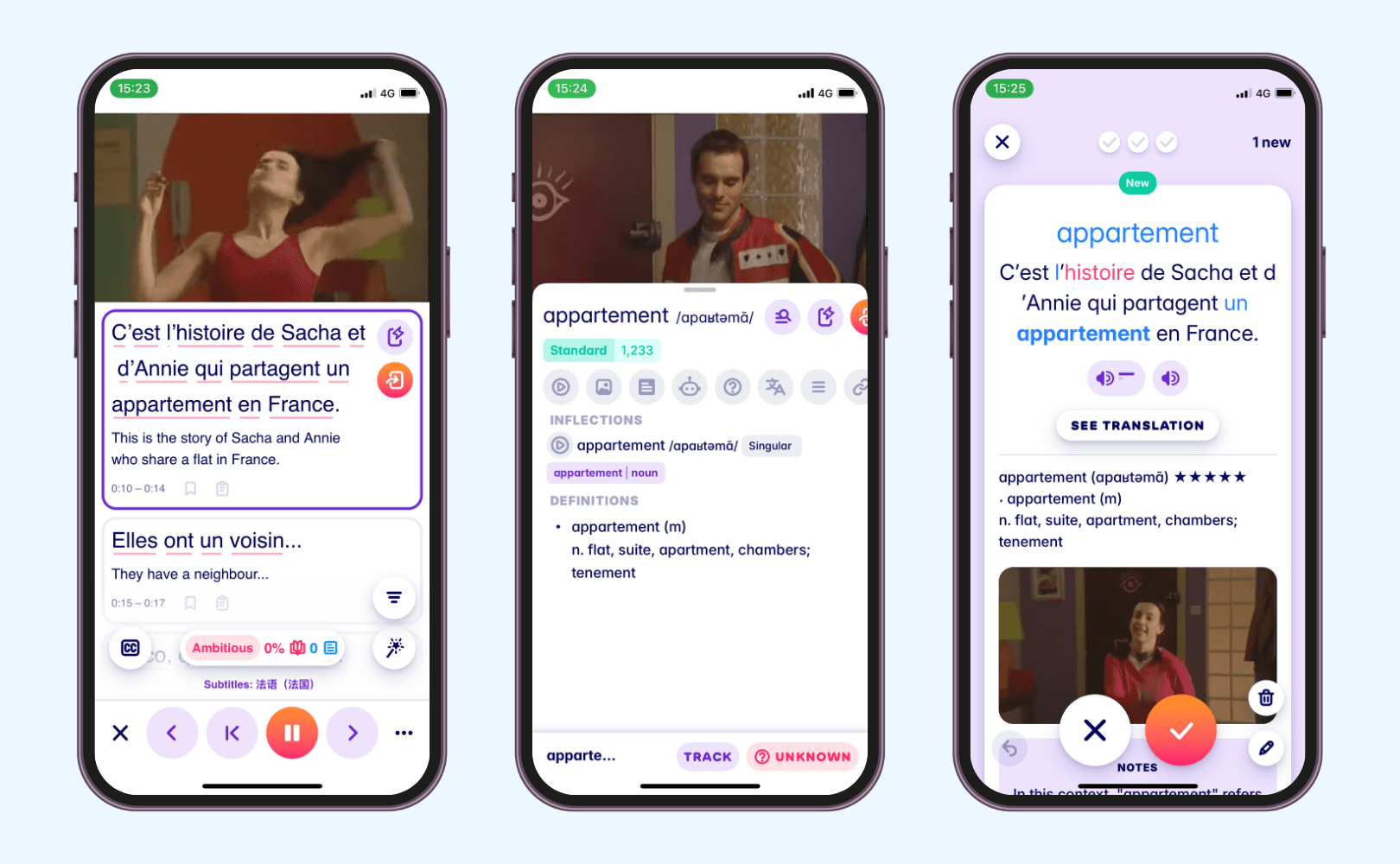
Anyway, if you want to speed up your French learning with real content, Migaku's browser extension and app let you look up words instantly while watching shows or reading articles. Makes immersion way more practical, especially once you hit that B1-B2 range. There's a 10-day free trial if you want to check it out.
---
## How many hours does it take to learn French language
[The FSI (Foreign Service Institute)](https://2009-2017.state.gov/m/fsi/sls/orgoverview/languages) classifies French as a **Category I** language for English speakers. That means it's one of the easiest languages to learn if your native language is English. Their estimate? Around **600-750 hours** of active study to reach professional working proficiency.
But let's get more specific with each level:
1. A1: 60-100 hours
2. A2: 180-200 hours total (about 80-100 additional hours from A1)
3. B1: 350-400 hours total (another 150-200 hours)
4. B2: 600-750 hours total (250-350 more hours)
5. C1: 900-1,000 hours total
6. C2: 1,200+ hours total
These numbers assume structured, effective study. Not passive listening while scrolling your phone, but actual focused practice with the French language.
---
## Breaking down the daily timeline of learning the French language
Okay, so how does this translate to actual calendar time? Depends entirely on how much you study each day.
- If you study **30 minutes** daily, reaching B2 level takes about 3-4 years. Yeah, that's a long time. But it's sustainable for most people with jobs and lives.
- **One hour** daily gets you to B2 in roughly 2 years. This is probably the sweet spot for serious learners who aren't in a rush.
- **Two hours** daily means you could hit B2 in about a year. This requires real commitment but is totally doable if learning French is a priority.
- **Four hours** daily (Full immersion mode) could get you to B2 in 6 months. This is what you'd do if you moved to France or took a gap year to focus on studying French.
---
## Month by month progress expectations to master French
Let me give you a realistic roadmap assuming **one hour of daily study**.
1. Months 1-2 (A1): You're learning pronunciation, basic [grammar](https://migaku.com/blog/language-fun/french-grammar-guide), and essential vocabulary. You can introduce yourself, order food, ask for directions. It feels slow but you're building the foundation.
2. Months 3-6 (A2): Conversations about familiar topics become possible. You're watching French content with subtitles and catching words. Grammar is starting to click. You feel like you're actually learning a language now.
3. Months 7-12 (B1): This is where it gets fun. You can express opinions, tell stories about your day, and follow conversations between native speakers (if they're not talking too fast). You're watching French shows and understanding the plot without subtitles.
4. Months 13-24 (B2): You're solidly conversational. Most interactions with French speakers feel natural. You can read French news articles, watch French movies, and participate in discussions about complex topics. You'd call yourself fluent at this point.
5. Beyond 24 months: You're refining, expanding vocabulary, and moving toward true proficiency where French feels almost as comfortable as your native language.
---
## Factors that affect you to learn French quickly
Here's where it gets personal. Those hour estimates assume average conditions, but your mileage will vary based on several factors.
1. Your native language matters a lot. English speakers have a huge advantage learning French because about 30% of English vocabulary comes from French. Words like "restaurant," "police," and "attention" are basically the same. If you speak [Spanish](https://migaku.com/learn-spanish), [Italian](https://migaku.com/learn-italian), or [Portuguese](https://migaku.com/learn-portuguese), you've got even more overlap with vocabulary and grammar structures.
2. Previous language learning experience speeds things up. If French is your third or fourth language, you already know how to learn a new language efficiently and your brain is better at pattern recognition.
3. Study methods make a massive difference. One hour of active practice (Speaking with a tutor, participating in French lessons, doing exercises, watching French content with focused attention) beats three hours of passive review any day.
4. Immersion is the big one. Living in France or another French-speaking country can cut your timeline in half because you can get input and speak French all day long. Even partial immersion, like changing your phone to French and watching French shows, helps improve language skills.
Age isn't the barrier people think it is. Is 30 too late to learn French? Absolutely not. Adults actually have advantages in understanding grammar rules and staying disciplined. Kids pick up pronunciation easier, but adults can learn faster overall if they're motivated.
---
## Common mistakes that waste time in French language learning
People studying French make the same errors that add months to their timeline.
1. Spending too long on grammar before practicing. You need both simultaneously. Learn a grammar concept, then use it immediately in conversation or writing.
2. Avoiding speaking because you're not ready. You'll never feel ready. Start speaking at A1, even if it's just describing your room to yourself.
3. Only using one method. Textbooks alone won't work. Neither will apps alone. You need variety: reading, listening, speaking, writing.
4. Translating everything in your head. This becomes a crutch. Train yourself to think in French, even if it's simple thoughts at first.
5. Not tracking your progress. When you can't see improvement, motivation dies. Keep a journal or record yourself speaking monthly to see how far you've come.
---
## How to learn French faster without burning out
Want to speed things up? Here are strategies that actually work.
1. Use spaced repetition apps for vocabulary. [Anki](https://migaku.com/blog/japanese/anki-language-learning-guide) and similar tools ensure you review words right before you'd forget them. Way more efficient than random review.
2. Get a tutor or language partner early. Speaking from day one feels awkward but accelerates progress dramatically. You can find affordable tutors online or language exchange partners for free.
3. Immerse yourself in content you actually enjoy. Forcing yourself to watch boring French news won't work long-term. Find French YouTube channels, podcasts, or shows that match your interests. If you like cooking, watch French cooking channels. Into gaming? Find French gamers.
4. Change your environment to French. Phone settings, social media, everything. Those tiny exposures add up to hundreds of extra practice moments per week.
5. Focus on input before output at first. You need to hear and read tons of French before you can produce it naturally. Don't stress about speaking perfectly in month one.
6. Study consistently rather than in massive chunks. Thirty minutes daily beats a 3-hour weekend session. Your brain needs regular exposure to build those neural pathways.
Anyway, if you want to speed up your French learning with real content, Migaku's browser extension and app let you look up words instantly while watching shows or reading articles. Makes immersion way more practical, especially once you hit that B1-B2 range. There's a 10-day free trial if you want to check it out.
 ---
## FAQs
People love asking this. The honest answer? You can make serious progress in 3 months, but you won't be fluent in French. Anyone claiming you'll be fluent in 3 months is selling something. The [grammar](https://migaku.com/blog/language-fun/french-grammar-guide) alone takes time to internalize, and building [vocabulary](https://migaku.com/blog/language-fun/3-things-to-learn-a-language) happens gradually.
---
## Is French worth the time investment as a new language to learn
That's personal, but French opens up a lot. It's spoken across multiple continents, it's useful for travel, and there's incredible content (Films, literature, music) only fully accessible in French. The media content alone is a major motivation for some learners to learn the language, let alone that it is also an efficient way to learn French.
> If you consume media in French, and you understand at least some of the messages and sentences within that media, you will make progress. _Period_.
As a native English speaker, you're certainly on an easier track to learn French!
---
## FAQs
People love asking this. The honest answer? You can make serious progress in 3 months, but you won't be fluent in French. Anyone claiming you'll be fluent in 3 months is selling something. The [grammar](https://migaku.com/blog/language-fun/french-grammar-guide) alone takes time to internalize, and building [vocabulary](https://migaku.com/blog/language-fun/3-things-to-learn-a-language) happens gradually.
---
## Is French worth the time investment as a new language to learn
That's personal, but French opens up a lot. It's spoken across multiple continents, it's useful for travel, and there's incredible content (Films, literature, music) only fully accessible in French. The media content alone is a major motivation for some learners to learn the language, let alone that it is also an efficient way to learn French.
> If you consume media in French, and you understand at least some of the messages and sentences within that media, you will make progress. _Period_.
As a native English speaker, you're certainly on an easier track to learn French!