# How to Learn Vocabulary Fast: Acquire New Vocabulary With These Methods
> Memorizing a whole list is not gonna work. Try to learn vocabulary fast using spaced repetition, context-based learning, and active practice.
**URL:** https://migaku.com/blog/language-fun/how-to-learn-vocabulary-fast
**Last Updated:** 2026-02-18
**Tags:** fundamentals, vocabulary, phrases
---
You want to [learn vocabulary fast](https://migaku.com) because you're tired of forgetting words five minutes after you look them up, right? I've been there. Memorizing foreign vocabulary doesn't have to be a slow grind. There are specific techniques that actually work, backed by research and used by successful language learners everywhere. I'm going to show you the fastest methods that'll help you build a solid vocabulary base without wasting time on strategies that don't stick.
---
## Why most vocabulary learning methods fail
Here's the thing. Most people try to learn vocabulary the same way they crammed for high school tests, reading word lists over and over until their eyes glaze over. This approach fails because your brain isn't designed to remember random information without context or emotional connection.
When you study vocabulary in isolation, you're fighting against how memory actually works.
> - ⬆️Your brain prioritizes information that seems important, useful, or emotionally relevant. A random list of words on a page? Your brain treats that like junk mail and tosses it out within hours.
> - ⏰The other problem is timing. You might review words once or twice, then never see them again until you've completely forgotten them. Or you review them too much when they're still fresh, wasting time on words you already know while neglecting the ones slipping away.
---
## Spaced repetition: The fastest way to make words stick
Spaced repetition is hands down the most efficient method for memorizing vocabulary.
> **The concept is simple: you review words right before you're about to forget them.** This timing creates the strongest memory traces in your brain.
Research shows that spacing out your reviews over increasing intervals (One day, three days, one week, two weeks) helps move vocabulary from short-term to long-term memory. Each time you successfully recall a word, the next review happens further in the future. Words you struggle with come back sooner.
The magic is that you're not wasting time reviewing words you already know well. You focus your energy exactly where it's needed. This makes learning vocabulary exponentially faster than traditional methods.
Most learners use apps like [Anki](https://apps.ankiweb.net/) or [Memrise](https://www.memrise.com/) to automate this process. Anki has nearly 1,000 free decks available for different languages, and the algorithm handles all the scheduling for you. You just show up and review whatever cards are due that day.
---
## Flashcards done right in language learning
Flashcards work when you use them correctly. The key is making cards that force active recall, not passive recognition.
- Bad flashcard: Front has the English word "house," back has the foreign translation. This only tests one direction and doesn't give you context.
- Good flashcard: Front has a sentence with a blank ("I live in a ___"), back has the target word and full sentence. Even better if you include an image of a house or audio of a native speaker saying the sentence.
Here's what makes flashcards effective for vocabulary learning. You should always include context. Single words without sentences are harder to remember and don't teach you how to actually use the word. Add example sentences on every card.
Make your cards personal when possible. If you're learning the word for "dog," use a sentence about your own dog or a dog you know. Personal connections create stronger memories.
Keep cards simple. Don't put ten different meanings on one card. Make separate cards for each meaning or usage. Your brain learns better with focused, bite-sized information.
---
## Learn new words in context through reading
Reading is probably the most natural way to build vocabulary because you see new words used in real situations. When you encounter a word in a story or article, you get automatic context clues about what it means and how it's used.
> The fastest approach combines **reading with vocabulary tools**.
When you read content slightly above your level (where you understand about 80-90% of the words), you'll naturally pick up new vocabulary from context. The words you can't figure out? Look them up and add them to your flashcard system.
I debated mentioning this earlier, but timing matters here too. You want to read regularly, not binge once a month. Even 15 minutes of reading daily in your target language will expose you to way more vocabulary than occasional marathon sessions.
Pick content you actually care about. If you force yourself to read boring textbook passages, you won't stick with it. Read manga if you're learning Japanese. Read football news if you love sports. Your genuine interest helps the vocabulary stick.
---
## Learn words with mnemonics and memory techniques
Mnemonics are mental shortcuts that help you remember vocabulary faster. They work by connecting new information to things you already know.
For example, the Japanese word (neko) means cat. You might remember this by imagining a cat with a "neck" that goes "oh!" when you pet it. Silly? Yes. Effective? Absolutely.
The keyword method is particularly powerful for [language learning](https://migaku.com/blog/language-fun/3-things-to-learn-a-language). You find a word in your native language that sounds similar to the foreign word, then create a vivid mental image connecting them. The weirder and more visual the image, the better it sticks.
Some learners think mnemonics are cheating or create an extra step. Actually, they speed up initial memorization significantly. Once you've used a word enough times in real contexts, the mnemonic fades away and you remember the word directly.
---
## Active usage beats passive study
You can memorize a thousand words with flashcards, but if you never use them, they'll feel foreign and awkward when you need them. Active usage means actually producing the language, speaking or writing with your new vocabulary.
Try this: after learning 10-15 new words, write a short paragraph using all of them. It doesn't have to be a masterpiece. Just force yourself to construct sentences with those words. This moves them from passive recognition (You know what they mean when you see them) to active recall (You can pull them up when you need them).
1. **Language exchange partners** are gold for this. When you're talking with someone and need to use a word you just learned, that's when it really cements in your memory. The slight stress of real conversation creates emotional markers that help memory formation.
2. Even **talking to yourself** works. Narrate your day in your target language. Describe what you're doing, what you see, how you feel. You'll quickly discover which vocabulary you actually know versus which words you only recognize.
---
## How many words do you need
This is a practical question every learner asks. The Common European Framework gives us these rough numbers:
| CEFR Level | Estimated Vocabulary Size |
| - | - |
| A1 | 500 - 1,000 words |
| A2 | 1,000 - 2,000 words |
| B1 | 2,000 - 4,000 words |
| B2 | 4,000 - 6,000 words |
| C1 | 6,000 - 8,000 words |
| C2 | 8,000+ words |
Here's the reality check: you don't need to know every word in the dictionary. With about 1,000 of the most common words, you can understand roughly 80% of everyday conversation. At 3,000 words, you're approaching 95% comprehension for most casual content.
**Focus on frequency** first. Learn the most common words in your target language before diving into obscure vocabulary. Every language has frequency lists available online that show you which words appear most often in real usage.
---
## Combine methods for maximum speed
The fastest vocabulary learners don't use just one method. They combine several approaches that reinforce each other.
Here's a practical system:
1. Start with a spaced repetition app as your foundation. Add 10-20 new words daily based on a frequency list or words you encounter while reading. Review your due cards every morning.
2. Read or watch content in your target language for 20-30 minutes daily. When you see words you don't know, look them up and add the good ones to your flashcard deck. This ensures you're learning vocabulary that actually appears in real usage.
3. Practice active output twice a week. Write a journal entry, record yourself speaking, or chat with a language partner. Force yourself to use the new vocabulary you've been studying.
This combination hits vocabulary from multiple angles: deliberate memorization, contextual learning, and active production. Each method strengthens the others.
---
## Avoid these common vocabulary mistakes
1. Don't learn words in alphabetical lists. Your brain doesn't organize information that way, and you'll create weird associations between unrelated words just because they happen to be next to each other.
2. Don't ignore grammar completely. Yes, vocabulary is crucial, but you need basic [grammar](https://migaku.com/blog/japanese/the-problem-with-textbooks) to string words together meaningfully. You don't need perfect grammar to start, but understanding how sentences work in your target language helps vocabulary stick better.
3. Don't study words you'll never use. If you're learning Spanish for travel, you probably don't need specialized medical terminology. Be strategic about which vocabulary deserves your time and attention.
4. Don't expect instant results. Even with the fastest methods, building a solid vocabulary base takes weeks and months, not days. You can learn words quickly, but cementing them in long-term memory requires consistent review over time.
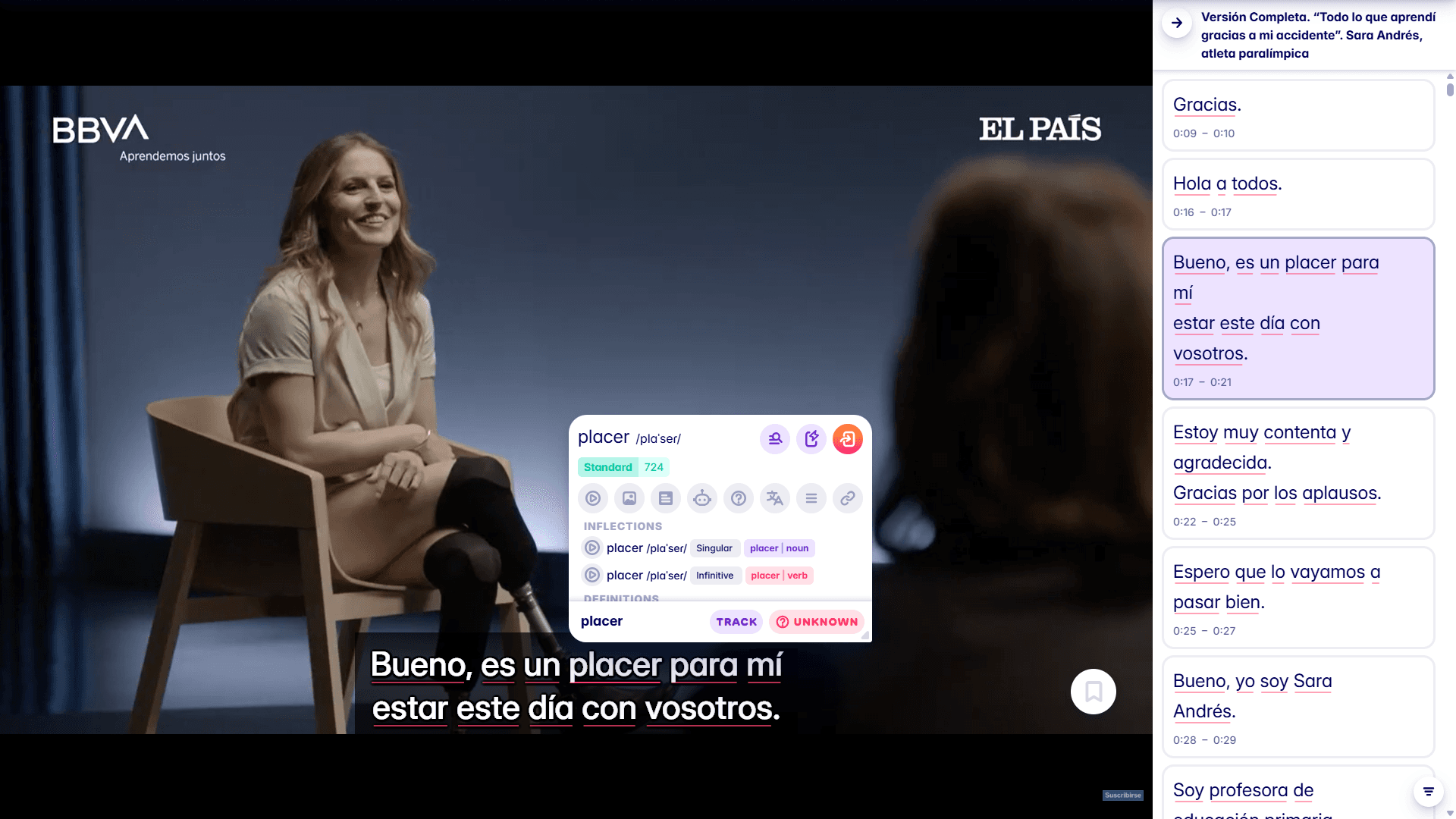
If you want to use these strategies with real content, Migaku's browser extension and app let you look up words instantly while watching shows or reading articles. Makes immersion learning way more practical. There's a 10-day free trial if you want to check it out.
 ---
## Learn vocabulary fast with immersion. This is how you can stay consistent!
Immersion accelerates vocabulary learning because you encounter words repeatedly in natural contexts. When you hear the same word used five different ways in five different situations, you develop a deeper understanding than any flashcard can provide.
> If you consume media in the language you want to learn, and you understand at least some of the messages and sentences within that media, you will make progress. _Period_.
Adjust your strategy as you go, but never give up!
---
## Learn vocabulary fast with immersion. This is how you can stay consistent!
Immersion accelerates vocabulary learning because you encounter words repeatedly in natural contexts. When you hear the same word used five different ways in five different situations, you develop a deeper understanding than any flashcard can provide.
> If you consume media in the language you want to learn, and you understand at least some of the messages and sentences within that media, you will make progress. _Period_.
Adjust your strategy as you go, but never give up!