How to Say See You Later in Portuguese: All the Ways to Say Goodbye
Last updated: March 29, 2026

Learning how to say goodbye in Portuguese goes way beyond just memorizing "tchau." If you want to sound natural when parting ways with someone, you need to learn the right Portuguese phrase for the situation. Portuguese speakers use different expressions depending on whether they're being formal or casual, saying goodbye temporarily or permanently, and even which country they're in. This guide breaks down all the ways to say "see you later" in Portuguese, with real context so you know exactly when to use each one.
- The most common way to say see you later in Portuguese
- Time-specific farewells using até
- Tchau and its variations
- When to use adeus (and when not to)
- Informal ways to say goodbye and slang alternatives
- Professional versus casual contexts
- Brazilian Portuguese versus European Portuguese differences
- Your next steps to learn Portuguese
- FAQs
The most common way to say see you later in Portuguese
Até mais is probably what you'll hear most often when Portuguese speakers say goodbye with the intention of seeing each other again. It literally translates to "until more" but functions exactly like "see you later" in English.
You can use até mais in pretty much any casual situation. Leaving a friend's house? Até mais. Finishing a conversation with a coworker? Até mais. It works across both Brazilian and European Portuguese, though Brazilians tend to use it slightly more frequently in everyday conversation.
The pronunciation is roughly "ah-TEH mah-ees" with the stress on the second syllable of até. The "s" at the end of mais sounds like an "sh" in Brazilian Portuguese, so you'll actually hear something closer to "mah-eesh."
Here's the thing about até. It's super flexible as a construction in Portuguese. You can stick it in front of different time words to create specific farewell phrases. This makes it one of the most useful words to learn early on.
Time-specific farewells using até
Once you understand how até works, you can create a bunch of different goodbye phrases just by adding time expressions.
- Até logo means "see you soon" and works when you expect to see the person relatively quickly. Maybe you're leaving work, but you'll see your colleague tomorrow, or you're saying goodbye to a friend you hang out with regularly. The word logo means "soon" or "shortly," so this phrase carries that sense of nearness.
- Até amanhã translates directly to "see you tomorrow" and you'd use it exactly like the English version. Heading out at the end of a workday? Tell your teammates até amanhã. The pronunciation is "ah-TEH ah-mahn-YAH."
- Até mais tarde means "see you later today" specifically. If you're leaving for lunch but coming back to the office, or stepping out briefly during a gathering, this phrase clarifies that you'll return the same day. It's more specific than até mais, which could mean later today or just sometime in the future.
You can even get creative with this pattern. Até segunda means "see you Monday," até semana que vem is "see you next week," and até já is an informal "see you in a bit" that's popular in Portugal.
Tchau and its variations
Tchau is the most common casual goodbye in Portuguese, borrowed from the Italian "ciao." Brazilians use this constantly, and it's perfectly acceptable in almost any informal situation.
You'll often hear people double it up as tchau tchau , which sounds friendlier and more affectionate. Think of it like saying "bye bye" in English. Parents use it with kids, friends use it with each other, and it generally adds a warm tone to the goodbye.
In Brazilian Portuguese, especially, people combine tchau with other farewell phrases. You might hear "tchau, até mais" or "tchau tchau, até logo" as someone is walking away. This isn't redundant; it's just how natural conversation flows.
When to use adeus (and when not to)
Adeus translates to "goodbye" but carries much heavier weight than the English word. This is a formal, permanent-sounding farewell that Portuguese speakers reserve for serious situations.
If you're saying goodbye to someone you might never see again, adeus fits. If someone's moving to another country permanently, adeus works. But if you're just leaving a party or ending a phone call with a friend? Skip it. You'll sound overly dramatic or like you're ending the relationship.
European Portuguese speakers use adeus a bit more casually than Brazilians, but even in Portugal, it's still more formal than até or tchau. Think of it as closer to "farewell" in English rather than a simple "bye."
The religious origin of the word (literally "to God") contributes to its serious tone. You're essentially committing someone to God's care, which historically meant you didn't expect to see them again anytime soon.
Informal ways to say goodbye and slang alternatives
Once you get comfortable with the standard phrases, you'll start noticing Portuguese speakers use some more casual expressions to say goodbye.
- Vou nessa literally means "I'm going in this one" but functions like "I'm out" or "I'm heading off" in English. It's super casual and works great when you're leaving a social gathering. You might say "beleza, vou nessa" which combines "alright" with "I'm heading out."
- A gente se vê translates to "we'll see each other" and works exactly like "see you around" in English. It's casual, friendly, and doesn't commit to a specific time. Perfect for acquaintances or friends you see irregularly.
- Falou is São Paulo slang that's spread to other parts of Brazil. It literally means "spoke" but functions as a casual "bye" or "later." Young people especially use this one constantly. You can say just "falou" or extend it to "falou, valeu" (bye, thanks) when someone's done you a favor.
- Te vejo depois means "I'll see you later" and is more common in spoken Brazilian Portuguese than European. It's straightforward and works in any casual situation where you expect to see the person again.
Professional versus casual contexts
Knowing when to be formal matters in Portuguese-speaking countries, especially in professional settings.
In business emails or formal letters in Portuguese, you'd typically use atenciosamente (similar to "sincerely") or cordialmente (cordially) rather than até or tchau. These aren't spoken farewells, but they're important for written communication.
When leaving a business meeting or professional event, até logo works well. It's polite without being overly formal, and it implies you'll cross paths again professionally. Até mais works here too, especially if you have an ongoing working relationship with the person.
With clients or higher-ups you don't know well, you might opt for tenha um bom dia (have a good day) or até breve (see you soon) which sound slightly more polished than the casual até mais.
The thing about Portuguese business culture is that it often blends formal and informal elements depending on the relationship. After you've worked with someone for a while, switching to tchau or até mais in person (while keeping emails formal) is totally normal.
Brazilian Portuguese versus European Portuguese differences
The core goodbye phrases work across both variants, but the frequency and context shift between Brazil and Portugal.
Brazilians say tchau constantly. It's the default casual goodbye for probably 80% of informal situations. European Portuguese speakers use tchau too, but they're more likely to throw in até já or just até in quick, casual partings.
European Portuguese speakers are also more comfortable with adeus in semi-formal situations where Brazilians would stick with até logo or até mais. If you're in Lisbon and someone says adeus to you at a shop, they're not being dramatic, they're just being normally polite.
The pronunciation differences matter here too. European Portuguese tends to swallow unstressed vowels more than Brazilian Portuguese, so até might sound closer to "teh" in Portugal versus the clearer "ah-TEH" you'd hear in Brazil.
Regional slang within Brazil itself varies quite a bit. In São Paulo, you might hear "falou" (literally "spoke") as a casual goodbye. In the South, "tchau tchau" is even more common than in other regions. Rio has its own variations too, though até mais remains universal.
Your next steps to learn Portuguese
If you want to actually use these goodbye phrases naturally, you need to hear them in context repeatedly. Reading about them here gives you the foundation, but watching Portuguese content and listening to native speakers is where things click.
Portuguese shows, podcasts, and YouTube videos will expose you to these phrases dozens of times in natural situations. You'll start picking up on the subtle differences between when someone chooses até logo versus até mais, or when tchau feels more appropriate than a time-specific farewell.
The word até appears constantly in Portuguese media because it's so versatile. Once you start noticing it, you'll see it everywhere, and that repetition helps cement the usage patterns in your brain.
Pay attention to how characters say goodbye in different situations. A formal business scene will use different language than friends parting after a night out. This contextual learning beats memorizing lists every time.
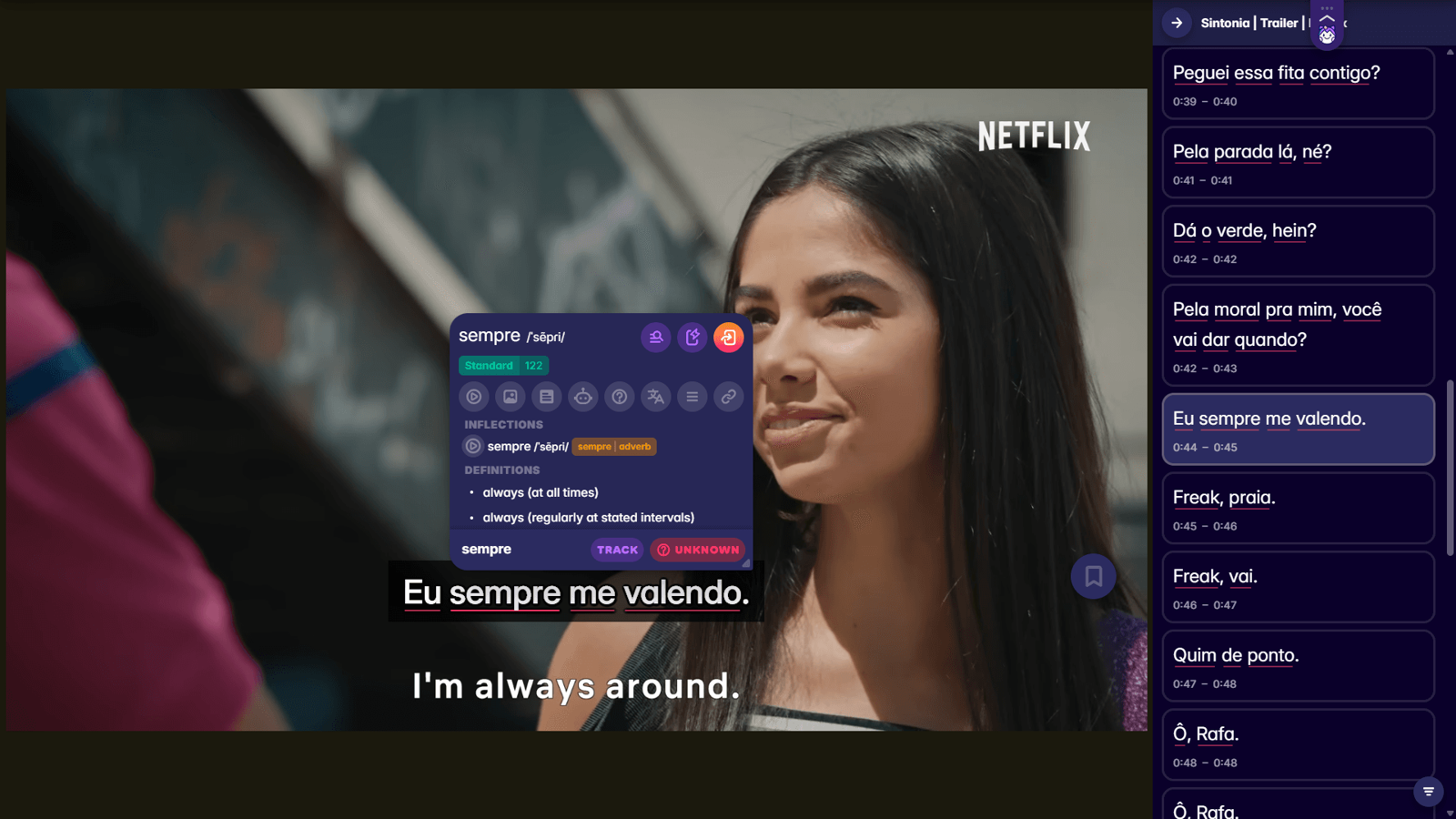
If you want to actually learn from Portuguese content without constantly pausing to look things up, Migaku's browser extension and app let you click any word for instant definitions while watching shows or reading articles. Makes immersion learning way more practical. There's a 10-day free trial if you want to check it out.
FAQs
In more formal situations or when using você instead of tu, it becomes "posso ver você mais tarde?" The placement of the pronoun shifts based on formality and regional preferences.
A more casual way to suggest meeting up later is "a gente se vê mais tarde?" which means "we'll see each other later?" The question inflection makes it a suggestion rather than a statement.
Learning how to say goodbye in Portuguese takes immersion
You can memorize every goodbye phrase in Portuguese, but using them naturally requires actual exposure to the language in real contexts. That's where consuming Portuguese media becomes essential. When you watch a Brazilian series and hear characters saying "tchau, até mais" as they leave scenes, your brain registers not just the words but the tone, timing, and appropriateness for that situation.
If you consume media in Portuguese, and you understand at least some of the messages and sentences within that media, you will make progress. Period.
A well-said goodbye is just as important as a warm greeting.👋