Happy Birthday in Cantonese: "生日快樂" Pronunciation & Song Guide
Last updated: March 27, 2026

Learning how to wish someone a happy birthday in Cantonese is actually pretty straightforward, and it's one of those phrases you'll definitely want to have ready if you're celebrating with Cantonese-speaking friends or family. Whether you're planning a trip to Hong Kong, have relatives in Singapore, or just want to surprise someone special, getting this phrase down shows real thoughtfulness. Plus, the birthday song in Cantonese is super similar to the English version, so you'll pick it up quickly.
The core phrase: 生日快樂
Here's what you came for. The standard way to say happy birthday in Cantonese is 生日快樂 (Saang1 Jat6 Faai3 Lok6). You'll hear this phrase everywhere in Hong Kong, Macau, and among Cantonese speakers worldwide.
Let me break down what each character means.
- 生日 (Saang1 Jat6) literally translates to "birth day," where 生 means "birth" or "to be born" and 日 means "day."
- The second part, 快樂 (Faai3 Lok6), means "happy" or "joyful."
So when you put it all together, you're literally saying "birth day happy," which is just how Cantonese structures the phrase.
The pronunciation might look intimidating with all those numbers, but those are just tone markers in the Jyutping romanization system. Cantonese has six main tones, and the numbers tell you which tone to use. For 生日快樂, you're using tones 1, 6, 3, and 6 respectively. Tone 1 is high and level, tone 6 is low and level, and tone 3 is mid and level. Don't stress too much about getting the tones perfect right away. People will understand you even if your tones aren't spot-on, though practicing them will definitely help.
The Cantonese birthday song
The birthday song in Cantonese is basically a direct translation of the English "Happy Birthday to You" song. You sing it to the exact same melody, which makes it super easy to learn if you already know the English version.
💡 Lyrics 💡
祝你生日快樂 (Juk1 Nei5 Saang1 Jat6 Faai3 Lok6)
祝你生日快樂 (Juk1 Nei5 Saang1 Jat6 Faai3 Lok6)
祝你生日快樂 (Juk1 Nei5 Saang1 Jat6 Faai3 Lok6)
祝你生日快樂 (Juk1 Nei5 Saang1 Jat6 Faai3 Lok6)
Pretty straightforward, right? You sing it four times through, just like in English. The phrase 祝你 (Juk1 Nei5) means "wish you" or "bless you," so the whole line translates to "wish you happy birthday."
If you want to personalize it with someone's name, you'd replace 你 (Nei5, meaning "you") with their name. So if you're singing to someone named Amy, you'd sing 祝 Amy 生日快樂. The melody stays exactly the same, which honestly makes this one of the easier aspects of learning Cantonese for celebrations.
Other birthday wishes and variations
While 生日快樂 is the standard greeting, there are other phrases you can use to wish someone well on their birthday.
- 希望日日開心 (Hei1 Mong6 Jat6 Jat6 Hoi1 Sam1) means "hope you're happy every day." This is a sweet, extended wish that goes beyond just the birthday itself. 日日 means "every day" (literally "day day"), and 開心 means "happy" or "cheerful."
- 長命百歲 (Coeng4 Meng6 Baak3 Seoi3) translates to "long life, a hundred years." This one's especially common when wishing older relatives or respected elders a happy birthday. It's a traditional blessing for longevity and health.
- You might also hear 生日快樂,身體健康 (Saang1 Jat6 Faai3 Lok6, San1 Tai2 Gin6 Hong1), which adds "good health" to the birthday wish. 身體健康 literally means "body healthy," and it's a really common addition when you want to express care for someone's wellbeing.
Cultural context in Hong Kong and Singapore
Birthday celebrations in Hong Kong follow some interesting traditions. One cool cultural tidbit: traditionally, the seventh day of Chinese New Year is considered everyone's birthday. It's called 人日 (Yan4 Jat6), literally "human day," and it celebrates the creation of humanity according to Chinese mythology. Pretty cool concept, right?
In modern Hong Kong and Singapore, birthday parties look pretty similar to Western celebrations. You'll find birthday cakes, candles, singing, and gift-giving. The Cantonese birthday song gets sung at pretty much every party, and people will definitely appreciate it if you join in with the Cantonese lyrics instead of defaulting to English.
One difference you might notice: longevity noodles (長壽麵 , Coeng4 Sau6 Min6) are a traditional birthday food. The long noodles symbolize long life, and you're supposed to eat them without cutting them to preserve that symbolism. Birthday cakes are popular too, but those noodles carry special cultural meaning.
Practical tips for using happy birthday phrases
- When you're at a birthday celebration, timing matters. You'd typically say 生日快樂 when you first see the birthday person, similar to how you'd greet them with "happy birthday" in English. If you're giving a gift, you'd say it then too.
- The birthday song gets sung when the cake comes out, just like in Western celebrations. Everyone gathers around, the candles get lit, and you all sing 祝你生日快樂 together. After they blow out the candles, people often clap and cheer.
- If you're texting or messaging, typing 生日快樂 works perfectly. Most people will appreciate the effort, especially if Cantonese isn't your native language. You could also add an emoji or two (🎂🎉) to make it feel more festive, though that's totally optional.
Moving beyond birthday greetings
Once you've got 生日快樂 down, you might want to expand into other common Cantonese phrases. Greetings like 你好 (Nei5 Hou2, "hello") or 早晨 (Jou2 San4, "good morning") are super useful. Learning how to say thank you, 多謝 (Do1 Ze6), or excuse me, 唔好意思 (M4 Hou2 Ji3 Si1), helps you navigate basic social situations.
Food vocabulary is another great place to start since Cantonese cuisine is so incredible. Knowing how to order dim sum, ask for the check, or compliment a meal makes dining experiences way more enjoyable.
The grammar takes more time to wrap your head around. Cantonese uses sentence-final particles that add meaning and emotion to statements. These little words at the end of sentences can completely change the tone or implication of what you're saying. They're subtle but super important for sounding natural.
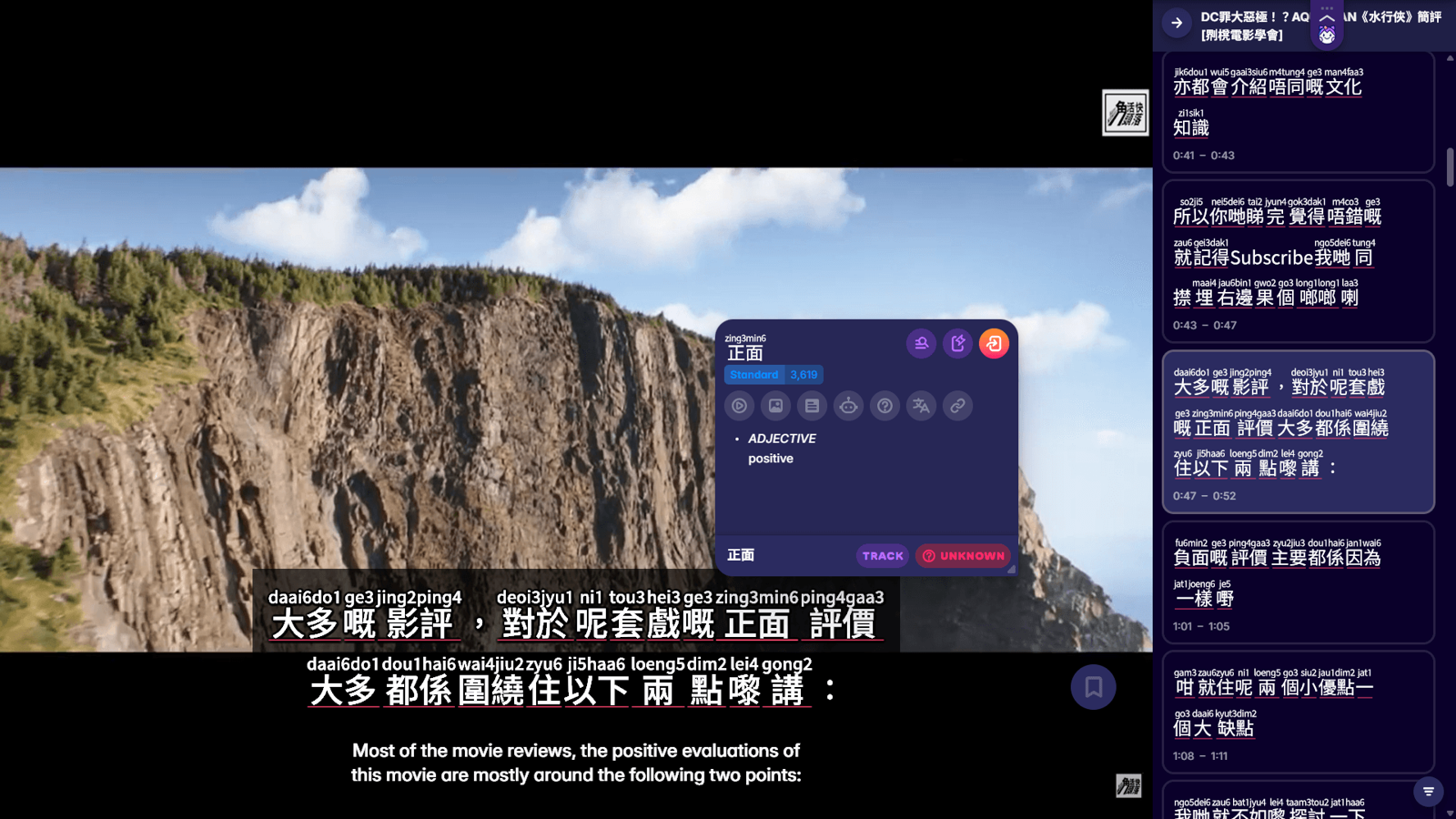
Anyway, if you want to learn Cantonese through real content like TV shows, movies, or articles, Migaku's browser extension and app let you look up words and save them while you're watching or reading. Makes the whole immersion process way more practical. There's a 10-day free trial if you want to check it out.
FAQs
You might hear 快樂 in phrases like 聖誕快樂 (Sing3 Daan3 Faai3 Lok6) for "Merry Christmas" or 新年快樂 (San1 Nin4 Faai3 Lok6) for "Happy New Year." It's basically the go-to word for expressing happiness in celebratory greetings.
Learning Cantonese language for real conversations!
Knowing how to say happy birthday is great, but if you want to actually learn Cantonese for real conversations, you'll need to go beyond memorizing phrases. The language has some genuinely tricky aspects, like those six tones, the complex grammar particles that change meaning subtly, and the fact that spoken Cantonese differs quite a bit from written formal Chinese. Immersion really helps. Watching Cantonese TV shows, listening to Cantopop, or following Cantonese YouTubers gives you exposure to how people speak. You start picking up the rhythm, the common phrases, and the natural flow of conversation.
If you consume media in Cantonese, and you understand at least some of the messages and sentences within that media, you will make progress. Period.
The challenge is that Cantonese doesn't have as many learning resources as Mandarin. You'll find fewer textbooks, fewer apps, and fewer structured courses. That makes self-study harder, but definitely not impossible. Finding native content and working through it systematically makes a huge difference.