# How Many Chinese Characters to Learn: Numbers For Learners of Each Level
> How many Chinese characters do you need to know to be fluent? Here are some numbers for your reference to set a clear goal!
**URL:** https://migaku.com/blog/chinese/how-many-chinese-characters-to-learn
**Last Updated:** 2025-12-17
**Tags:** vocabulary, discussion
---
Do you like (Biang Biang Noodles)? That is the most complicated Chinese character you might need to know for your daily life! 🤣 Over 100,000 historical characters exist. The good news? You don’t need to know them all. Not even close. The real question isn't about scholarly mastery; it's about finding your personal tipping point — the magic number where the language starts to make sense [when you're learning Chinese](https://migaku.com/learn-chinese). That number is far smaller than you think, and it depends entirely on what you want to do. Let's find yours.
---
## What does "knowing" a Chinese character even mean?
"Knowing" a character isn't a single skill. It’s a spectrum.
1. On one end, there's recognition — you see and you think "cat." You can grasp its meaning in a sentence, maybe even guess its sound.
2. On the far other end, there's active recall and production — you can write that character from memory, with the correct stroke order, and use it correctly in your own sentences when speaking to Chinese people.
The workload difference between these two poles is massive.
So, when we talk about "learning" a character, we need to be honest about our goal. For most modern Chinese learners — especially those using digital tools — recognition is the primary, powerful skill to learn Chinese. It’s the key to reading, browsing websites, and navigating a Mandarin-speaking environment. Production, especially [handwriting](https://migaku.com/blog/chinese/how-to-write-in-chinese), is a deeper, more specialized art. The upside of focusing on recognition? You can functionally "know" many more characters much faster. The downside? You might not be able to write a simple note by hand. And that's okay, if it aligns with your goals.
This is the first, crucial filter. Are you learning to read novels and news, or to pass a classic calligraphy exam? Your answer will dramatically shift your target number. For probably 95% of learners, a strong recognition foundation is the golden ticket. It unlocks the world. But the ability to generate input into active output is the sign proving that you have fully internalized this knowledge!
---
## How many Chinese characters do you need to know according to HSK fluency standards?
Educational systems, out of necessity, need concrete goals. They provide useful, if generalized, benchmarks.
The most cited one is the 3000 high-frequency characters mark. This is often presented as the threshold for basic literacy — the number needed to understand roughly 98% of a modern newspaper or a general-interest book. It’s the foundation. With these, you can parse most everyday text, even if you need to look up the occasional specialized term.
On the other hand, characters aren't learned in isolation. They combine to form words. Learning the character (Electric) and (Speech) gives you (Telephone). You’re not learning three separate concepts; you’re building a network. So, chasing a raw character count is the wrong mindset. You’re really chasing vocabulary and contextual familiarity. The characters are the puzzle pieces; the words and sentences are the picture.
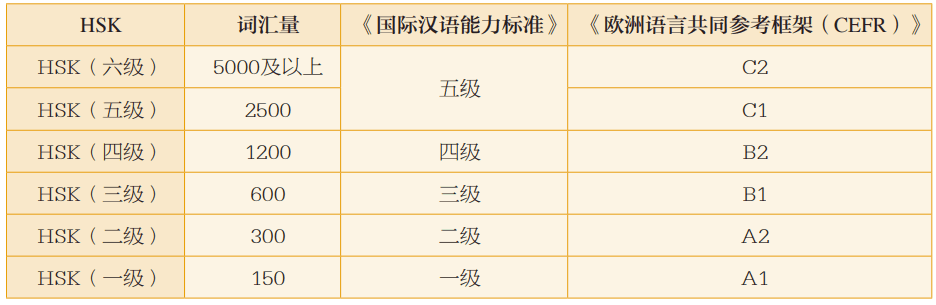
This table displays [the HSK standards for vocabulary](https://migaku.com/blog/chinese/hsk-vocabulary-lists) for each level.
1. To become fluent in using the Chinese language, learners need to reach at least HSK 6, which means they need to learn at least 5000 words.
2. To be able to converse in professional or academic topics, learners need to be able to read at least 11000 words, based on HSK 7-9 requirements. (Of course, these are words and phrases, not characters, so there may be many characters being repeated in different words in this list.)
 ---
## How many characters do you need to be fluent in Chinese in real life?
Let’s switch from the academic counts to the real-life tiers. After all, not every learner is chasing the academic goal, and you might just want to have a good time in China or with Chinese culture.
### Tier 1 for functional tourist & beginner (500-1000 characters)
This is your survival kit. With this recognition base, you can handle menus, street signs, basic instructions, and simple conversations. You’ll get the gist of a text message but encounter difficulty in understanding a social media post. You won't read a novel, but you’ll navigate a city, order amazing food, and make a local friend’s day. The goal here isn't perfection — it's connection and practical function. If that’s your aim, you’ll love how quickly you can get here with the help of [a vocabulary app like Duolingo](https://migaku.com/blog/chinese/duolingo-chinese-review).
### Tier 2 for engaged learner & avid reader (2000-2500 characters)
This is where the language truly opens up. You’re now hitting that newspaper-literacy standard. You can read web articles, contemporary novels (with a dictionary for the tough patches), and follow complex TV shows with subtitles. You can handle most of the daily Mandarin-language environment. This tier requires dedicated, consistent study, but the payoff is immense: direct access to a universe of culture, media, and conversation without a translator.
To reach this proficiency, you need more dedicated time for new character learning, revision, tests, and reading materials to help you internalize the uses, sounds, and meanings of these characters. A vocabulary book, newspapers, and [immersion study methods](https://migaku.com/blog/chinese/chinese-immersion-learning) are some good choices at this stage.
### Tier 3 for the scholar & professional (3000+ characters)
This tier is for specialization. You might need it for academic research in classical texts, a career in high-level translation, or work in a technical field like law, medicine, or engineering. The learning here never really stops — you’re constantly adding niche characters and archaic forms.
For your academic and professional pursuits to continue smoothly, you will need to start to read academic papers and essays from, maybe, (CNKI) or your university library. You need to follow specific periodicals or some well-known universities' social accounts for the latest news and academic conferences.
---
## Flashcards are a great helper in learning Chinese words and vocabulary
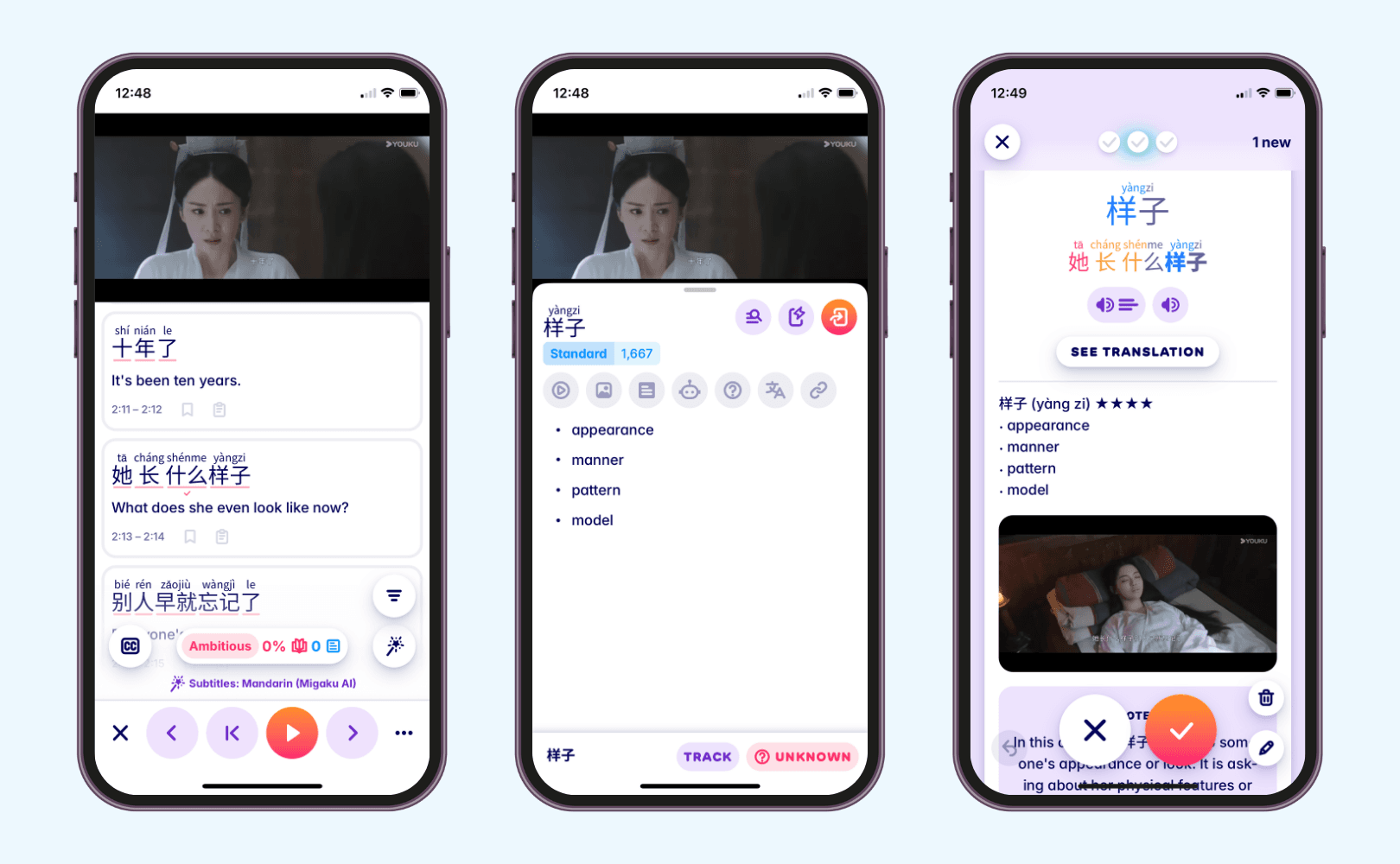
Learning common Chinese characters and words is more efficient if you use a flashcard app that prompts words for revision based on the memory curve. While Duolingo teaches you words based on its own syllabus, Migaku app allows you to extract new words and sentences from Chinese video subtitles and generate flashcards on your own. (This feature is only for YouTube, Netflix, and Rakuten for now.)
1. Switch on YouTube and search for Chinese videos with the app
2. Click "Watch with Migaku", and the magic wand at the lower right corner to generate Chinese subtitles
3. Click on the new words or sentences in each subtitle and generate flashcards!
---
## How many characters do you need to be fluent in Chinese in real life?
Let’s switch from the academic counts to the real-life tiers. After all, not every learner is chasing the academic goal, and you might just want to have a good time in China or with Chinese culture.
### Tier 1 for functional tourist & beginner (500-1000 characters)
This is your survival kit. With this recognition base, you can handle menus, street signs, basic instructions, and simple conversations. You’ll get the gist of a text message but encounter difficulty in understanding a social media post. You won't read a novel, but you’ll navigate a city, order amazing food, and make a local friend’s day. The goal here isn't perfection — it's connection and practical function. If that’s your aim, you’ll love how quickly you can get here with the help of [a vocabulary app like Duolingo](https://migaku.com/blog/chinese/duolingo-chinese-review).
### Tier 2 for engaged learner & avid reader (2000-2500 characters)
This is where the language truly opens up. You’re now hitting that newspaper-literacy standard. You can read web articles, contemporary novels (with a dictionary for the tough patches), and follow complex TV shows with subtitles. You can handle most of the daily Mandarin-language environment. This tier requires dedicated, consistent study, but the payoff is immense: direct access to a universe of culture, media, and conversation without a translator.
To reach this proficiency, you need more dedicated time for new character learning, revision, tests, and reading materials to help you internalize the uses, sounds, and meanings of these characters. A vocabulary book, newspapers, and [immersion study methods](https://migaku.com/blog/chinese/chinese-immersion-learning) are some good choices at this stage.
### Tier 3 for the scholar & professional (3000+ characters)
This tier is for specialization. You might need it for academic research in classical texts, a career in high-level translation, or work in a technical field like law, medicine, or engineering. The learning here never really stops — you’re constantly adding niche characters and archaic forms.
For your academic and professional pursuits to continue smoothly, you will need to start to read academic papers and essays from, maybe, (CNKI) or your university library. You need to follow specific periodicals or some well-known universities' social accounts for the latest news and academic conferences.
---
## Flashcards are a great helper in learning Chinese words and vocabulary
Learning common Chinese characters and words is more efficient if you use a flashcard app that prompts words for revision based on the memory curve. While Duolingo teaches you words based on its own syllabus, Migaku app allows you to extract new words and sentences from Chinese video subtitles and generate flashcards on your own. (This feature is only for YouTube, Netflix, and Rakuten for now.)
1. Switch on YouTube and search for Chinese videos with the app
2. Click "Watch with Migaku", and the magic wand at the lower right corner to generate Chinese subtitles
3. Click on the new words or sentences in each subtitle and generate flashcards!
 ---
## FAQs
For advanced, educated fluency — reading novels and newspapers — you'll want a recognition knowledge of around 3000 characters. This is the level targeted by the highest HSK proficiency exams. But the real key is vocabulary. Those 3000 characters form the building blocks for 8000-10000 words, which is the true measure of a rich, functional vocabulary. Focus on words, and the character mastery follows.
If you mean conversational fluency—handling daily life, social situations, and personal interests—then yes, with intense, immersive study (think 2+ hours daily with consistent speaking practice), it's a very ambitious but possible goal. If you mean full professional or academic fluency, you need about 4 to 5 years.
This is the core number for genuine, functional literacy. With 2,000 characters under your belt, you can recognize about 98% of the characters in a modern newspaper, read most contemporary novels (with occasional look-ups), and engage deeply with everyday media and conversation.
---
## Forget about characters, and focus on how many words you need to know!
So, what’s the final, straightforward advice? Don’t fixate on a magic number on Chinese characters. Start with words and build your immersion practice strategies. Your progress will feel faster and more rewarding if you acquire the vocabulary via media resources.
> If you consume media in Chinese, and you understand at least some of the messages and sentences within that media, you will make progress. _Period_.
Don't let the number daunt you!
---
## FAQs
For advanced, educated fluency — reading novels and newspapers — you'll want a recognition knowledge of around 3000 characters. This is the level targeted by the highest HSK proficiency exams. But the real key is vocabulary. Those 3000 characters form the building blocks for 8000-10000 words, which is the true measure of a rich, functional vocabulary. Focus on words, and the character mastery follows.
If you mean conversational fluency—handling daily life, social situations, and personal interests—then yes, with intense, immersive study (think 2+ hours daily with consistent speaking practice), it's a very ambitious but possible goal. If you mean full professional or academic fluency, you need about 4 to 5 years.
This is the core number for genuine, functional literacy. With 2,000 characters under your belt, you can recognize about 98% of the characters in a modern newspaper, read most contemporary novels (with occasional look-ups), and engage deeply with everyday media and conversation.
---
## Forget about characters, and focus on how many words you need to know!
So, what’s the final, straightforward advice? Don’t fixate on a magic number on Chinese characters. Start with words and build your immersion practice strategies. Your progress will feel faster and more rewarding if you acquire the vocabulary via media resources.
> If you consume media in Chinese, and you understand at least some of the messages and sentences within that media, you will make progress. _Period_.
Don't let the number daunt you!