# Genki vs Minna no Nihongo: Which Japanese Textbook Wins?
> Honest comparison of Genki and Minna no Nihongo for learning Japanese. Find out which beginner textbook actually works for self-study in 2026.
**URL:** https://migaku.com/blog/japanese/genki-vs-minna-no-nihongo
**Last Updated:** 2026-01-15
**Tags:** fundamentals, vocabulary, phrases, grammar
---
You're staring at two [textbooks](https://migaku.com/blog/japanese/best-japanese-textbooks) that everyone keeps recommending: Genki and Minna no Nihongo, and don't know which to choose as a [Japanese beginner](https://migaku.com/learn-japanese). I've used both extensively, and after helping dozens of learners pick between them, I can tell you exactly what makes each one tick. Let's dig into the details because there's way more to consider here.
---
## What makes Genki different
Genki was designed specifically for English-speaking university students learning Japanese. The whole textbook assumes you're either self-studying or in a classroom where the teacher explains concepts in English. Every grammar explanation is written in clear, straightforward English that actually makes sense.
When you open Genki 1, you'll find dialogues between college students doing everyday stuff like introducing themselves, going to cafes, or talking about their schedules. The vocab and situations feel natural for younger learners. Each chapter follows a predictable pattern: dialogue, vocab list, grammar explanations, practice exercises.
The grammar explanations in Genki are honestly pretty solid. They don't just tell you the rule, they explain why Japanese works that way and give you multiple example sentences.
Here's what you get with Genki:
- Main textbook with all grammar explanation in English
- Separate workbook for extra practice
- Audio CD or downloadable files with all dialogues and listening exercises
- Answer key available separately
- Clear progression from [hiragana and katakana](https://migaku.com/blog/japanese/japanese-writing-practice) through basic kanji
The Genki series covers roughly N5 to N4 level material across two books. Genki 1 handles N5 content, while Genki 2 pushes you into N4 territory. You'll learn about 300 kanji total and around 1,700 vocabulary words by the time you finish both books.
---
## How Minna no Nihongo works
Minna no Nihongo takes a completely different approach. The main textbook is written entirely in Japanese with zero English explanations. Seriously, everything is in Japanese from day one. The dialogues, instructions, exercise prompts, all of it.
"Wait, how am I supposed to learn from a book I can't read?" Good question. Minna no Nihongo expects you to buy separate grammar explanation books in your native language. So you'd get the main textbook plus the "Translation and Grammar Notes" book in English. This setup costs more money upfront, which is honestly annoying.
The content in Minna no Nihongo focuses on adult situations rather than college life. You'll find dialogues about business meetings, formal introductions, workplace scenarios, and everyday adult interactions. The language skews more formal and polite compared to Genki's casual college vibe.
Each lesson in Minna no Nihongo includes:
- Vocabulary list with translations
- Main dialogue or text entirely in Japanese
- Grammar practice drills
- Conversation practice sections
- Reading comprehension passages
The separate grammar explanation book breaks down each grammar point with English explanations and example sentences. You basically flip between two books while studying, which some people find tedious.
Minna no Nihongo also covers N5 to N4 level material across its two main volumes. The vocab count and kanji coverage are similar to Genki, though the specific words differ based on the textbook's focus on adult versus student life.
---
## Grammar presentation showdown
Both textbooks introduce grammar systematically, but the presentation style differs massively.
Genki integrates grammar explanation directly into each chapter. You read the dialogue, check the vocab, then immediately see the grammar points explained in English with example sentences.
The explanations connect grammar to the dialogue you just read, making it easier to understand context. When Genki teaches te-form () verbs, you get a full page explaining [conjugation](https://migaku.com/blog/japanese/japanese-verb-conjugation) patterns, usage rules, and common mistakes.
> Use Genki if you want everything in one place with clear English backup.
Minna no Nihongo separates grammar from the main text. You encounter grammar in the Japanese-only textbook through drills and exercises, then reference your translation book for explanations. This [immersion](https://migaku.com/blog/japanese/japanese-immersion-learning)-first approach forces you to engage with Japanese more directly, but it can feel frustrating when you're genuinely confused.
> Use Minna no Nihongo if you have a teacher or if you prefer figuring things out through pattern recognition before reading explanations.
---
## Self-study reality check
> As a self-learner, Genki wins this category hands down.
The textbook was literally designed for independent study. Everything you need is right there: explanations, exercises, answer keys, audio files. You can work through Genki completely on your own without getting stuck.
I've watched plenty of self-taught learners succeed with Genki because the book anticipates confusion and addresses it proactively. The English explanations mean you won't waste hours wondering what a grammar point actually means.
> Minna no Nihongo assumes classroom support.
The Japanese-only main text makes sense when you have a teacher demonstrating concepts and answering questions. For self-study, you'll constantly bounce between the main book and translation guide, which slows down your learning pace.
That said, some dedicated self-learners prefer use Minna specifically because it forces more Japanese exposure. If you're disciplined and enjoy puzzle-solving, Minna's immersion approach can work. But honestly? Most beginners find it unnecessarily difficult without a teacher.
---
## Vocabulary and kanji coverage
Genki introduces vocab thematically based on each chapter's situation. You'll learn words related to shopping, family, hobbies, [travel](https://migaku.com/blog/japanese/japanese-travel-phrases), and daily activities. The vocab feels practical and immediately useful. Genki teaches kanji gradually, starting with simple characters and building complexity.
Minna no Nihongo also uses thematic vocab but focuses more on formal and business contexts. You'll learn polite language patterns earlier and encounter more workplace-related terminology. The kanji introduction follows a similar gradual approach, though the specific characters prioritized differ slightly.
Both textbooks teach enough vocab and kanji to pass the JLPT N5 exam after the first book and approach N4 level after the second book. Neither textbook alone will make you fluent or fully prepare you for N4, but they provide solid foundations.
---
## Audio resources and listening practice
Genki includes comprehensive audio files with every dialogue, vocab list, and listening exercise. The audio quality is clear, speakers use natural speed and intonation, and you can download everything easily. The listening exercises actually challenge you appropriately for your level.
Minna no Nihongo also provides audio CDs (or downloadable files with newer editions) covering dialogues and listening exercises. The audio quality is equally good, though some learners find the formal speaking style less engaging than Genki's casual conversations.
Both textbooks offer enough listening practice for beginners. You'll develop basic comprehension skills with either book. The real difference is content focus: college life versus adult situations.
---
## Workbook and supplementary materials
Genki's workbook reinforces each chapter with additional exercises covering grammar, kanji, reading, and writing. The exercises are well-designed and genuinely helpful. You can buy an answer key separately, which is essential for self-study.
Minna no Nihongo has multiple supplementary books: the main text, translation and grammar notes, workbook, kanji practice book, and more. This modular approach gives you flexibility but also costs significantly more money. Each supplement adds up quickly.
For self-study on a budget, Genki's simpler two-book system (Textbook plus workbook) makes more financial sense.
---
## Which textbook should you choose
**Pick Genki if you:**
- Plan to self-study without a teacher
- Want clear English explanations integrated into lessons
- Prefer learning through college-life situations
- Need everything in one affordable package
- Like structured, predictable lesson formats
**Pick Minna no Nihongo if you:**
- Have a Japanese teacher or tutor
- Want maximum Japanese language exposure from day one
- Need business and formal language early
- Don't mind buying multiple supplementary books
- Enjoy immersion-style learning with minimal English
If you're still undecided, buy Genki 1 and the workbook. Work through the first five chapters. If you love the format and make good progress, continue with Genki. If you find it too English-heavy and crave more Japanese exposure, you can always switch to Minna no Nihongo later. Your first five chapters won't be wasted; the grammar and vocab overlap significantly.
---
## What else do I need besides textbooks
Here's something most people don't tell you: whichever textbook you choose, you'll need to supplement it with real Japanese content. Textbooks teach grammar and basic vocab, but actual language acquisition happens through exposure to native materials.
After you've worked through a few chapters of your chosen textbook, start consuming beginner-friendly native content. Watch Japanese shows with subtitles, read simple manga, listen to podcasts for learners. This combination of structured textbook study plus immersion creates way faster progress than textbook grinding alone.
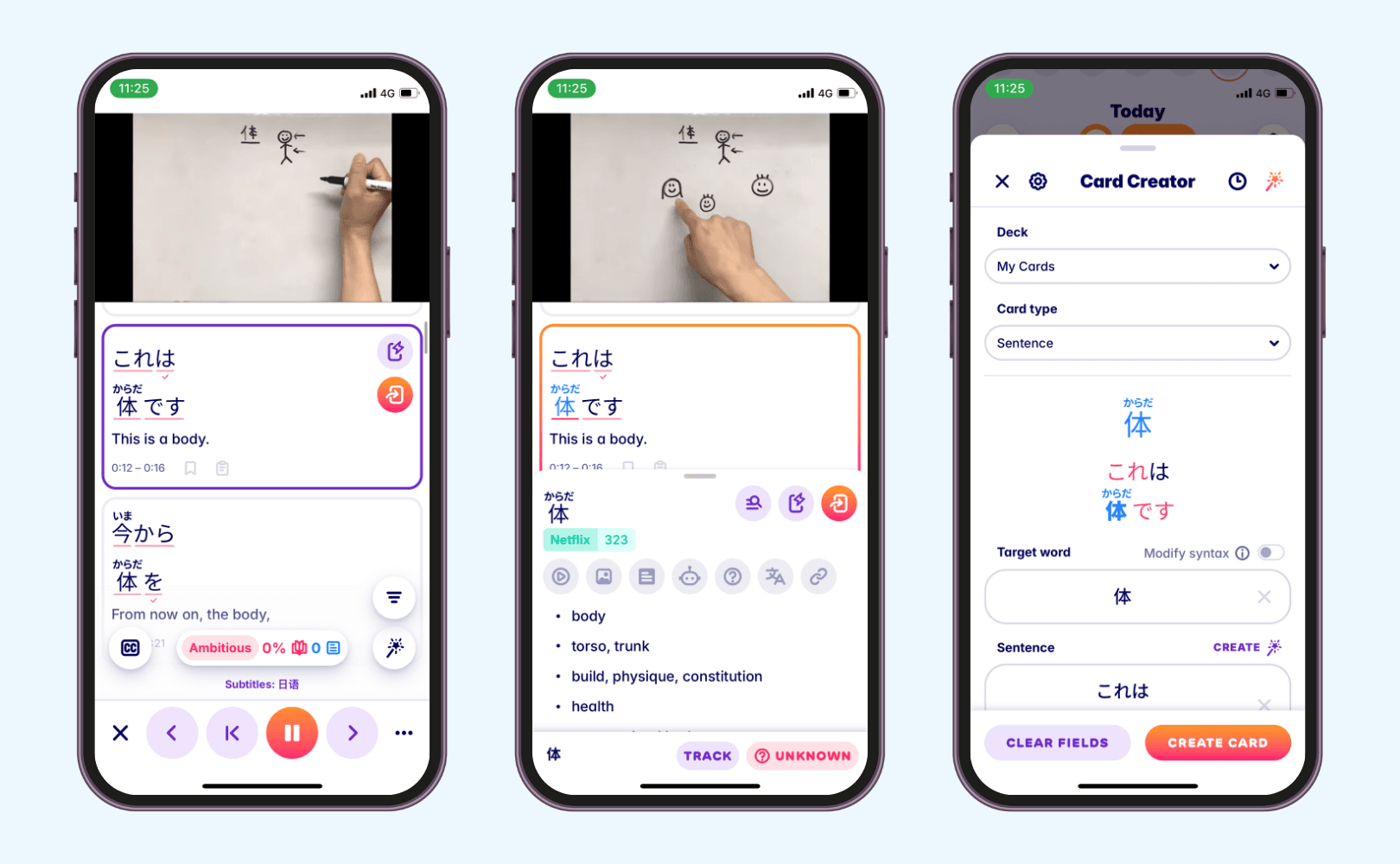
Once you've got some textbook foundations down, you'll want to practice with actual Japanese content. Migaku's browser extension and app let you look up words instantly while watching Japanese shows or reading articles, which makes immersion learning way more practical than pausing every five seconds to check a dictionary. There's a 10-day free trial if you want to see how it speeds up your learning.
 ---
## FAQs
For most beginners, especially self-learners, Genki is better. The integrated English support and self-study-friendly design make learning smoother. Minna no Nihongo works better in classroom settings with teacher support.
Genki 1 covers most N5 content, and Genki 2 gets you partway through N4. You'll need additional study materials, practice tests, and vocab building to actually pass JLPT exams. The textbook provides foundations, but JLPT prep requires focused test practice too.
Absolutely not. Genki teaches beginner-level Japanese. Fluency requires years of study, immersion, conversation practice, and exposure to native content. Think of Genki as your first step on a long journey, covering maybe 5-10% of what you need for fluency.
---
## Grammar improves your understanding in Japanese learning
The grammar foundation from your textbook helps you understand what you're seeing and hearing in native content. Meanwhile, native content shows you how real people actually use the grammar patterns you're studying. They work together.
> If you consume media in Japanese, and you understand at least some of the messages and sentences within that media, you will make progress. _Period_.
Slow progress is better than quitting.
---
## FAQs
For most beginners, especially self-learners, Genki is better. The integrated English support and self-study-friendly design make learning smoother. Minna no Nihongo works better in classroom settings with teacher support.
Genki 1 covers most N5 content, and Genki 2 gets you partway through N4. You'll need additional study materials, practice tests, and vocab building to actually pass JLPT exams. The textbook provides foundations, but JLPT prep requires focused test practice too.
Absolutely not. Genki teaches beginner-level Japanese. Fluency requires years of study, immersion, conversation practice, and exposure to native content. Think of Genki as your first step on a long journey, covering maybe 5-10% of what you need for fluency.
---
## Grammar improves your understanding in Japanese learning
The grammar foundation from your textbook helps you understand what you're seeing and hearing in native content. Meanwhile, native content shows you how real people actually use the grammar patterns you're studying. They work together.
> If you consume media in Japanese, and you understand at least some of the messages and sentences within that media, you will make progress. _Period_.
Slow progress is better than quitting.