Japanese Grammar N5: Complete Guide to JLPT N5 Grammar Practice
Last updated: February 8, 2026
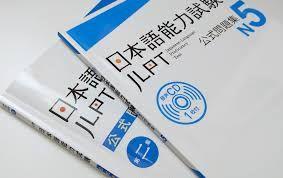
If you're gearing up for the JLPT N5, you already know that grammar forms the backbone of this test. The Japanese Language Proficiency Test N5 level covers about 80 essential grammar points that you absolutely need to master as a Japanese learner. This guide breaks down every grammar structure you'll encounter, from basic particles to verb conjugations, so you can walk into that test feeling confident.
- Understanding the JLPT N5 grammar landscape
- Core particles that show up everywhere
- Verb conjugations you'll see in JLPT N5 grammar list
- Copulas and basic statements in the grammar lists
- Practice adjectives in two flavors
- Question formation patterns
- Time expressions and frequency
- Existence and possession
- Expressing wants and obligations
- Comparison and degree
- Connecting sentences smoothly
- Practical study strategies for mastering these points in N5 level
- Resources for JLPT N5 grammar practice: Flashcards, videos, textbooks
Understanding the JLPT N5 grammar landscape
The JLPT N5 sits at the beginner level of Japanese proficiency. You'll need to demonstrate understanding of basic grammar patterns, around 100 kanji characters, and roughly 800 vocabulary words. The test itself runs about 90 minutes total, split between language knowledge (Vocabulary and grammar), reading comprehension, and listening sections.
How long does it take to pass the JLPT N5? Most learners spend between 150-300 hours studying, which translates to about 3-6 months if you're putting in consistent daily effort. That timeline assumes you're starting from zero Japanese knowledge and dedicating at least an hour or two each day to study.
The grammar section tests your ability to choose correct particles, identify proper verb forms, and understand sentence structure. You'll see questions where you need to fill in blanks, reorder scrambled sentences, and comprehend short passages. Pretty straightforward stuff, but you need solid fundamentals.
Core particles that show up everywhere
Particles are those little grammatical markers that tell you how words relate to each other in a sentence. They're absolutely critical for N5.
The big three: wa, ga, and o
は marks your topic. When you say (I am a student), that は tells us "we're talking about me now." It sets the scene for what comes next.
が marks the grammatical subject, especially for new information or emphasis. You'll use it with words like (Who) and (What). When someone asks (Who is coming?), that が points directly to the unknown subject.
を marks direct objects. (I read a book) uses を to show that "book" is the thing being read.
Location and direction particles
に handles specific locations, destinations, and time points. (I go to Tokyo) shows destination. (I'll meet at 3 o'clock) marks a specific time.
で indicates where an action takes place or the means by which something happens. (I study at the library) versus (I go by bus).
へ also marks direction, similar to に but with a slightly more abstract sense of "toward." For N5 purposes, you can mostly treat it like に for destinations.
と means "with" or "and." (I talk with friends) or (Dogs and cats).
Verb conjugations you'll see in JLPT N5 grammar list
Japanese verbs at the N5 level follow predictable patterns once you learn the rules.
You'll work with three main groups: u-verbs, ru-verbs, and irregular verbs.
Present and past tense basics
The dictionary form (Like "to eat" or "to go") represents the plain present/future tense.
- For polite speech, you add ます: , .
- Past tense in polite form uses ました: (Ate), (Went).
- Negative forms use ません for present ( "don't eat") and ませんでした for past ( "didn't eat").
The te-form that connects everything in JLPT grammar
The te-form is one of those grammar structures that shows up constantly. It connects actions, makes requests, and forms progressive tenses.
- For ru-verbs, drop る and add て: becomes .
- U-verbs have different patterns depending on their ending sound. (To write) becomes . (To speak) becomes .
You'll use te-form with:
- ください to make polite requests: (Please wait).
- Add います to create the progressive: (Am eating).
Let's do something together: mashou
The volitional form ましょう suggests doing something together. Take the ます stem and add ましょう: (Let's go), (Let's eat).
Add か to make it a suggestion question: (Shall we watch a movie?). This pattern comes up frequently in the test listening section when people are making plans.
Copulas and basic statements in the grammar lists
The copula です acts like "is" or "am" in English, connecting nouns and na-adjectives to their subjects.
-
This is a book. (Simple equation: A is B.)
- For past tense, use でした: (Yesterday was rainy).
- Negative forms use じゃありません or ではありません: (Am not a student).
- Past negative becomes じゃありませんでした.
The plain form だ works the same way but sounds casual. You'll see it in practice materials, but the test typically expects polite です forms in your answers.
Practice adjectives in two flavors
Japanese splits adjectives into i-adjectives and na-adjectives, each with different conjugation patterns.
I-adjectives that end in i
These adjectives end with an い sound and conjugate by changing that ending. (Big), (Small), (Expensive/Tall).
- Present tense just adds です for politeness: (Is expensive).
- Past tense changes い to かった: (Was expensive).
- Negative drops い and adds くない: (Is not expensive).
- Past negative uses くなかった: (Was not expensive).
Na-adjectives that need na
These adjectives require な when directly modifying nouns. (Quiet), (Convenient), (Liked).
They conjugate like nouns using です: (Is quiet), (Was quiet).
When modifying a noun, add な: (Quiet room).
Question formation patterns
Questions in Japanese often just add か to the end of a statement. (Is a student) becomes (Are you a student?).
Question words like (What), (Who), (Where), (When), and (How) replace the information you're asking about.
-
What is this? -
Who is coming?
The particle の can turn statements into casual questions through intonation alone: (You're going?).
Time expressions and frequency
Temporal expressions at N5 level include basic time words and counters.
Japanese | English |
|---|---|
今 | Now |
今日 | Today |
昨日 | Yesterday |
明日 | Tomorrow |
毎日 | Every day |
Frequency adverbs like (Always), (Often), (Sometimes), (Not at all, used with negatives).
When stating specific times, use に: (I wake up at 7 o'clock). But relative time words like "today" or "tomorrow" don't need に.
Existence and possession
Two verbs handle existence in Japanese, split by animate and inanimate objects.
- for living things: (There is a dog).
- for non-living things: (There is a book).
Both verbs also express possession. (I have a car). The topic is marked with は, and the possessed item takes が.
Location uses に: (There is a book on the desk).
Expressing wants and obligations
Desire uses たい added to the verb stem. Take , remove ます, add たい: (I want to eat).
The thing you want takes を or が, though が sounds more natural: (I want to eat sushi).
For wanting objects, use : (I want a new car).
Obligation appears through patterns like なければなりません (Must do) or ないといけません, though these edge toward N4 territory. At N5, you'll mostly see the suggestion forms and permission patterns using てもいいです (It's okay to do).
Comparison and degree
Comparing things uses より (Than) and the question word どちら (Which one). (A is bigger than B).
For "which is more," use : (Which do you like more, dogs or cats?).
Superlatives use (Most/Best): (Japan's tallest mountain).
Connecting sentences smoothly
Beyond te-form, several conjunctions link ideas together.
- means "and then" or "moreover," connecting sequential events or adding information.
- means "but" or "however," contrasting statements.
- means "because" or "so," showing reason. Attach it to the plain form of verbs and i-adjectives, or the stem of na-adjectives and nouns: (Because it's rain, I won't go).
- at the end of a clause can mean "but" in a softer way than でも: (I want to go, but I don't have time).
Practical study strategies for mastering these points in N5 level
Here's the thing about grammar learning: you need to see these patterns in actual sentences, not just memorize rules. The test will throw you into real contexts where you need to recognize how particles change meaning or which verb form fits the situation.
- Create example sentences for each grammar point using vocabulary you already know. If you're learning the たい form, write five sentences about things you actually want to do. (I want to go to Japan), (I want to eat ramen).
- Video lessons help because you can hear natural pronunciation and see grammar in conversational contexts. Watching someone explain why you'd use は versus が in a specific sentence beats reading about abstract rules.
- Practice tests show you exactly how JLPT formats questions. You'll get comfortable with the test structure, like those scrambled sentence problems where you need to put four segments in the correct order. The grammar section also includes reading passages where you choose the right particle or verb form to complete the text.
- Link grammar study with vocabulary building. When you learn a new verb, immediately practice conjugating it into te-form, past tense, negative forms. This reinforces both the word and the grammar pattern simultaneously.
- The listening section tests grammar too, even though it seems focused on comprehension. You need to catch those particles and verb endings to understand who's doing what. When someone says (Page 21) or asks (Do we need to do the entire thing?), you're processing grammar in real time.
Resources for JLPT N5 grammar practice: Flashcards, videos, textbooks
- Textbooks like Genki I cover most N5 grammar points across their lessons. The structured approach walks you through particles, then verb conjugations, building complexity gradually.
- Online platforms offer interactive exercises where you can test yourself on specific grammar points. Many provide immediate feedback, so you know right away if you're confusing を and に or messing up your verb conjugations.
- Flashcard systems help drill individual grammar patterns. You might have cards showing a sentence with a blank, and you need to supply the correct particle or verb form. Spaced repetition keeps these patterns fresh in your memory leading up to test day.
- Study guides specifically designed for JLPT N5 compile all the essential grammar points in one place. They typically include example sentences, common mistakes to avoid, and practice questions formatted like the actual test.
- If you want to level up your grammar study with real Japanese content, Migaku's browser extension and app let you look up words and grammar patterns instantly while watching shows or reading articles. You can save sentences directly to your study deck and review them with spaced repetition. There's a 10-day free trial if you want to see how it works with your study routine.

Achieve your grammar mastery through immersion
Grammar rules become automatic when you encounter them repeatedly in natural contexts. Reading simple manga, watching beginner Japanese content, or following along with graded readers exposes you to these patterns in action.
If you consume media in Japanese, and you understand at least some of the messages and sentences within that media, you will make progress. Period.
Intuition comes from seeing the language used correctly over and over.