# How to Use Japanese Polite Language Sonkeigo in Japanese Keigo System
> How to express politeness in Japanese? Learn sonkeigo verb conjugation, honorific prefixes, and when to use Japanese keigo in business and formal settings.
**URL:** https://migaku.com/blog/japanese/japanese-respectful-language-sonkeigo
**Last Updated:** 2026-02-15
**Tags:** fundamentals, vocabulary, phrases, grammar
---
[Learning Japanese](https://migaku.com/learn-japanese) is one thing, but speaking it politely in professional settings? That's where things get interesting. If you've ever wondered how Japanese people manage to sound so respectful in business meetings or [formal situations](https://migaku.com/blog/japanese/sonkeigo-vs-kenjougo), the answer lies in keigo, specifically a form called sonkeigo. This [respectful language](https://migaku.com/blog/japanese/duolingo-japanese-review-does-it-work) system lets you elevate the actions of others to show proper respect, and honestly, it's pretty essential if you plan to work in Japan or interact with Japanese speakers in formal contexts. Let's break down exactly how sonkeigo works and when you'd use it.🙇♀️
---
## What is sonkeigo and why does it matter
Sonkeigo (尊敬語, literally "respectful language") is one of the three main categories of keigo, the Japanese honorific system. When you use sonkeigo, you're elevating someone else's actions to show respect. Think of it as linguistic respect built directly into the [grammar](https://migaku.com/blog/japanese/japanese-sentence-structure).
The Japanese language has this fascinating way of adjusting formality through different speech levels. While teineigo adds basic politeness with the masu form and desu endings, sonkeigo goes several steps further. You'll use it when talking about what your boss does, what a customer says, or what a professor thinks. The whole point is to acknowledge the higher status of the person you're talking about.
Here's the thing: sonkeigo isn't optional in many situations. If you're working at a Japanese company and talking to your manager, using regular polite form just won't cut it. You need sonkeigo to properly acknowledge the hierarchy. Same goes for [customer service](https://migaku.com/blog/japanese/anime-manga-business-japanese), where you'd use sonkeigo to talk about what the customer wants or needs.
---
## Different levels of politeness in Japanese: Teineigo, kenjougo, and sonkeigo
Before diving deeper into sonkeigo specifically, you should understand how it fits into the bigger picture of Japanese politeness.
1. **Teineigo** is your baseline polite form. This is what most learners start with, the masu and desu forms you probably learned early on. It's polite enough for everyday conversations with people you don't know well, but it doesn't specifically honor anyone.
2. **Kenjougo** is humble language. You use this to lower your own actions or your in-group's actions when speaking to someone of higher status. Instead of saying you'll do something in a normal way, you use special humble verbs to show modesty.
3. **Sonkeigo** is the respectful language we're focusing on here. You use it to elevate the other person's actions. These three work together in formal situations. You might use kenjougo for your own actions and sonkeigo for the other person's actions, all while maintaining teineigo as your baseline politeness level.
The level of politeness you choose depends entirely on your relationship with the person and the context. A business meeting requires more formality than chatting with a classmate, even if you're being polite in both situations.
---
## How sonkeigo verb conjugation works
Alright, this is where sonkeigo gets practical. There are several patterns for creating respectful verb forms, and once you know them, you can apply them pretty consistently.
> The most common pattern uses the passive form ending in **rareru or areru**. You take the verb stem and add this ending, which transforms it into a respectful form.
For example, (miru, to see) becomes (mirareru). When your teacher looks at something, you'd say (miraremasu) instead of the regular polite form.
> Another super common pattern uses **o- or go-** as a prefix with **"ni naru."** You take the verb stem, add the honorific prefix, and finish with ni naru.
So (yomu, to read) becomes (o-yomi ni naru). This pattern feels very respectful and you'll hear it constantly in business Japanese.
Some verbs have special sonkeigo forms that you just need to memorize. These are irregular but super common:
- (iu, to say) becomes (ossharu)
- (kuru, to come) becomes (irassharu)
- (suru, to do) becomes (nasaru)
- (taberu, to eat) becomes (meshiagaru)
- (miru, to see) becomes (goran ni naru)
These special forms show up all the time, so they're worth drilling until they become automatic.
The nasaru ending appears in several respectful verbs. You'll see it in (ossharu) and (nasaru) itself. When conjugating these verbs into the masu form, they become osshaimasu and nasaimasu, which sounds way more natural than what you might expect from regular conjugation rules.
---
## Using honorific prefixes with nouns and adjectives in Japanese language
Sonkeigo isn't just about verb forms.
> You can also add respect by using the prefixes **o-** () and **go-** () before certain nouns and adjectives.
1. The prefix o- typically goes with native Japanese words (wago). You'd say (o-namae) for someone's name when speaking respectfully, or (o-cha) when offering tea to a guest.
2. The prefix go- usually attaches to words of Chinese origin (kango). For instance, (go-juusho) for someone's address, or (go-iken) for someone's opinion.
There are exceptions to these patterns, which is pretty typical for Japanese. Some words just sound better with one prefix over the other, and you'll develop an ear for it as you listen to more Japanese. The key is that these prefixes show respect for the person or thing you're talking about.
When you're talking about your own stuff or actions, you generally wouldn't use these honorific prefixes. That would sound weird, like you're trying to elevate yourself. The exception is certain set phrases or when referring to things in a general polite way, like (o-kane) for money, which is just standard polite [vocabulary](https://migaku.com/blog/japanese/how-to-learn-japanese-vocabulary).
---
## Common sonkeigo patterns in Japanese honorific words
Some sonkeigo expressions come up so frequently that they're worth memorizing as complete phrases. These are the bread and butter of respectful Japanese.
- (irasshaimase) is what you hear when entering any shop in Japan. It's the respectful form of "welcome" or "please come in," using the special verb irassharu.
- (ossharu toori desu) means "just as you say" or "you're exactly right." It uses the respectful verb for "to say" and you'd use it to agree with someone of higher status.
- (go-zonji desu ka) is the respectful way to ask "do you know?" Instead of the regular (shitte imasu ka), this shows respect to the person's knowledge.
- (meshiagatte kudasai) means "please eat" or "please drink" in a respectful way. You'll hear this when someone offers you food or drink in a formal setting.
- (o-machi kudasai) is "please wait" using the honorific prefix. Service staff use this constantly when asking customers to wait a moment.
These phrases become automatic once you've heard them enough times in context. Watching Japanese business dramas or listening to customer service interactions gives you tons of exposure to natural sonkeigo usage.
---
## Sonkeigo versus kenjougo: What's the difference
This trips up a lot of learners, so let's make it clear. Sonkeigo and kenjougo are basically mirror images of each other in the Japanese keigo system.
1. **Sonkeigo elevates the other person.** When your boss reads a document, you use sonkeigo: (The department head read that document). You're making their action sound more elevated and respectful.
2. **Kenjougo, or humble speech, lowers your own actions.** When you read a document for your boss, you use kenjougo: (I humbly looked at that document). You're being modest about what you did.
The verb you choose depends entirely on whose action you're describing. If the customer is doing something, use sonkeigo. If you're doing something for the customer, use kenjougo. This distinction is crucial in business settings where you need to show respect to clients while being humble about your own company's actions.
A common mistake is mixing these up or using sonkeigo for your own actions. That makes you sound like you're putting yourself above the other person in the social rank, which is the opposite of what you want. As a learner, getting comfortable with these polite speeches takes practice, but it becomes intuitive once you've heard enough examples.
---
## When you'd use sonkeigo in real-life polite language
Sonkeigo shows up in specific contexts where hierarchy and formality matter in the Japanese culture. Understanding these situations helps you know when to switch into respectful language mode in Japanese society.
1. **Business settings** are the classic use case. When talking to or about clients, customers, supervisors, or executives, sonkeigo is expected for politeness and formality. A salesperson would use sonkeigo when asking what a customer thinks: (dou omowaremasu ka, "What do you think?" in respectful form).
2. **Customer service** relies heavily on sonkeigo for respect and politeness. Anyone working in retail, hospitality, or service industries will use it constantly. When a hotel staff member asks if you've decided, they'll say (o-kimari ni narimashita ka) using the o- + ni naru pattern in sentence endings.
3. **Academic contexts** require sonkeigo when students speak to or about professors. You wouldn't use casual or even basic polite language when asking your professor if they saw your email. You'd use a respectful form to show proper deference.
4. **Social hierarchy** matters too. When meeting someone significantly older or in a respected position, sonkeigo demonstrates appropriate hierarchical respect and the position of power. This applies to formal introductions, ceremonial occasions, or any situation where social standing creates a clear difference in status.
Here's where it gets interesting: you generally wouldn't use sonkeigo within your own in-group when talking to outsiders. If you're representing your company and talking to a client about what your boss said, you'd use humble language for your boss's actions because you're both part of the same group relative to the client. The formality shifts based on who's in the conversation.
---
## Tips to learn Japanese sonkeigo and match the level of politeness
Sonkeigo takes time to master, and that's completely normal. Even native Japanese speakers sometimes struggle with the more complex keigo forms.
1. Start by learning the most common irregular verbs first in the honorific language in Japanese. Those special sonkeigo forms for verbs like "to say," "to come," and "to do" show up constantly, so they give you the most bang for your buck. Once you've got those down, the regular conjugation patterns become easier to apply.
2. Listen to how native speakers use polite language with sonkeigo. Japanese business dramas, customer service interactions, and formal interviews all provide authentic examples. Pay attention to when people switch between different levels of politeness.
3. Practice the conjugation patterns separately before trying to use them in full sentences. Take regular verbs you already know and transform them into sonkeigo forms. Write them out, say them aloud, and get comfortable with how they sound.
4. Don't stress about perfection early on. As learners of Japanese, people will generally appreciate the effort to use respectful language, even if there are mistakes. The important thing is understanding the concept and trying to apply it appropriately.
5. Context matters more than memorizing every possible form. Understanding when sonkeigo is expected and who you're showing respect to helps you make better choices about which forms to use.
6. Reading [business emails in Japanese](https://migaku.com/blog/japanese/japanese-email-writing) or formal announcements shows you written sonkeigo, which sometimes differs slightly from spoken forms. Both are useful to recognize.
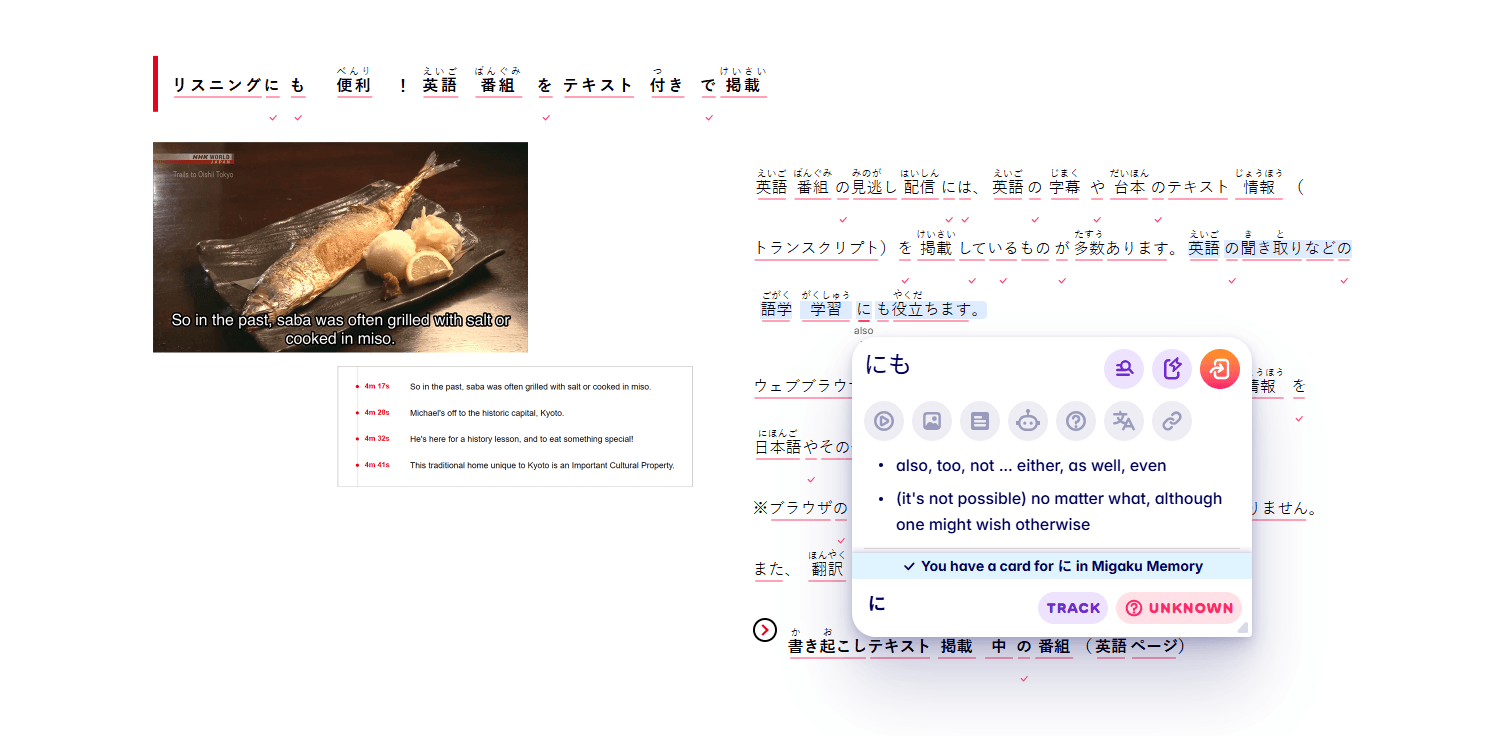
Anyway, if you want to see sonkeigo in action while learning from real Japanese content, Migaku's browser extension and app let you look up words and grammar patterns instantly while watching shows or reading articles. You can catch these respectful forms in context and build your understanding naturally. There's a 10-day free trial if you want to check it out.
 ---
## What makes the Japanese humble language and respectful language so nuanced...
🔍Sonkeigo represents a core part of communicating effectively in Japanese, especially in professional or formal contexts. The verb conjugation patterns, honorific prefixes, and special irregular forms all work together to create a respectful way of talking about others' actions. Combined with kenjougo for your own actions and teineigo as your baseline, you've got the complete keigo system that makes Japanese politeness so nuanced. Getting comfortable with sonkeigo takes exposure and practice.
> If you consume media in Japanese, and you understand at least some of the messages and sentences within that media, you will make progress. _Period_.
The effort is worth it, and it shows genuine cultural understanding.
---
## What makes the Japanese humble language and respectful language so nuanced...
🔍Sonkeigo represents a core part of communicating effectively in Japanese, especially in professional or formal contexts. The verb conjugation patterns, honorific prefixes, and special irregular forms all work together to create a respectful way of talking about others' actions. Combined with kenjougo for your own actions and teineigo as your baseline, you've got the complete keigo system that makes Japanese politeness so nuanced. Getting comfortable with sonkeigo takes exposure and practice.
> If you consume media in Japanese, and you understand at least some of the messages and sentences within that media, you will make progress. _Period_.
The effort is worth it, and it shows genuine cultural understanding.