# Korean vs Chinese: Which Language Should You Learn?
> Comparing Korean vs Chinese for language learners. We break down writing systems, pronunciation, and which is easier for English speakers to master.
**URL:** https://migaku.com/blog/korean/korean-vs-chinese
**Last Updated:** 2026-03-20
**Tags:** discussion, comparison
---
Trying to figure out whether to [learn Korean](https://migaku.com/learn-korean) or [Chinese](https://migaku.com/learn-chinese)? Good question. Both languages open up massive opportunities for culture, career, and travel, but they're wildly different in how they work. Korean has this genius alphabet system that you can learn in an afternoon, while Chinese throws thousands of characters at you. Chinese has tones that can make or break your meaning, while Korean stays pretty flat. Let's break down exactly what you're getting into with each one so you can pick the right fit.
----
## The writing system difference between Chinese and Korean
The writing systems for Korean and Chinese couldn't be more different, and this alone might determine which language you choose.
### Hangul makes everything easier
Korean uses [Hangul](https://migaku.com/blog/korean/korean-alphabet-complete-guide), an alphabet created in the 15th century specifically to be easy to learn. And honestly? It delivers on that promise. You've got 24 letters (14 consonants and 10 vowels) that combine into syllable blocks. An English speaker can usually read Hangul within a few hours of study. You might not understand what you're reading yet, but you can sound out the words.
The letters are arranged in blocks that represent syllables. So instead of writing letters in a line like English, Korean stacks them into little squares. The word for "Korea" (한국) has two blocks: 한 (han) and 국 (guk). Each block contains 2-3 letters arranged vertically and horizontally.
### Chinese characters are a whole different beast
Chinese uses characters (called Hanzi), where each symbol represents a word or morpheme. Mainland China uses simplified Chinese characters, while Taiwan and Hong Kong stick with traditional characters. Either way, you're looking at memorizing thousands of these things.
To read a Chinese newspaper comfortably, you need to know around 3,000-4,000 characters. For basic literacy, you're looking at about 1,500-2,000. Each character has to be memorized individually, though many share components (called [radicals](https://migaku.com/blog/chinese/chinese-radicals)) that can give you hints about meaning or pronunciation.
The good news? Once you learn a character, you've learned a word. The bad news? There are a LOT of characters to learn, and you can't just sound them out like you can with an alphabet.
----
## Korean vs Chinese pronunciation challenges
Both languages will mess with your mouth in different ways if you're an English speaker.
### Tones in Mandarin Chinese
Mandarin has four main tones plus a neutral tone. The same sound "ma" can mean mother (mā), hemp (má), horse (mǎ), or scold (mà) depending on your tone. Get the tone wrong and you might accidentally tell someone their mother is a horse. Happens more often than you'd think.
Learning to hear and pronounce these tones takes serious practice. Your brain isn't wired to use pitch for meaning if you grew up speaking English. You'll spend months training your ear to catch the differences and your mouth to produce them consistently.
### Korean pronunciation quirks
Korean doesn't have tones, which is a huge relief. But it does have some sounds that don't exist in English. The language has three sets of consonants: plain, aspirated, and tense. To an English speaker, these can sound nearly identical at first.
Take the "k" sound. Korean has ㄱ (g/k), ㅋ (k with a puff of air), and ㄲ (a tense, glottalized k). Native speakers hear these as completely different sounds, but English speakers often struggle to tell them apart for months.
Korean also does this thing where sounds change depending on what's around them. A ㄱ at the start of a word might sound like "g" but like "k" at the end. These sound changes (called phonological rules) follow patterns, but you need to learn them.
----
## Chinese vs Korean grammar structures
Both Korean and Chinese grammar work totally differently from English, just in opposite directions.
### Chinese keeps it relatively simple
Chinese grammar is actually pretty straightforward compared to most languages. No verb conjugation to worry about. No plural forms. No gendered nouns. The verb "to be" (是, shì) stays the same whether you're talking about I, you, he, yesterday, or tomorrow.
Word order does a lot of heavy lifting in Chinese. The basic pattern is **Subject-Verb-Object**, just like English. "I eat rice" translates pretty directly: 我吃饭 (wǒ chī fàn). Time expressions usually go at the beginning of sentences, and you add little particles to indicate things like past tense or questions.
The tricky part? **Chinese relies heavily on context.** You might hear a sentence that's just "吃了" (chī le, "ate already") with no subject at all. Who ate? You're supposed to figure that out from context.
### Korean grammar gets complex
Korean grammar is a whole different challenge. Verbs conjugate based on tense, politeness level, formality, and whether you're making a statement or asking a question. Korean grammar includes [multiple politeness levels](https://migaku.com/blog/korean/korean-honorifics) that you need to navigate depending on who you're talking to.
The **[word order is Subject-Object-Verb](https://migaku.com/blog/korean/korean-sentence-structure)**, which feels backward to English speakers. "I rice eat" instead of "I eat rice." You'll be constructing sentences in your head and then moving the verb to the end.
Korean also loves to stack grammatical endings onto verbs. A single verb can have multiple suffixes that add meaning. You might see something like 먹었었을까요 (meog-eoss-eoss-eulkkayo), which packs in past tense, another past tense marker, a speculative ending, and a polite question marker. All on one verb.
Conjugation in Korean takes time to master. But here's the thing: once you learn the patterns, they're pretty consistent. Korean is way more regular than English with its irregular verbs.
----
## Vocabulary: Borrowed, shared, and unique ones
### Chinese characters in Korean
Korean borrowed a ton of vocabulary from Chinese historically. Around 60% of Korean words have Chinese origins (called Sino-Korean words). These words were borrowed centuries ago when Korea adopted Chinese characters for writing.
The word for "school" in Korean is 학교 (hakgyo), which comes from the Chinese 学校 (xuéxiào). Same characters, similar pronunciation. If you learn Chinese first, you'll recognize tons of Korean vocabulary. If you learn Korean first, you'll have a head start on Chinese vocabulary (though the pronunciations have drifted over centuries).
Modern Korean writing uses Hangul exclusively for most purposes, but understanding these Chinese roots helps with vocabulary building.
### Mandarin vocabulary patterns
Chinese builds words by combining characters. Once you know basic characters, you can often guess the meaning of compound words. The word for "computer" is 电脑 (diànnǎo), which literally combines "electric" (电) and "brain" (脑). Makes sense, right?
This system is pretty logical once you get the hang of it. But you still need to memorize those base characters before the combinations start making sense.
----
## Practical factors: Should you learn Korean or Chinese
### Number of speakers
Mandarin Chinese has around 920 million native speakers, making it the most spoken language in the world. Korean has about 82 million native speakers, mostly in South Korea and North Korea.
If you're thinking purely about how many people you can talk to, Chinese wins by a landslide. But Korean gives you access to an incredibly influential culture in entertainment, technology, and business.
### Career and cultural benefits
Chinese opens doors in international business, diplomacy, and any field dealing with the world's second-largest economy. Mandarin skills are valuable in finance, trade, manufacturing, and tech.
Korean has blown up in cultural influence thanks to K-pop, K-dramas, Korean cinema, and Korean beauty products. The Korean entertainment industry is massive globally. Korean is also valuable in tech (Samsung, LG, Hyundai) and international relations.
### Learning resources
Both languages have tons of resources available now. Chinese has been taught widely for longer, so you'll find more traditional textbooks and courses. Korean resources have exploded in the past decade thanks to Hallyu (the Korean Wave).
Apps, YouTube channels, podcasts, and online courses exist for both. You can find native content (shows, movies, music, books) easily for either language.
----
## The verdict: Which should you learn
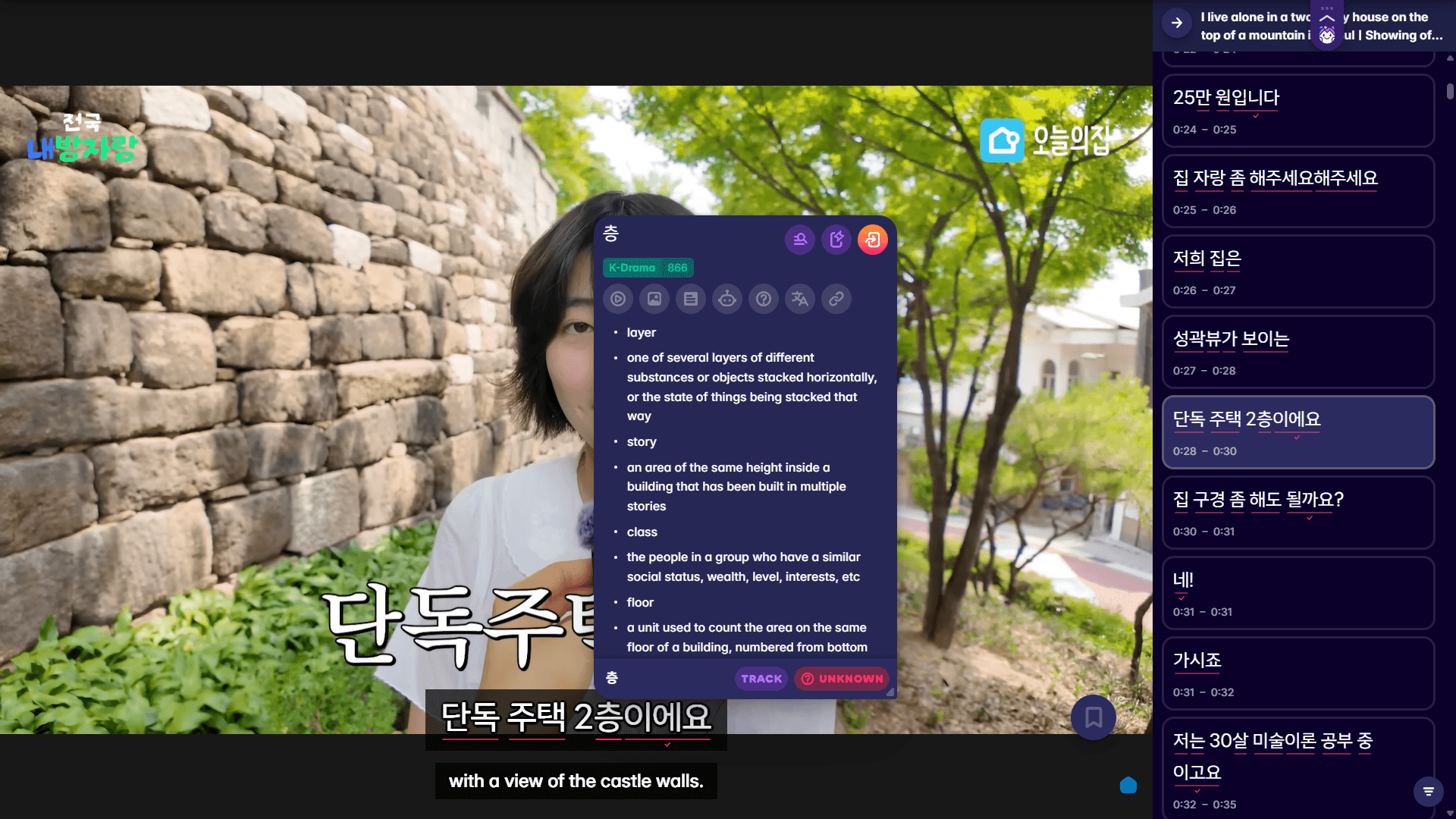
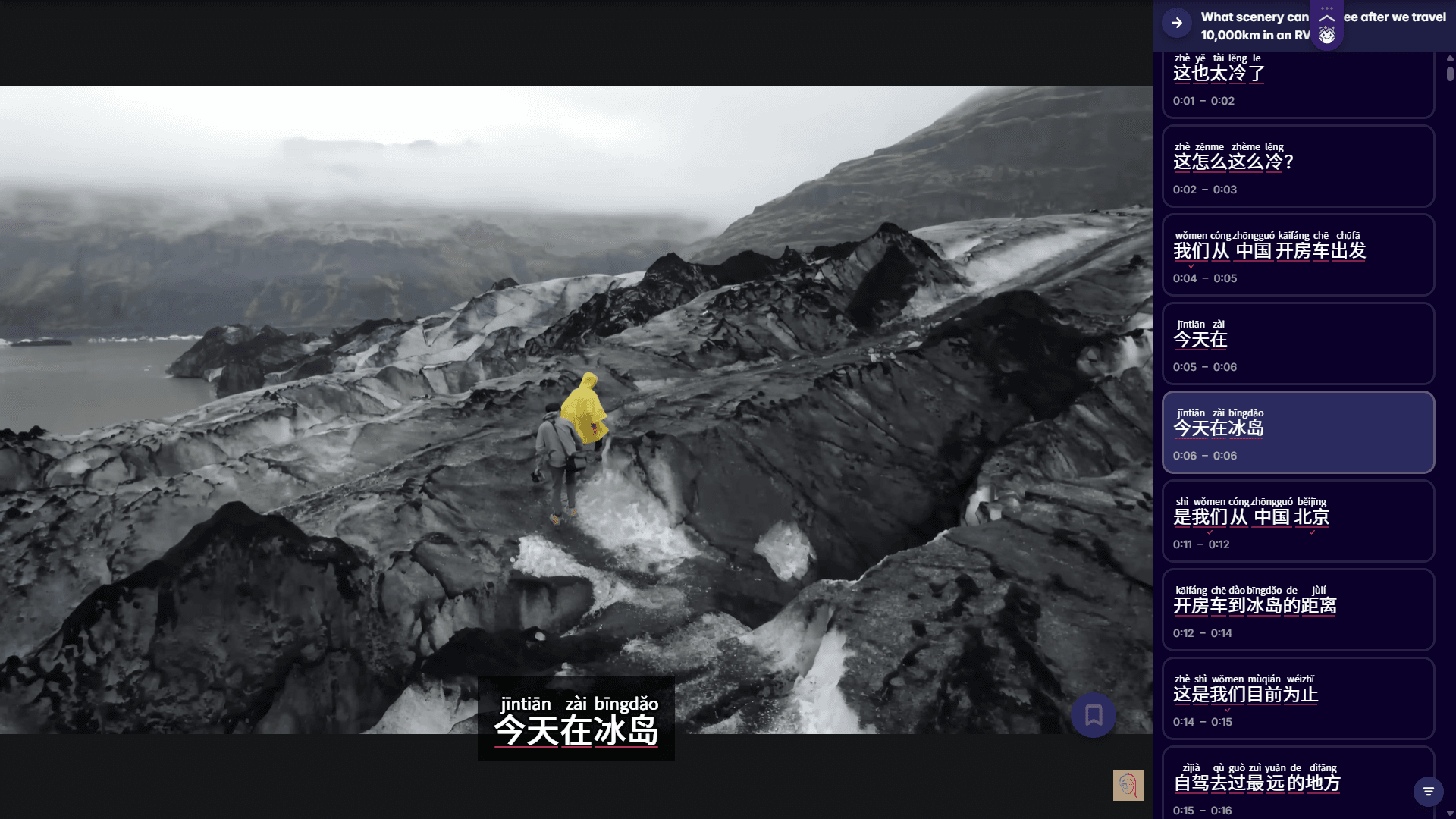
If you're serious about learning either language, Migaku's browser extension and app let you look up words instantly while watching shows or reading articles in Korean or Chinese. Makes immersion learning way more practical since you can learn from actual content you enjoy. There's a 10-day free trial if you want to check it out.
Choose Korean if you want an easier writing system, love Korean pop culture, or can't handle tones. The alphabet will get you reading quickly, and you'll be [watching K-dramas without subtitles](https://migaku.com/blog/korean/best-korean-shows-for-learning) before you know it.
 Choose Chinese if you want access to more speakers, need it for business with China, or prefer simpler grammar. Yeah, the characters are brutal, but the grammar won't twist your brain like Korean's verb conjugations.
 ----
## FAQs
Yeah, they absolutely look different when written down. Chinese uses only characters (Hanzi). Korean uses only Hangul in modern writing (those circular and linear alphabet letters arranged in blocks). Japanese uses a mix of three systems: kanji (borrowed Chinese characters), hiragana (curvy phonetic script), and katakana (angular phonetic script for foreign words).
Not really. Sure, Korean borrowed vocabulary from Chinese, but the grammar, pronunciation, and structure are completely different. Korean belongs to the Koreanic language family (possibly related to Altaic languages, though this is debated). Chinese belongs to the Sino-Tibetan family. The vocabulary overlap helps with learning, but that's about where the similarities end. Korean has complex verb conjugations and agglutinative grammar (stacking suffixes). Chinese has minimal conjugation and relies on word order and particles.
Depends on what you find difficult. Korean has the easier writing system by a mile. You can [learn Hangul in a day](https://migaku.com/blog/korean/korean-alphabet-pronunciation-guide). Chinese characters take years to master. But Korean grammar is more complex than Chinese grammar, with all those conjugation patterns and politeness levels. The Foreign Service Institute rates both as Category IV languages (the hardest for English speakers), estimating [2,200 hours to reach proficiency](https://migaku.com/blog/korean/how-long-does-it-take-to-learn-korean). But they're hard in different ways.
----
## If you prefer Korean culture, go for it!
Culturally and historically, Korea and China have influenced each other for thousands of years. China was a dominant cultural force in East Asia, and Korea adopted Chinese characters, Confucian philosophy, and various cultural practices. But genetically and linguistically, they're distinct peoples with different languages. Therefore, when choosing which one to learn, you should consider which one aligns with your future interests better and whose culture you are genuinely more interested in.
> If you consume media in the language you want to learn, and you understand at least some of the messages and sentences within that media, you will make progress. _Period_.
Pick one language, get decent at it, then add another if you want.📚💡
----
## FAQs
Yeah, they absolutely look different when written down. Chinese uses only characters (Hanzi). Korean uses only Hangul in modern writing (those circular and linear alphabet letters arranged in blocks). Japanese uses a mix of three systems: kanji (borrowed Chinese characters), hiragana (curvy phonetic script), and katakana (angular phonetic script for foreign words).
Not really. Sure, Korean borrowed vocabulary from Chinese, but the grammar, pronunciation, and structure are completely different. Korean belongs to the Koreanic language family (possibly related to Altaic languages, though this is debated). Chinese belongs to the Sino-Tibetan family. The vocabulary overlap helps with learning, but that's about where the similarities end. Korean has complex verb conjugations and agglutinative grammar (stacking suffixes). Chinese has minimal conjugation and relies on word order and particles.
Depends on what you find difficult. Korean has the easier writing system by a mile. You can [learn Hangul in a day](https://migaku.com/blog/korean/korean-alphabet-pronunciation-guide). Chinese characters take years to master. But Korean grammar is more complex than Chinese grammar, with all those conjugation patterns and politeness levels. The Foreign Service Institute rates both as Category IV languages (the hardest for English speakers), estimating [2,200 hours to reach proficiency](https://migaku.com/blog/korean/how-long-does-it-take-to-learn-korean). But they're hard in different ways.
----
## If you prefer Korean culture, go for it!
Culturally and historically, Korea and China have influenced each other for thousands of years. China was a dominant cultural force in East Asia, and Korea adopted Chinese characters, Confucian philosophy, and various cultural practices. But genetically and linguistically, they're distinct peoples with different languages. Therefore, when choosing which one to learn, you should consider which one aligns with your future interests better and whose culture you are genuinely more interested in.
> If you consume media in the language you want to learn, and you understand at least some of the messages and sentences within that media, you will make progress. _Period_.
Pick one language, get decent at it, then add another if you want.📚💡