# Language Exchange Tips: Conversation Exchange Techniques You Should Know
> Stop wasting time in unproductive language exchange sessions. Learn how to structure conversation exchanges and speak the language fluently in the end.
**URL:** https://migaku.com/blog/language-fun/language-exchange-tips
**Last Updated:** 2026-02-18
**Tags:** fundamentals, resources, culture, discussion
---
You've found a language exchange partner, set up a time to chat, and now you're staring at your screen wondering how to actually make this productive. Most people [dive into language](https://migaku.com/) exchange without a plan, end up speaking mostly English, and wonder why their Spanish or Japanese isn't improving. Here's the thing: language exchange can be incredibly effective, but only if you structure it right. After years of doing exchanges in multiple languages, I've figured out what works and what's just a waste of time for everyone involved.🗣️
---
## Why language exchange works (when done right)
Language exchange gives you something textbooks and apps can't: real conversation with a native speaker who's equally motivated to practice. You're both learners, which takes the pressure off compared to talking with a tutor. Plus, it's free.
The problem? Most language exchange sessions turn into unstructured hangouts where you speak 80% English and learn maybe three new words. That's fine if you want to make friends, but terrible if you actually want to get fluent.
Successful learners treat language exchange like structured practice time. They come prepared, they manage the time carefully, and they're specific about what kind of feedback they want.
---
## The 50/50 split is non-negotiable for successful language exchange
> ⏰This is the most important rule: **split your time evenly** between both languages. Seriously, set a timer.
Here's what typically happens without a timer: you start in your target language, struggle a bit, then naturally slip into English because it's easier. Before you know it, 40 minutes have passed and you've spent maybe 10 minutes actually practicing.
I use a simple timer on my phone. For a one-hour session, that's 30 minutes per language. For 45 minutes, do 22 minutes each with a minute to wrap up. When the timer goes off, you switch. No exceptions.
Some people feel awkward being this strict about it, but your language partner will actually appreciate it. They're there to practice too, and they probably feel the same frustration when sessions become lopsided.
---
## Structure your sessions with micro-goals
Don't just show up and wing it. Before each language exchange session, decide on one or two specific things you want to practice.
Maybe this week you're working on past tense storytelling. Or you want to practice giving opinions about movies. Or you're trying to use more transition words naturally.
I usually spend 5 minutes before a session writing down:
- One grammar point I want to use
- One topic I want to discuss
- Three new words or phrases I learned this week that I want to try using
This gives your conversation direction. Instead of the generic "how was your day" small talk that doesn't push your abilities, you're deliberately practicing specific skills.
Your language partner can do the samein the conversation exchange. At the start of each session, quickly share what you each want to focus on. Takes 30 seconds and makes everything more productive.
---
## Finding a language exchange partner who matches your level: Tandem and italki
Not all language exchange partners are created equal. The ideal partner is roughly at your level in your native language while you're at a similar level in their language. This keeps things balanced.
If you're intermediate in Spanish but your partner is a complete beginner in English, you'll spend most of your time doing basic corrections and explanations. That's more like tutoring than exchange.
Platforms like Tandem and italki's language exchange section let you filter by level, finding someone who can match your ability. Be honest about where you actually are. If you're A2/B1, say that. Don't claim you're intermediate when you can barely introduce yourself.
Also, looking for partners with similar goals works best. If you want to learn seriously in the new language and they want casual chatting to "maybe improve someday," you'll frustrate each other.
---
## How to handle corrections in language practice
This is where most language exchange sessions fail. You need to establish correction rules upfront, or you'll either get zero feedback or get interrupted every five seconds.
Here are the three approaches that work:
1. **First option: delayed corrections**. Your foreign language partner takes notes while you speak and gives you feedback at the end of your time block. This keeps conversation flowing naturally and lets you build momentum. I prefer this method because constant interruptions kill your confidence and make it hard to express complete thoughts.
2. **Second option: correction breaks**. Every 10 minutes, pause and let your partner share 2-3 corrections. This balances flow with regular feedback.
3. **Third option: immediate corrections for specific errors**. Tell your partner: "I'm working on using the subjunctive correctly. Please stop me every time I mess that up, but let other mistakes go." This focuses your learning without overwhelming you.
The worst approach? Saying "correct me whenever I make mistakes" with no structure. You'll either get corrected constantly and feel discouraged, or your partner will feel awkward correcting you and say nothing.
---
## Prepare conversation topics in advance
Walking into a language exchange with no topic ideas is like going to the gym with no workout plan. You'll probably do something, but it won't be very effective.
I keep a running list of conversation topics in my notes app. Some reliable ones:
- Describe a recent trip or experience in detail
- Explain how something works (A hobby, your job, a recipe)
- Discuss a movie, show, or book you both know
- Talk about cultural differences you've noticed
- Debate a light topic (Best pizza toppings, whether cats or dogs are better)
The key is choosing topics that push you to use varied vocabulary and grammar. Talking about your daily routine uses the same 200 words every time. Explaining why you think a particular movie is overrated forces you to use opinion phrases, complex sentences, and descriptive language.
Share your topic list with your partner beforehand. They can prepare too, which makes the conversation richer for both of you.
### Make it cultural exchange too
One of the best parts of language exchange is learning about another culture from someone who lives it. Don't just practice grammar; ask about holidays, food, social norms, regional differences, slang, whatever interests you.
This makes sessions more engaging and gives you practical cultural knowledge you won't get from textbooks. Plus, cultural topics naturally lead to rich conversations that expand your vocabulary.
Just be genuinely curious, not weird about it. Ask the same kinds of questions you'd want to answer about your own culture.
---
## Take notes during and after sessions
Keep a document open during your language exchange. When your partner uses a phrase you like, write it down. When they correct you, note it. When you struggle to express something, mark it so you can look it up later.
Right after the session, spend 10 minutes reviewing your notes. Add new words to your flashcard deck. Write example sentences using the corrections you received. This turns your conversation practice into lasting learning.
I've done language exchange sessions where I learned great stuff but didn't write it down. A week later, I couldn't remember any of it. Total waste.
Some people use shared Google Docs so both partners can add notes in real time. Pretty cool system if you're both into it.
---
## Avoid the English trap to improve language skills
Here's a common scenario: you're speaking in your target language, you don't know a word, so you switch to English to explain it. Then you stay in English because it's easier. Session ruined.
> ✒️Set a rule: if you don't know a word, **describe it** in your target language instead of switching.
This is actually great practice. Real fluency is being able to work around vocabulary gaps.
Can't remember the word for "blender"? Describe it: "the machine you use to mix fruit and make drinks." Your partner will tell you the word, and you'll remember it better because you struggled to describe it first.
Only switch to English if you're completely stuck and the conversation has stopped. Even then, get the word you need, then switch back immediately.
---
## Make language exchange consistent
One 3-hour marathon session per month is way less effective than 30 minutes twice a week. [Language learning](https://migaku.com/blog/language-fun/3-things-to-learn-a-language) rewards consistency.
Find a schedule that actually works for your life and stick to it. Tuesday and Thursday at 7pm. Every Saturday morning. Whatever. Put it in your calendar like any other appointment.
Your brain needs regular exposure to improve. Sporadic practice means you spend half of each session remembering what you talked about last time and getting back into the flow.
Also, regular sessions build accountability. If you know you're meeting your language partner on Thursday, you'll probably do a bit of study beforehand so you don't show up completely unprepared.
---
## Use video calls, not just text
Some people prefer text-based language exchange apps, and sure, that helps with writing. But if you want to actually speak the language, you need to practice speaking and listening at the same time.
Video calls (Skype, Zoom, Discord, whatever) force you to think on your feet, pronounce words correctly, and understand spoken language at natural speed. This is way harder than texting, which means it's way more valuable.
Texting lets you look up every word and craft perfect sentences. That's useful for learning, but it doesn't build the real-time processing skills you need for actual conversation.
> I do both: **regular video calls** for speaking practice, **plus occasional text exchanges** for writing practice and staying in touch between sessions. But the video calls are the core of language exchange.
---
## What to do when your language partner isn't working out
Sometimes a language exchange partnership just doesn't click. Maybe your schedules keep conflicting. Maybe your partner constantly cancels. Maybe you have different expectations about correction and structure.
That's fine. Don't force it.
Politely let them know it's not working and find someone else. Most exchange platforms have plenty of people looking for language exchange partners. You're not obligated to stick with someone who isn't helping you improve.
Red flags to watch for:
- They want to practice way more than 50/50 (Always going over their time)
- They're clearly looking for dating rather than language practice
- They cancel or reschedule constantly
- They refuse to give you corrections when you ask
- They get impatient or condescending when you make mistakes
Good language exchange partners are out there. Don't settle for ones that waste your time.
---
## Combine language exchange with other learning methods
Language exchange is powerful, but it's not a complete learning system. You still need to study grammar, build vocabulary, and consume content in your target language.
Think of language exchange as the place where you practice and test what you're learning elsewhere. You study verb conjugations during the week, then use them in conversation during your exchange session. You learn new vocabulary from reading, then try to naturally work those words into your next chat.
A tutor can explain grammar rules and correct your mistakes systematically. Language exchange lets you practice in a lower-pressure environment with someone at your level. Both have value.
The learners who improve fastest use multiple methods: structured study, [immersion](https://migaku.com/blog/language-fun/comprehensible-input-method-language-learning) through content, tutoring or classes, and regular language exchange. Each reinforces the others.
---
## Track your progress over time
Every few weeks, **record a short video of yourself** speaking in your target language. Talk for 2-3 minutes about anything. Don't script it.
1. **Watching these recordings** over time is incredibly motivating. You'll notice improvements you don't see day-to-day: better pronunciation, more complex sentences, fewer hesitations, bigger vocabulary.
2. You can also ask your language partner for **periodic feedback**: "Compared to when we started, what's improved? What should I focus on next?" Most partners will have useful observations about your progress.
This kind of tracking helps you see that language exchange is actually working, even when progress feels slow.
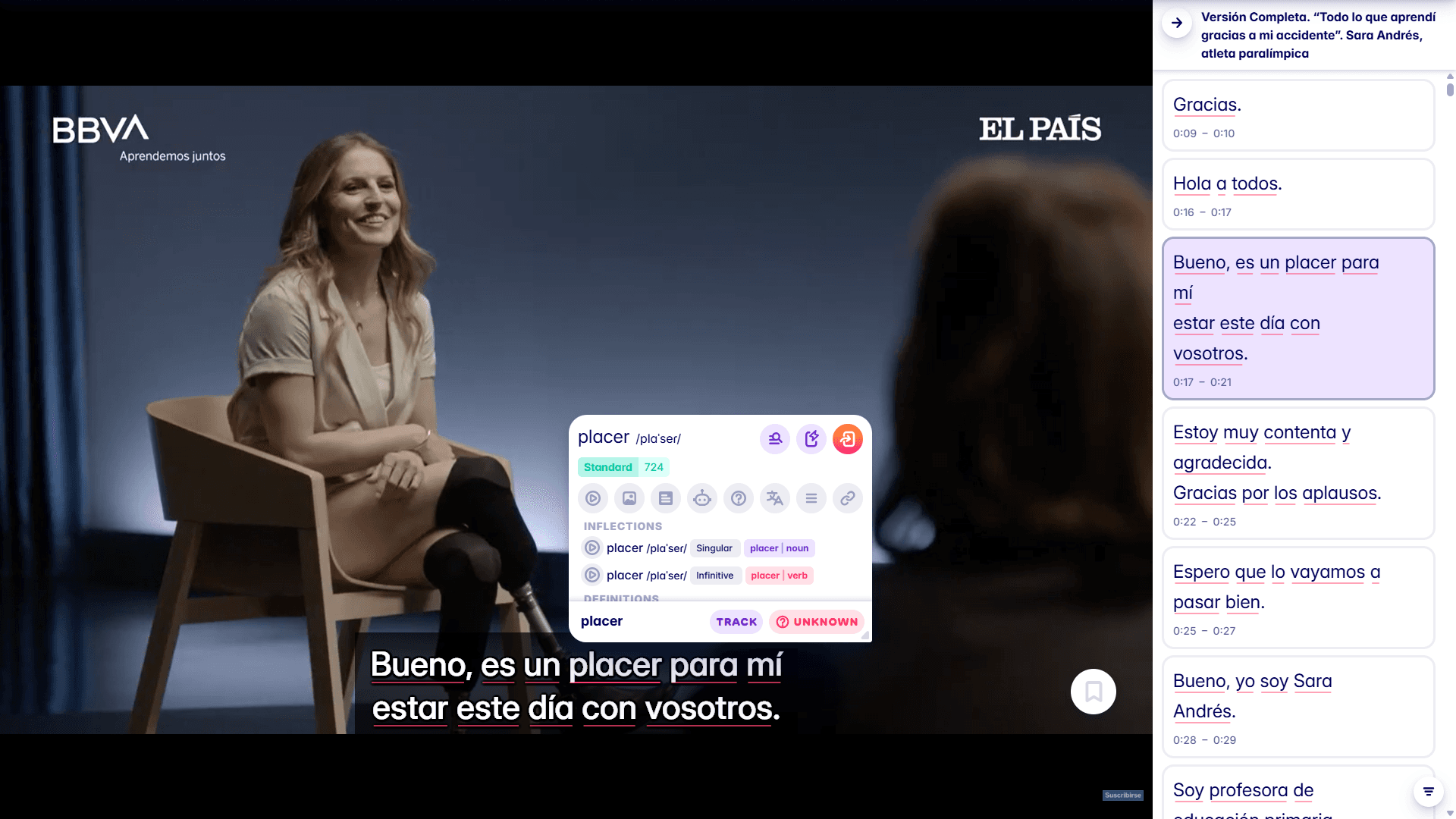
Anyway, if you want to level up your language learning beyond conversation practice, Migaku's browser extension and app let you look up words instantly while watching shows or reading articles in your target language. Makes immersion way more practical than pausing every 10 seconds to check a dictionary. There's a 10-day free trial if you want to check it out.
 ---
## The reality check: Language exchange takes effort for every learner
Language exchange isn't a magic solution. You can't just chat casually once a week and expect to become fluent. It requires preparation, structure, consistency, and active effort from both people. But when you do it right, it's one of the most effective free resources available for language learning, and it can improve your overall immersion in the new language you want to learn, together with other media content consumption.
> If you expose yourself to the language environment, and you understand at least some of the messages and sentences, you will make progress. _Period_.
When it gets easier, it means you've got better!
---
## The reality check: Language exchange takes effort for every learner
Language exchange isn't a magic solution. You can't just chat casually once a week and expect to become fluent. It requires preparation, structure, consistency, and active effort from both people. But when you do it right, it's one of the most effective free resources available for language learning, and it can improve your overall immersion in the new language you want to learn, together with other media content consumption.
> If you expose yourself to the language environment, and you understand at least some of the messages and sentences, you will make progress. _Period_.
When it gets easier, it means you've got better!