Japanese Alphabet Guide: Japanese Writing System Explained (Hiragana, Katakana & Kanji )
Last updated: April 12, 2026
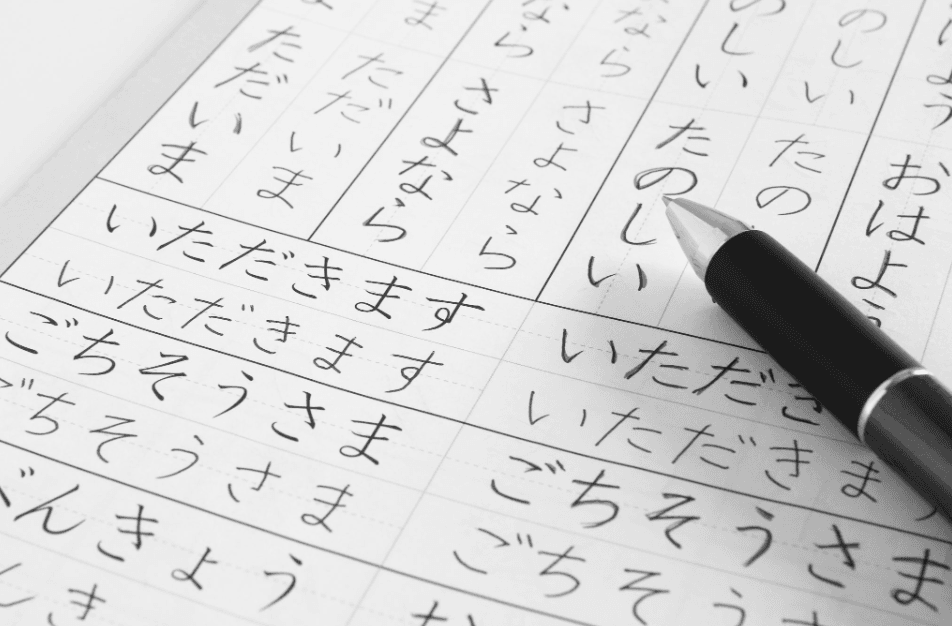
So here's the thing about the Japanese alphabet: technically, there isn't one. I know that sounds confusing when you're searching for "Japanese alphabet" as you start to learn Japanese, but stick with me because understanding how Japanese writing actually works is way more interesting than just memorizing letters. Japanese uses three different writing systems at the same time. Yeah, three. When I first learned this, I thought it was unnecessarily complicated, but once you understand why each system exists, it actually makes a lot of sense.
The Japanese writing system: Three scripts working together
The Japanese writing system combines hiragana (ひらがな), katakana (カタカナ), and kanji (漢字) in every sentence you'll read. Each one has a specific job, and Japanese people switch between them constantly without even thinking about it.
Let me show you a real sentence: 私はコーヒーを飲みます (Watashi wa kōhī o nomimasu) which means "I drink coffee." See how different the characters look? That's because 私 is kanji, は and を and ます are hiragana, and コーヒー is katakana. All in one sentence.
Hiragana: The foundation of Japanese
Hiragana is the first script most Japanese kids learn, and honestly, it's where you should start, too. There are 46 basic hiragana characters, and each one represents a sound. Think of it like building blocks for Japanese pronunciation.
The hiragana characters follow a pretty logical pattern based on vowel sounds. Japanese has five vowels: a (あ), i (い), u (う), e (え), and o (お). Then you add consonant sounds to create the rest. So ka (か), ki (き), ku (く), ke (け), ko (こ) all use the "k" consonant with different vowels.
Pretty cool how systematic it is, right?
Hiragana gets used for native Japanese words, grammatical particles, and verb endings. When you see those curvy, flowing characters in Japanese text, that's usually hiragana doing its job.
Katakana: The foreign word specialist
Katakana is what the Japanese alphabet uses for foreign words. When Japanese borrows words from English or other languages, they write them in katakana. The script has the same 46 basic sounds as hiragana, but the characters look more angular and sharp.
Coffee becomes コーヒー (kōhī), computer becomes コンピューター (konpyūtā), and hamburger becomes ハンバーガー (hanbāgā). You can see how the sounds get adapted to fit Japanese pronunciation patterns.
Katakana also gets used for emphasis (kind of like italics in English), animal sounds, and scientific terms. When you're reading Japanese manga or watching anime, you'll notice katakana shows up for sound effects too.
Kanji: The complex characters
Now we get to kanji, the Chinese characters that Japanese adopted and modified over centuries. This is where things get real. There are thousands of kanji, and each one represents a meaning rather than just a sound.
The Japanese government's official list includes 2,136 jōyō kanji (常用漢字), which means "regular use kanji." These are the ones you need to know to read newspapers, books, and official documents. Japanese students spend their entire school career learning these characters.
Each kanji can have multiple readings depending on context. The character 生, for example, can be read as "sei," "shō," "nama," "i," "u," "ha," or "ki" depending on the word. Yeah, it's a lot. The meaning relates to "life" or "birth," but how you pronounce it changes based on whether it's in a compound word or standing alone.
Some common kanji you'll see everywhere: 日 (sun/day), 本 (origin/book), 人 (person), 月 (moon/month), 水 (water). When you combine them, you get new meanings. 日本 (Nihon) means Japan, literally "sun origin."
When was the Japanese alphabet invented
The history is actually pretty fascinating. Japanese people were speaking Japanese for centuries before they had any writing system at all. Around the 5th century, Chinese characters (kanji) came to Japan through Korea, and Japanese scholars started using them to write Japanese.
But here's the problem: Chinese and Japanese are completely different languages. Chinese characters worked for meaning, but Japanese has grammatical elements that Chinese doesn't have. So around the 9th century, Women of the Imperial Court had the brilliant idea to simplify certain kanji and use them purely for their sounds. That's how hiragana was born.
The role of kana in modern Japanese
Even though kanji gets all the attention, kana remains essential to the Japanese language. Every Japanese sentence needs hiragana for grammatical structure. Particles like は (wa), を (o), and が (ga) are always written in hiragana. Verb conjugations use hiragana endings.
Children's books are often written entirely in hiragana because kids haven't learned enough kanji yet. As readers get older, more kanji replace hiragana, but the grammatical elements stay in hiragana.
Katakana has become increasingly important as Japan borrows more words from English and other languages. Technology terms, brand names, and trendy words often appear in katakana. Walking through Tokyo, you'll see katakana everywhere on signs and advertisements.
How to learn Japanese: Starting with the writing systems
When you want to learn Japanese, the writing system feels like the biggest hurdle. I'm going to be honest, it takes time. There's no magic shortcut to learning thousands of kanji.
But here's what actually works:
- Start with hiragana. Spend a week or two getting comfortable with all 46 characters. Use them to write out Japanese words you're learning. The muscle memory helps a ton.
- Then move to katakana. It'll go faster because you already understand how the syllable system works. You're just learning new shapes for the same sounds.
- For kanji, learn them in context with vocabulary words. Trying to memorize kanji meanings and readings in isolation is pretty miserable. When you learn the word 食べる (taberu, to eat), you're learning the kanji 食 along with its reading and meaning all at once.
Practical tips to learn to read and write Japanese
- Write by hand, even if you're learning primarily for reading. The act of writing each stroke helps cement the characters in your memory way better than just looking at them.
- Use spaced repetition for kanji. The sheer number of characters means you need a system to review them regularly. Learning a kanji once doesn't mean you'll remember it next month.
- Read as much as possible. Start with simple materials and gradually work your way up. Graded readers designed for learners are perfect for this. You'll see the same kanji and vocabulary patterns repeatedly, which reinforces your learning.
- Pay attention to radicals, the building blocks of kanji. Many kanji share common components that give hints about meaning or pronunciation. The radical 氵(water) appears in characters related to water: 海 (ocean), 川 (river), 池 (pond).
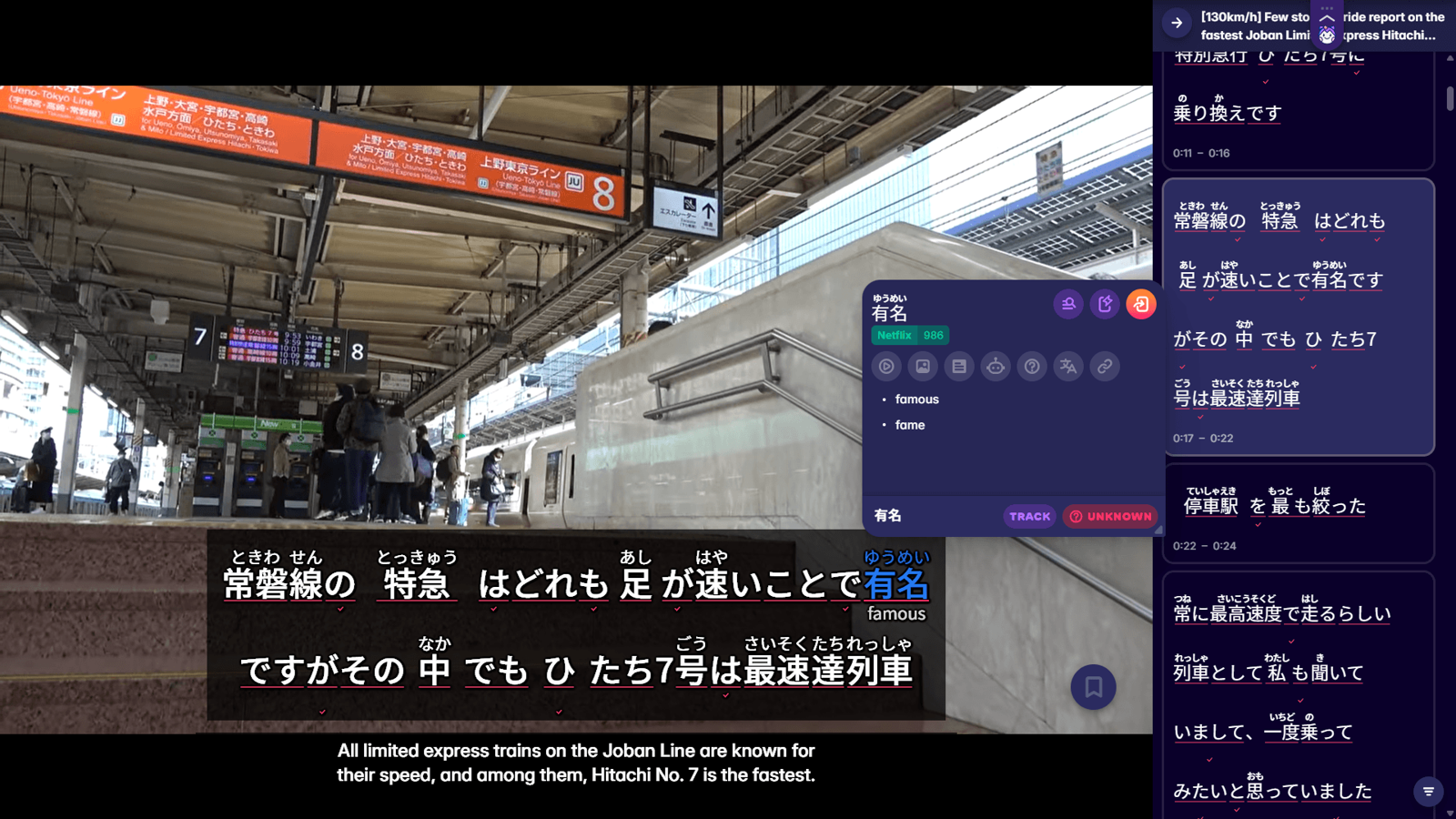
Anyway, if you want to actually practice reading Japanese with real content, Migaku's browser extension and app let you look up words and kanji instantly while watching shows or reading articles. You can see furigana for kanji you don't know yet and build your vocabulary naturally. There's a 10-day free trial if you want to check it out.
FAQs
Moving forward with Japanese writing
The Japanese writing system takes commitment to learn, but millions of people have done it successfully. You're learning the same system that Japanese elementary school kids master, and they manage just fine. Start with the basics: hiragana first, then katakana, then gradually add kanji as you learn vocabulary. Use real Japanese content as much as possible. Songs, shows, manga, and articles expose you to natural Japanese and reinforce what you're learning.
If you consume media in Japanese, and you understand at least some of the messages and sentences within that media, you will make progress. Period.
Practice consistently, and you'll get there!