# Japanese Humble Language Kenjougo: How to Use 謙譲語 (Humble Form) Right
> New to the Japanese polite language? Learn how to use kenjougo (Japanese humble language) with special verbs, お/ご patterns, and real examples.
**URL:** https://migaku.com/blog/japanese/japanese-humble-language-kenjougo
**Last Updated:** 2026-02-15
**Tags:** fundamentals, vocabulary, phrases, grammar
---
If you're [learning Japanese](https://migaku.com/learn-japanese) beyond the basics, you've probably realized that politeness levels are kind of a big deal. You can't just throw around casual verbs when talking to your boss or a customer. That's where kenjougo comes in. It's one of the three main types of [keigo](https://migaku.com/blog/japanese/sonkeigo-vs-kenjougo) (Polite language), and it's all about lowering yourself to show respect to others. Sounds a bit dramatic, but it's actually super practical once you get the hang of it. This guide will walk you through what kenjougo is, how it works, and when to use it.
---
## What is kenjougo
Kenjougo () is Japanese humble language. The kanji breaks down pretty clearly: means "humble" or "modest," means "yield" or "defer," and means "language." So you're literally using language that defers to others by **humbling yourself**.
> 💡Here's the thing about kenjougo: you use it when talking about your own actions or the actions of your in-group (like your company or family) to someone of higher status.
You're basically lowering your position to elevate the listener. It's different from just being polite. You're actively showing humility through specific verb forms and expressions.
The etymology tells you a lot about Japanese culture's approach to politeness. While Western languages might add a "please" or "sir," Japanese restructures entire verbs to encode respect and humility directly into the grammar. Pretty cool from a linguistic perspective.
---
## Understanding keigo: 尊敬語, 謙譲語, 丁寧語
Before diving deeper into kenjougo, you need to understand where it fits in the bigger picture of (keigo). Japanese has three main types of respectful language, and mixing them up is one of the most [common mistakes](https://migaku.com/blog/japanese/difficult-japanese-grammar) learners make.
Keigo breaks down into:
1. Sonkeigo () - Honorific language that elevates the actions of others
2. Kenjougo () - Humble language that lowers your own actions
3. Teineigo () - Polite form using です/ます
Teineigo is the [basic polite form](https://migaku.com/blog/japanese/basic-japanese-phrases) you learn early on. You just stick ます on verbs and です after nouns. Easy enough. Sonkeigo and kenjougo are where things get interesting because they involve special verb forms.
Sonkeigo elevates what someone else does. If your boss reads something, you might say まれる instead of む. Kenjougo humbles what you do. If you read something, you might say する instead of む.
The key difference: sonkeigo is about them, kenjougo is about you.
---
## How kenjougo works: Special verbs to humble oneself
Some Japanese verbs have completely unique humble forms. You can't just apply a formula. You've got to memorize these special verbs because they're used constantly in business and formal situations.
Here are the most common ones:
| Verb | Sonkeigo (Honorific Form) |
| - | - |
| く/ | る or う |
| する | す |
| う | す or げる |
| べる | く |
| む | く |
| る | する |
| く | う or する |
| っている | or げる |
| あげる | げる |
| もらう | く |
| う | |
Notice how some of these use kanji that emphasize respect or humility. means "to worship" or "bow," and it shows up in several humble verbs like and .
---
## Creating humble forms with お and ご
Beyond special verbs, you can create [humble expressions](https://migaku.com/blog/japanese/comprehensive-japanese-letter-writing-guide) using the prefixes **お and ご**. This is actually one of the most productive patterns in kenjougo.
> The basic formula is: **お + verb stem + する/いたす**
For example:
| Verb | English | Sonkeigo |
| - | - | - |
| る | To send | おりする |
| つ | To wait | おちする |
| く | To ask | おきする |
| える | To convey | おえする |
You use ご with words that have Chinese origins (words you'd typically write in kanji):
| Verb | English | Sonkeigo |
| - | - | - |
| する | To guide | ごする |
| する | To explain | ごする |
| する | To contact | ごする |
The choice between お and ご isn't random. Native Japanese words (Wago) take お, while Sino-Japanese words (Kango) take ご. There are exceptions, but that's the general rule.
---
## When to use kenjougo
Knowing when to use kenjougo matters just as much as knowing how. Use it wrong and you'll sound weird or even rude.
You use kenjougo when:
1. Talking about your own actions to someone of higher status (Your boss, a customer, a teacher, elders)
2. Talking about your in-group's actions to outsiders (Your company's actions when speaking to a client)
3. You want to show respect through humility
You don't use kenjougo when:
1. Talking about someone else's actions (Use sonkeigo instead)
2. Talking casually with friends or peers
3. Describing your own actions in neutral contexts
Here's a practical example. If you're meeting a client and want to say "I will contact you tomorrow," you'd say:
- ごします。(Ashita go-renraku itashimasu.)
You're using ご (Humble form of contact) and す (Humble form of do). You're lowering your action to show respect to the client.
---
## Common kenjougo phrases and expressions
Some kenjougo expressions come up constantly in daily Japanese, especially in business settings. Here are the ones you'll hear all the time:
- さんをごじですか?(Hashimoto-san wo gozonji desu ka?)
This means "Do you know Mr. Hashimoto?" The verb る becomes ごじ in its humble form. Wait, why are you humbling yourself about knowing someone? In this case, you're showing respect to the person you're asking.
- Maggie Senseiをごじですか?(Maggie Sensei wo gozonji desu ka?)
Same structure, asking if someone knows Maggie Sensei. This phrase is super common in business when making introductions or networking.
- おいをおりしてもよろしいですか?(Otearai wo okari shite mo yoroshii desu ka?)
This means "May I use the restroom?" Literally you're saying "May I borrow the toilet?" using the humble form おりする. The politeness level here is appropriate for formal situations like being a guest at someone's home or in a business setting.
Other useful phrases:
- ございません
*I'm very sorry* (Using humble verb す)
- させていただきます
*I will look at it* (Stacking humble forms)
- おちしております
*I am waiting* (Humble progressive form)
---
## Kenjougo in business and customer service
[Business Japanese](https://migaku.com/blog/japanese/anime-manga-business-japanese) is where kenjougo really shines. Customer service workers, salespeople, and office workers use it constantly because they're always positioning themselves below the customer or client.
**In a store**, you'll hear staff say:
- おちください。(Shoushou omachi kudasai.)
"Please wait a moment." They're using the humble prefix お with つ.
- こちらにおをおきください。(Kochira ni onamae wo okaki kudasai.)
"Please write your name here." The お prefix makes it humble and respectful.
**In emails**, business Japanese gets even more formal. You'll see phrases like:
- ごのほどよろしくおいします。(Go-kentou no hodo yoroshiku onegai itashimasu.)
"I humbly ask for your consideration." This stacks multiple polite and humble forms together.
The business world expects this level of politeness. Using casual forms with clients or customers would be considered incredibly rude. When you're representing your company to outsiders, you humble your company's actions even when talking about your boss.
---
## Common mistakes when learning kenjougo
Everyone messes up kenjougo when they're learning it. Here are the mistakes I see most often:
1. Using kenjougo for other people's actions: You can't say your boss りました (Humble form of came). Your boss doesn't humble themselves in your speech. Use sonkeigo instead: られました or いらっしゃいました.
2. Mixing up the prefixes: Using ご with native Japanese words or お with Chinese-origin words sounds off. You wouldn't say ごちする. It's おちする.
3. Over-humbling: Using kenjougo with friends or in casual situations makes you sound weird or sarcastic. Save it for actual formal situations.
4. Under-humbling: Not using kenjougo when the situation calls for it can make you sound arrogant or disrespectful, especially in business contexts.
5. Using the wrong special verb: There are quite a few special humble verbs, and using the regular verb in a formal situation stands out. You need to memorize the common ones.
---
## How to practice and learn kenjougo
Learning kenjougo takes time because you need to internalize both the forms and the social contexts. Here's how to actually get better at it:
1. Start with the most common special verbs. Focus on る, す, す, く, and う first. These show up constantly.
2. Watch Japanese business dramas or variety shows where people interact across status levels. You'll hear kenjougo in action and start picking up on when it's used.
3. Practice writing formal emails in Japanese. Email templates force you to use proper kenjougo because the context is clear and the expectations are high.
4. Pay attention to customer service interactions. Convenience store clerks, restaurant staff, and hotel workers use textbook kenjougo all day long.
5. Learn Japanese with materials that include keigo explanations. Textbooks aimed at intermediate learners usually have dedicated sections on the different types of keigo and when to use each.
The real trick is exposure. You need to see and hear kenjougo used naturally in context. Reading business Japanese or watching office dramas gives you that context way better than just memorizing verb charts.
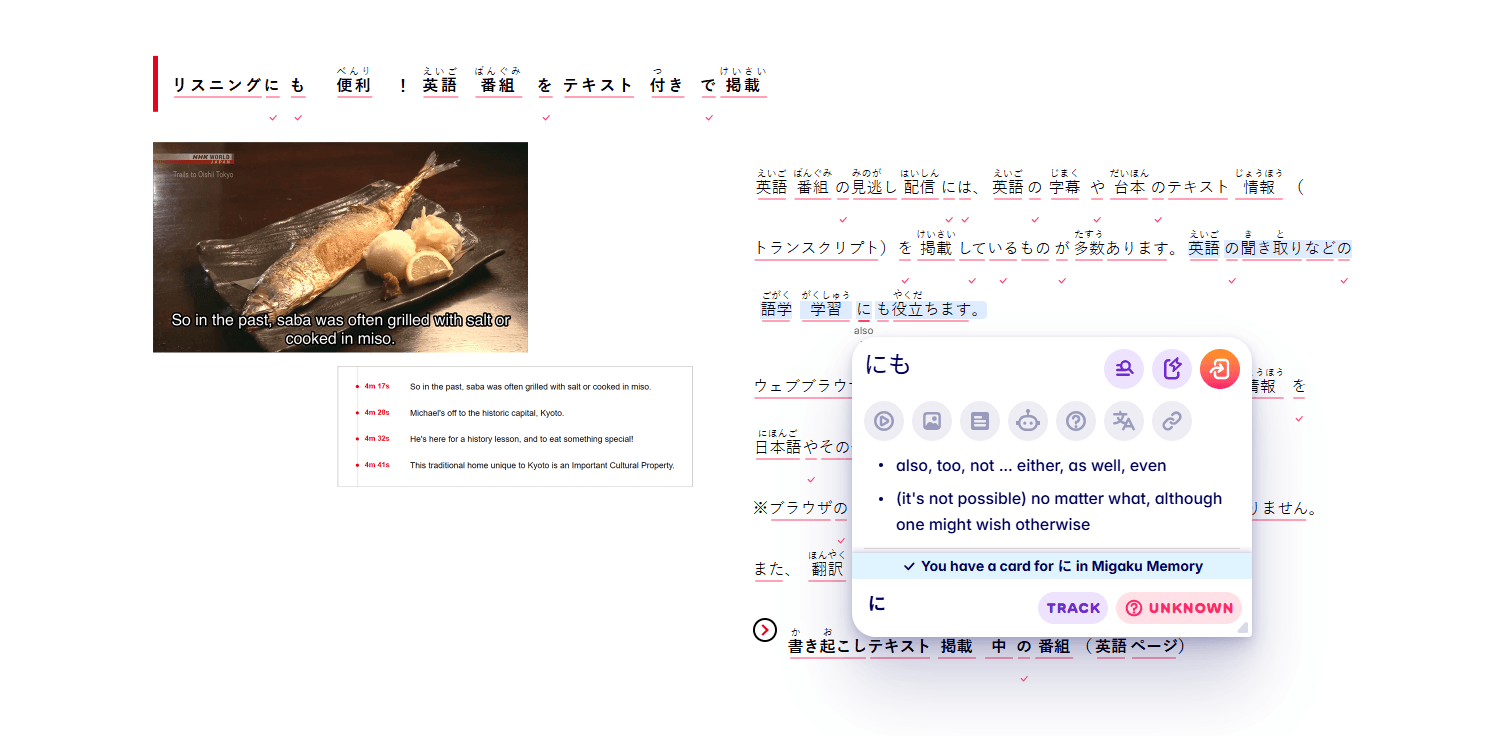
Anyway, if you want to actually learn Japanese through immersion with real content, Migaku's browser extension and app let you look up words instantly while watching shows or reading articles. Makes picking up kenjougo from actual usage way more practical. There's a 10-day free trial if you want to check it out.
 ---
## Using kenjougo in Japanese culture as a learner
Yes, it takes extra effort to get used to the Japanese polite culture and humble speech when talking to someone. Especially when in social situations, you need to not just know when to use polite language, but also how to use it fluently. This language recipe is new, but the special ingredient remains unchanged - time and exposure. The more you expose yourself to [real Japanese](https://migaku.com/blog/japanese/best-japanese-learning-apps) in formal contexts, the more these patterns will click. It's one of those things where immersion really helps because you need to see the social dynamics in action.
> If you consume media in Japanese, and you understand at least some of the messages and sentences within that media, you will make progress. _Period_.
Once you've acquired them, no one can take them away from you!🧠
---
## Using kenjougo in Japanese culture as a learner
Yes, it takes extra effort to get used to the Japanese polite culture and humble speech when talking to someone. Especially when in social situations, you need to not just know when to use polite language, but also how to use it fluently. This language recipe is new, but the special ingredient remains unchanged - time and exposure. The more you expose yourself to [real Japanese](https://migaku.com/blog/japanese/best-japanese-learning-apps) in formal contexts, the more these patterns will click. It's one of those things where immersion really helps because you need to see the social dynamics in action.
> If you consume media in Japanese, and you understand at least some of the messages and sentences within that media, you will make progress. _Period_.
Once you've acquired them, no one can take them away from you!🧠