# Easiest Languages to Learn for Native English Speakers in 2026
> Discover the easiest languages for English speakers to learn in 2026. From Norwegian to Spanish, learn which languages take just 600 hours vs 2,200+.
**URL:** https://migaku.com/blog/language-fun/easiest-languages-to-learn-for-english-speakers
**Last Updated:** 2026-02-09
**Tags:** culture, discussion, deepdive
---
Thinking about [picking up a second language](https://migaku.com/) but feeling overwhelmed by all the options? You're definitely not alone. The good news is that some languages are genuinely way easier for English speakers to learn than others.✔️ We're talking about languages where you can hold basic conversations in a few months instead of grinding for years. Let's break down which languages will give you the fastest wins and why they're so much more approachable than the rest.
---
## What makes a language easier to learn
Before we jump into specific languages, it helps to understand why some are genuinely easier than others. This isn't just subjective opinion, there's real linguistic science behind it.
The [Foreign Service Institute](https://2009-2017.state.gov/m/fsi/sls/orgoverview/languages) (FSI) has spent decades training diplomats in foreign languages, and they've tracked exactly how long it takes English speakers to reach professional proficiency. They categorize languages into difficulty levels, with Category I being the easiest (Around 600-750 hours of study) and Category IV being the hardest (2,200+ hours for languages like Arabic or Mandarin).
Here's what makes learning a language easier for you as an English speaker:
1. Shared vocabulary is huge. If a language shares tons of words with English (Called cognates), you already know hundreds or even thousands of words before you start. When you see "hospital" in Spanish (hospital), "music" in French (musique), or "problem" in Dutch (probleem), your brain instantly recognizes them.
2. Grammar complexity matters a lot. Languages with simpler [verb conjugation](https://migaku.com/blog/japanese/japanese-verb-conjugation)s, fewer noun cases, and straightforward [sentence structure](https://migaku.com/blog/japanese/japanese-sentence-structure)s will save you months of headaches. Some languages make you memorize different forms for masculine, feminine, and neutral nouns across multiple cases. Others keep it way simpler.
3. The writing system can be a dealbreaker. Languages using the Latin alphabet (The same one English uses) let you start reading immediately. Compare that to learning entirely new writing systems like Cyrillic, Arabic script, or thousands of Chinese characters.
4. Pronunciation difficulty varies wildly. Some languages have sounds that simply don't exist in English, making them physically harder to produce. Others stick to familiar sounds you've been making your whole life.
---
## The FSI language categories explained
The FSI groups languages into categories based on how long their diplomats typically need to reach "Professional Working Proficiency" (Roughly equivalent to B2/C1 on the CEFR scale, if you're familiar with those levels).
1. Category I languages take about 24-30 weeks (600-750 hours) and include most Germanic and Romance languages.
2. Category II needs around 36 weeks (900 hours) and includes languages like German and Indonesian.
3. Category III requires 44 weeks (1,100 hours) for languages with significant linguistic or cultural differences.
4. Category IV demands 88 weeks (2,200 hours) for the hardest languages like Japanese, Arabic, Mandarin, and Korean.
The CEFR levels (A1, A2, B1, B2, C1, C2) work differently. They measure specific competencies rather than study hours. A1 is absolute beginner, A2 is elementary, B1 is intermediate, B2 is upper intermediate, C1 is advanced, and C2 is mastery (Near-native). Most casual learners aim for B1 or B2, where you can handle most everyday situations comfortably.
---
## The easiest languages for English speakers
### 1. Norwegian is easier to learn than others
Norwegian consistently ranks as one of the easiest languages for English speakers to learn, and for good reason. As a Germanic language (Just like English), it shares a ton of structural DNA with what you already know.
The grammar is surprisingly straightforward. Norwegian has simpler verb conjugations than most European languages. Verbs don't change based on person or number, so "I go", "you go", and "they go" all use the same verb form. Pretty cool!
Vocabulary overlaps heavily with English. Words like "problem" (problem), "start" (starte), and "winter" (vinter) are basically identical. Even when words differ, they often follow predictable patterns that make them easy to remember.
Pronunciation is manageable for English speakers. Yes, there are some new sounds to learn, but nothing compared to tonal languages or languages with completely foreign phonemes. Plus, nearly every Norwegian speaks excellent English, so you'll find patient practice partners everywhere.
Around 5 million people speak Norwegian, primarily in Norway. While that's not a massive speaker population, Norway's high quality of life and strong economy make it useful for anyone interested in Scandinavian culture or work opportunities.
### 2. Spanish is another easy language
Spanish is probably the most popular language to learn for English speakers, and it deserves that reputation. It's a Romance language with Latin roots, which means English speakers already recognize thousands of words thanks to English's heavy Latin borrowing.
The grammar follows logical patterns. Yes, you'll need to learn verb conjugations and gendered nouns, but the rules are consistent and predictable. Once you understand the patterns, you can apply them reliably.
Pronunciation is phonetic and clear. Spanish words are pronounced exactly as they're written, with consistent rules and no weird exceptions like English has. Each vowel makes one sound, period.
With over 500 million native speakers worldwide, Spanish offers incredible practical value. It's the official language in 20 countries across Europe, Latin America, and even parts of Africa. Whether you're [travel](https://migaku.com/blog/spanish/spanish-travel-phrases-essential-guide)ing, working internationally, or just consuming media, Spanish opens massive doors.
The abundance of learning resources helps too. You'll find endless Spanish music, movies, podcasts, books, and YouTube channels. [Immersion](https://migaku.com/blog/japanese/the-problem-with-textbooks) content is everywhere, making it easy to practice daily.
### 3. Dutch as a foreign language
Dutch flies under the radar, but it's genuinely one of the easiest language options out there. As a Germanic language closely related to English, it shares both vocabulary and grammatical structures.
The vocabulary will feel familiar constantly. Words like "water" (water), "hand" (hand), and "begin" (beginnen) are nearly identical. Even more complex words often have recognizable roots that make them easy to decode.
Grammar sits somewhere between English and German. It's more complex than Norwegian but simpler than German, with fewer irregular verbs and more straightforward rules. You'll encounter some gendered nouns, but the system is more forgiving than Romance languages.
Pronunciation can be tricky at first. Dutch has some guttural sounds that don't exist in English, but with practice, most learners get comfortable with them. The writing system uses the familiar Latin alphabet, so at least you're not learning new characters.
About 24 million people speak Dutch, primarily in the Netherlands and Belgium. While that's a smaller speaker population, the Netherlands' economic importance and high English proficiency make it valuable for business and cultural exchange.
### 4. Portuguese for English speakers to learn
Portuguese deserves way more attention than it gets. As a Romance language, it shares the same Latin foundation as Spanish, French, and Italian, giving English speakers a head start on vocabulary.
The grammar resembles Spanish closely. [If you've studied any Spanish, Portuguese will feel familiar.](https://migaku.com/blog/spanish/spanish-vs-portuguese) The verb conjugations follow similar patterns, and the sentence structure works the same way. Many learners actually study both simultaneously because they reinforce each other.
Pronunciation is more complex than in Spanish. European Portuguese especially has some challenging nasal sounds and vowel reductions that take practice. Brazilian Portuguese is generally considered easier for English speakers to pronounce and understand.
Over 250 million native speakers use Portuguese worldwide. It's the official language of Portugal, Brazil, Angola, Mozambique, and several other countries across four continents. Brazil's growing economy alone makes Portuguese increasingly valuable.
The choice between European and Brazilian Portuguese matters. Brazilian Portuguese dominates in terms of speaker numbers and economic relevance, while European Portuguese connects you to Portugal and its historical influence. Most learners choose Brazilian for practical reasons.
### 5. French for native English speakers
French holds a special place for English speakers because English borrowed thousands of French words after the Norman Conquest in 1066. When you start learning French, you'll constantly think "oh, I already know this word!"
Vocabulary recognition is instant for tons of words. "Table" (table), "restaurant" (restaurant), "important" (important), and thousands more are identical or nearly identical. Academic and formal English especially draws heavily from French roots.
Grammar gets moderately complex. French has gendered nouns, verb conjugations, and some tricky rules about agreement. It's definitely more challenging than Spanish or Norwegian in this department, but still manageable with consistent practice.
Pronunciation requires dedicated effort. French has sounds that don't exist in English, plus silent letters and liaison rules that confuse beginners. You'll need to train your ear and mouth, but it's totally doable.
Around 275 million people speak French worldwide, including 77 million native speakers. It's an official language in 29 countries across Europe, Africa, North America, and the Pacific. French remains hugely important in international diplomacy, culture, and business.
### 6. Italian language learning
Italian often gets called the most beautiful Romance language, and it's also one of the most approachable for English speakers. The pronunciation is clear and musical, making it enjoyable to practice.
Grammar follows Romance language patterns similar to Spanish and French. You'll deal with gendered nouns and verb conjugations, but the rules are logical and consistent. Italian actually has fewer irregular verbs than French, which helps.
Vocabulary overlaps significantly with English, especially in areas like music, art, food, and architecture. Words like "piano", "opera", "pasta", and "cappuccino" are just the tip of the iceberg. The Latin roots mean you'll recognize patterns constantly.
Pronunciation is straightforward and phonetic. Like Spanish, Italian words are pronounced as written, with consistent vowel sounds and clear syllables. The melodic rhythm makes it fun to speak, even as a beginner.
About 85 million people speak Italian worldwide, primarily in Italy, Switzerland, San Marino, and Vatican City. While the speaker population is smaller than Spanish or French, Italy's cultural influence in food, fashion, art, and design makes Italian culturally rewarding.
### 7. Learn to speak Swedish
Swedish shares many characteristics with Norwegian, making it another excellent choice from the Germanic language [family](https://migaku.com/blog/japanese/japanese-family-words-complete-guide). The two languages are mutually intelligible to a large degree, so learning one gives you partial access to the other.
Grammar simplicity rivals Norwegian. Verb conjugations are minimal, with verbs staying the same regardless of person or number. The sentence structure feels natural to English speakers, and word order follows familiar patterns.
Vocabulary includes tons of English cognates and loanwords. Modern Swedish has borrowed heavily from English, especially in technology and pop culture. Words like "computer" (dator, though "computer" is also understood) and "weekend" (helg or weekend) show the overlap.
Pronunciation is generally accessible. Swedish has a musical quality with pitch accents that take practice, but the individual sounds are mostly manageable for English speakers. The writing system uses a few extra letters (å, ä, ö) but it's still the Latin alphabet.
Around 10 million people speak Swedish, primarily in Sweden and parts of Finland. Sweden's high quality of life, strong economy, and cultural exports (Music, design, literature) make Swedish appealing despite the smaller speaker population.
### 8. Afrikaans
Afrikaans is genuinely one of the easiest language options for English speakers, though it's less commonly studied than the others on this list. It evolved from Dutch but simplified considerably over time.
The grammar is remarkably simple. Afrikaans dropped many of the complex features that Dutch retained, resulting in no verb conjugations (Seriously, verbs don't change form), no gendered nouns, and straightforward sentence patterns. It's almost like someone designed an easy mode version of Dutch.
Vocabulary comes primarily from Dutch with English, Malay, and African language influences. If you know English and have any exposure to Dutch or German, you'll recognize tons of words immediately.
Pronunciation is relatively easy. While there are some sounds that take practice, the overall phonetic system is approachable, and the writing system uses the familiar Latin alphabet.
About 7 million native speakers use Afrikaans, primarily in South Africa and Namibia. It's one of South Africa's 11 official languages. The practical utility is more limited than languages like Spanish or French, but it's a solid choice if you're interested in South African culture or planning to spend time there.
---
## Which language in the world should you choose
With so many different languages to choose from, how do you decide which one to spend your time mastering? Honestly, pick based on your personal goals and interests rather than just difficulty.
1. If you want maximum practical utility, Spanish wins. The huge speaker population and geographic spread make it incredibly useful for travel, work, and cultural access. It's also easy to learn and has tons of resources available.
2. If you're interested in Scandinavian culture or potentially working in Northern Europe, Norwegian or Swedish make great choices. They're genuinely easier to learn than most options, and the quality of life in those countries is excellent.
3. If you have specific career goals, let those guide you. Portuguese is booming thanks to Brazil's economy. French remains crucial in international organizations and African development. Dutch matters for business in the Netherlands and Belgium.
4. If you're learning purely for enjoyment, pick whichever language connects to music, movies, books, or culture you already love. You'll stay motivated way longer if you're genuinely interested in the content you're consuming.
---
## The hardest languages to learn for English speakers
Just for perspective, the hardest languages for English speakers include [Mandarin Chinese](https://migaku.com/learn-chinese), Arabic, [Japanese](https://migaku.com/learn-japanese), and [Korean](https://migaku.com/learn-korean). These Category IV languages require roughly 2,200 hours to reach proficiency, compared to 600-750 hours for the easiest languages.
What makes them so difficult? Entirely different writing systems (Thousands of characters for Chinese and Japanese, new alphabets for Korean and Arabic), tonal pronunciation where pitch changes word meaning, grammar structures that work completely differently from English, and almost zero vocabulary overlap.
Mandarin is often cited as the number one hardest language for English speakers. The tonal system, character-based writing, and complete lack of cognates create a massive learning curve. That doesn't mean it's impossible, plenty of English speakers learn Mandarin successfully, but it requires significantly more time and effort.
Understanding this difficulty spectrum helps you appreciate why languages like Spanish and Norwegian are considered easy. The shared vocabulary alone saves you months of memorization.
---
## Getting started with your new language
Once you've picked a language to learn, the next step is actually diving in. The easiest languages for English speakers still require consistent practice and exposure.
1. Immersion works incredibly well, even if you can't travel. Watch shows and movies in your target language, listen to podcasts and music, read books and articles, and try to think in the language when possible. The more you surround yourself with the language, the faster you'll improve.
2. Grammar study matters but don't obsess over it. Understanding basic grammar rules helps you build correct sentences, but you'll acquire most grammar naturally through exposure and practice. Balance structured learning with real-world usage.
3. Speaking practice is crucial from day one. Don't wait until you "feel ready" to start speaking. Find language exchange partners, use apps, talk to yourself, whatever it takes. Speaking is a separate skill that needs dedicated practice.
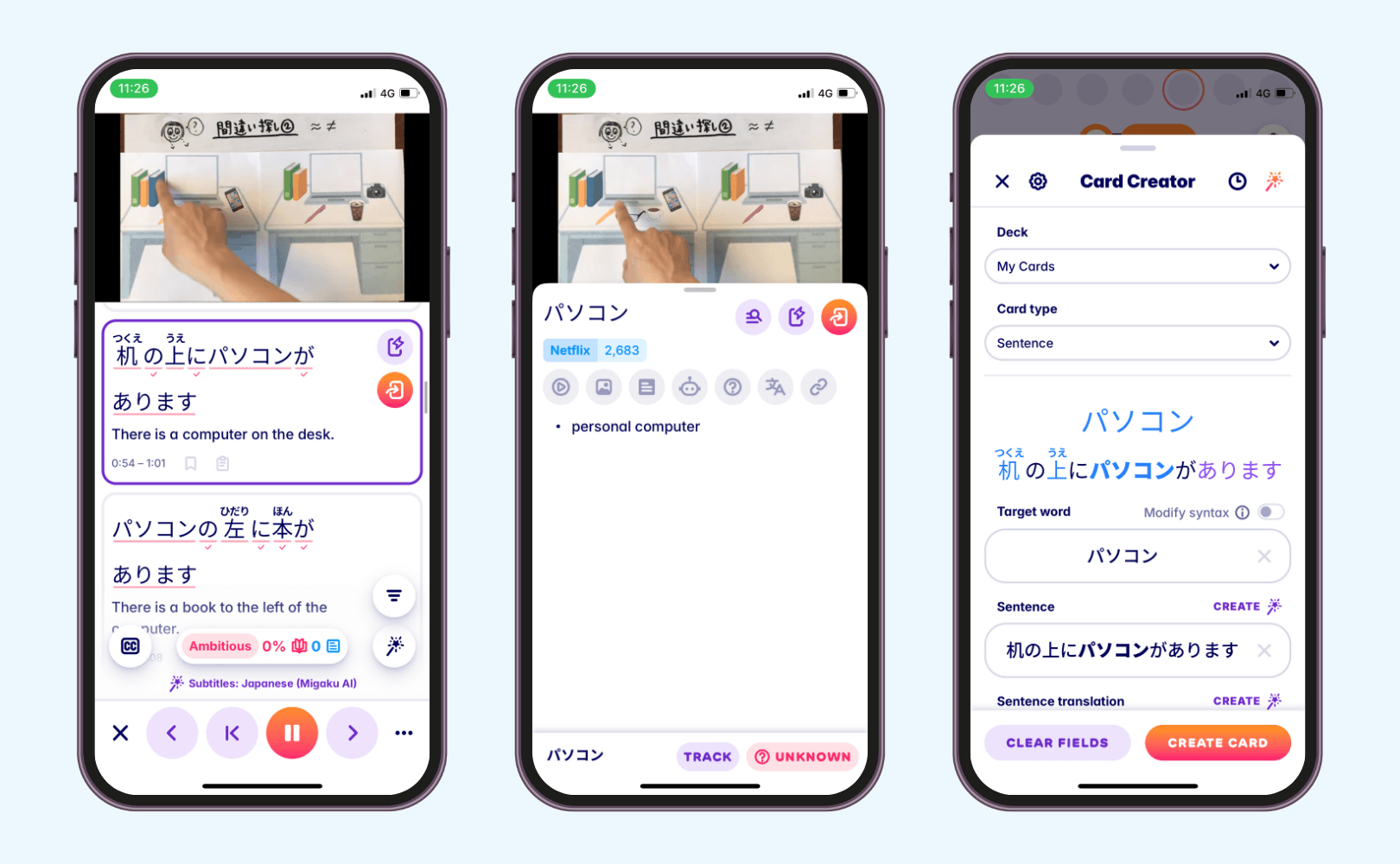
Anyway, if you want to actually use these strategies with real content, Migaku's browser extension and app let you look up words instantly while watching shows or reading articles. Makes immersion learning way more practical. There's a 10-day free trial if you want to check it out.
 ---
## Is it rewarding to learn a new language?
I don't have to tell you the answer directly, but you can feel it once you can read the text, watch the drama, talk to a native speaker, and surprise them with your fluency. Language learning is the fastest way to build connections with people from other countries and backgrounds. Imagine meeting travelers from China, and you can help them navigate and translate. It's the moment that you will keep in your memory. But before that rewarding moment, you can still relish your progress with every new sentence you understand in the media you're consuming.
> If you consume media to pick up a new language, and you understand at least some of the messages and sentences within that media, you will make progress. _Period_.
Language builds connections.
---
## Is it rewarding to learn a new language?
I don't have to tell you the answer directly, but you can feel it once you can read the text, watch the drama, talk to a native speaker, and surprise them with your fluency. Language learning is the fastest way to build connections with people from other countries and backgrounds. Imagine meeting travelers from China, and you can help them navigate and translate. It's the moment that you will keep in your memory. But before that rewarding moment, you can still relish your progress with every new sentence you understand in the media you're consuming.
> If you consume media to pick up a new language, and you understand at least some of the messages and sentences within that media, you will make progress. _Period_.
Language builds connections.