How to Learn Two Languages at Once: Strategies That Work
Last updated: March 20, 2026

So you want to learn two languages at once? I get it. Maybe you're planning a move to Spain but also need French for work, or you're just ambitious and want to speed up your polyglot journey. The good news is that learning multiple languages simultaneously is totally possible, and plenty of people do it successfully. The key is having the right strategies so you don't end up confusing vocabulary or burning out halfway through.
Is it possible to learn two languages at once
Yes, it's absolutely possible to learn two languages at the same time. I've done it myself, and I've seen countless language learners make real progress with this approach. The human brain is pretty capable of compartmentalizing different language systems when you set things up correctly.
Success depends heavily on how you structure your learning. Just randomly switching between languages throughout the day or mixing them in the same study session will only lead to confusion. You need deliberate strategies to keep the languages separate in your mind while still making consistent progress in both.
Our brains can handle multiple language systems without major interference when we create clear contexts for each language. Think about how millions of people grow up bilingual or trilingual naturally. They're not getting confused because each language has its own context, whether that's which parent speaks it, where it's used, or what situations call for it.
The real question isn't whether it's possible, but whether it's the right choice for you based on your goals, timeline, and learning style.
Should you learn two languages at once
This depends on your specific situation. Learning one language at a time is definitely easier and often faster for reaching fluency in that single language. But sometimes learning 2 languages simultaneously makes practical sense.
✅1. You might want to study two languages if you have a genuine need for both in your daily life. Maybe you're moving to Belgium, where you'll encounter both French and Dutch, or you're in a relationship where you'd benefit from knowing both your partner's language and another language for work.
✅2. Another good reason is if you're learning similar languages where knowledge transfers well. Spanish and Portuguese share tons of vocabulary and grammar structures. Learning them together can speed things up because patterns in one language reinforce the other.
❌1. On the flip side, you probably shouldn't learn two languages simultaneously if you're a complete beginner to language learning in general. Getting a feel for how language acquisition works by focusing on a new language first gives you skills that transfer to learning any language later.
❌2. Also skip the dual approach if you need to reach a specific proficiency level quickly. Studying for the JLPT N2 exam while also trying to learn Korean on the side will just slow down your Japanese progress when that exam has a deadline.
Tips for learning two languages at the same time
Choose your new languages strategically
The language pair you pick matters a lot. Learning related languages like Spanish and Italian can work in your favor because cognates and similar grammar patterns create helpful connections. You'll recognize that "biblioteca" and "biblioteca" both mean library, or that both languages conjugate verbs in comparable ways.
But here's where it gets tricky. Some people find that similar languages create more interference because they're easy to mix up. You might accidentally use an Italian word while speaking Spanish. For these folks, learning a different language family combination works better, like pairing Japanese with French.
Languages with completely different writing systems are easier to keep separate mentally. Learning Mandarin and German simultaneously gives your brain clear visual cues about which language you're working with. The characters versus Latin alphabet distinction helps with compartmentalization.
Separate your language learning sessions completely
This is probably the most important tip. Never study both languages in the same session. Your brain needs clear boundaries to build separate language systems.
I like to dedicate specific days to each language. Mondays, Wednesdays, and Fridays are for Language A, while Tuesdays, Thursdays, and Saturdays are for Language B. Sunday can be a rest day or a lighter review day for whichever language needs it more.
Another approach is time-blocking by time of day. Morning study sessions are always Korean, evening sessions are always Spanish. The consistency helps your brain switch into the right language mode automatically.
Physical location can work too. Study one language at your desk, the other at a coffee shop or library. These environmental cues trigger your brain to access the correct language system.
Use color-coding and visual organization
Visual cues are incredibly helpful for keeping languages separate. Assign each language a specific color and stick with it consistently across all your materials.
All your French materials might be blue: blue notebooks, blue folder tabs, blue highlights in digital documents. Spanish gets red: red notebooks, red sticky notes, red calendar entries for study time. This seems simple, but it really helps your brain categorize information correctly.
Digital tools make this easy. In Anki, you can customize deck colors. Your language apps can go in different colored folders on your phone. Even your physical textbooks can get colored book covers or labels.
Mind maps work great too. Create separate mind maps for each language's grammar rules, vocabulary themes, or cultural notes. The visual separation reinforces that these are distinct systems.
Create different learning contexts
Beyond just separating study sessions, build completely different contexts around each language. This goes deeper than scheduling.
Use different media for each language. Maybe you watch TV shows and movies in one language but listen to podcasts and read books in the other. The different formats create mental associations that keep the languages distinct.
I've found that associating each language with different topics helps too. If you're learning both German and Japanese, maybe you read about technology and science in German but focus on cooking and daily life content in Japanese. Your brain starts linking German with certain subject matter and Japanese with other domains.
Different learning methods can work as well. Perhaps you take a structured course with a tutor for one language but use immersion-heavy self-study for the other. The varied approaches give each language its own flavor in your learning experience.
Prioritize consistent daily practice
When you learn multiple languages, consistency becomes even more critical than when learning one language. You can't afford to let either language sit untouched for weeks.
Even if you're alternating days between languages, try to get at least a little exposure to both languages daily. Maybe you do a full study session for Language A, but you still listen to a 10-minute podcast in Language B while commuting. This keeps both languages active in your mind.
The 15/30/15 method is one approach some learners use.
- Spend 15 minutes on Language A,
- 30 minutes on Language B (your priority language),
- then another 15 minutes back on Language A.
This keeps both languages activated in a single day while still emphasizing one.
Language learning apps make daily practice easier. A quick 10-minute Duolingo session or flashcard review can maintain your connection to a language even on days when you're focusing your main study time elsewhere.
Develop metalinguistic awareness
Learning languages simultaneously actually builds something called metalinguistic awareness, which is your ability to think about language as a system. This is pretty cool because it makes you a better language learner overall.
Pay attention to how grammar works across both languages. Notice when they handle a concept similarly versus differently. Spanish and French both have gendered nouns, but Japanese doesn't. Recognizing these patterns helps you understand language structure more deeply.
This awareness helps you catch interference before it becomes a problem. You'll notice when you're about to use a word from the wrong language and can correct yourself. Over time, this monitoring becomes automatic.
Comparing languages also reveals things about your native language you never noticed. English speakers often don't think about articles much until learning a language that uses them differently or not at all.
Track progress separately and celebrate wins
Keep completely separate tracking systems for each language. Don't compare your progress between them because they'll naturally advance at different rates.
Maybe you're advancing faster in Spanish because it's more similar to English, while Japanese takes more time due to the writing system. That's totally normal and doesn't mean you're failing at Japanese.
Use different apps or journals to log your study time, vocabulary learned, and milestones reached for each language. Celebrate when you finish a textbook chapter in Korean, and separately celebrate when you have your first conversation in Portuguese.
Progress looks different for different languages anyway. You might feel conversational in Spanish after six months but still be working through basic grammar in Mandarin after the same time period. Both are valid achievements.
Accept that you might not become fluent in both languages simultaneously
Real talk: learning two languages at once usually means slower progress toward fluency in each compared to focusing on just one. That's the tradeoff.
If your goal is basic conversational ability in both languages, the dual approach works great. But if you want to learn a language to a high level of fluency quickly, you're better off sequencing them rather than doing them in parallel.
Some people use a primary/secondary approach. They focus 70% of their language learning time on their main language and 30% on the secondary one. This acknowledges that one language is the priority while still making progress in both.
Think about your actual goals. Do you need both languages for daily life right now? Then simultaneous learning makes sense. Is one more urgent? Maybe start with that one and add the second language once you hit an intermediate level in the first.
Practical daily schedule example for learning two languages simultaneously
Here's what a realistic week might look like when learning two languages:
- Monday: 30 minutes Spanish grammar study, 20 minutes Spanish listening practice
- Tuesday: 30 minutes Japanese kanji practice, 20 minutes Japanese reading
- Wednesday: 45 minutes Spanish conversation practice with a tutor
- Thursday: 30 minutes Japanese grammar, 20 minutes Japanese podcast
- Friday: 30 minutes Spanish reading, 20 minutes Spanish writing practice
- Saturday: 45 minutes Japanese conversation exchange
- Sunday: Light review of both languages, 15 minutes each
This gives you roughly equal time with both languages across the week while keeping them in separate sessions. Adjust the time based on what's realistic for your schedule. Even 15 minutes daily per language adds up to real progress.
Anyway, if you want to actually use these strategies with real content, Migaku's browser extension and app let you look up words instantly while watching shows or reading articles in your target languages. Makes immersion learning way more practical when you're juggling multiple languages. There's a 10-day free trial if you want to check it out.
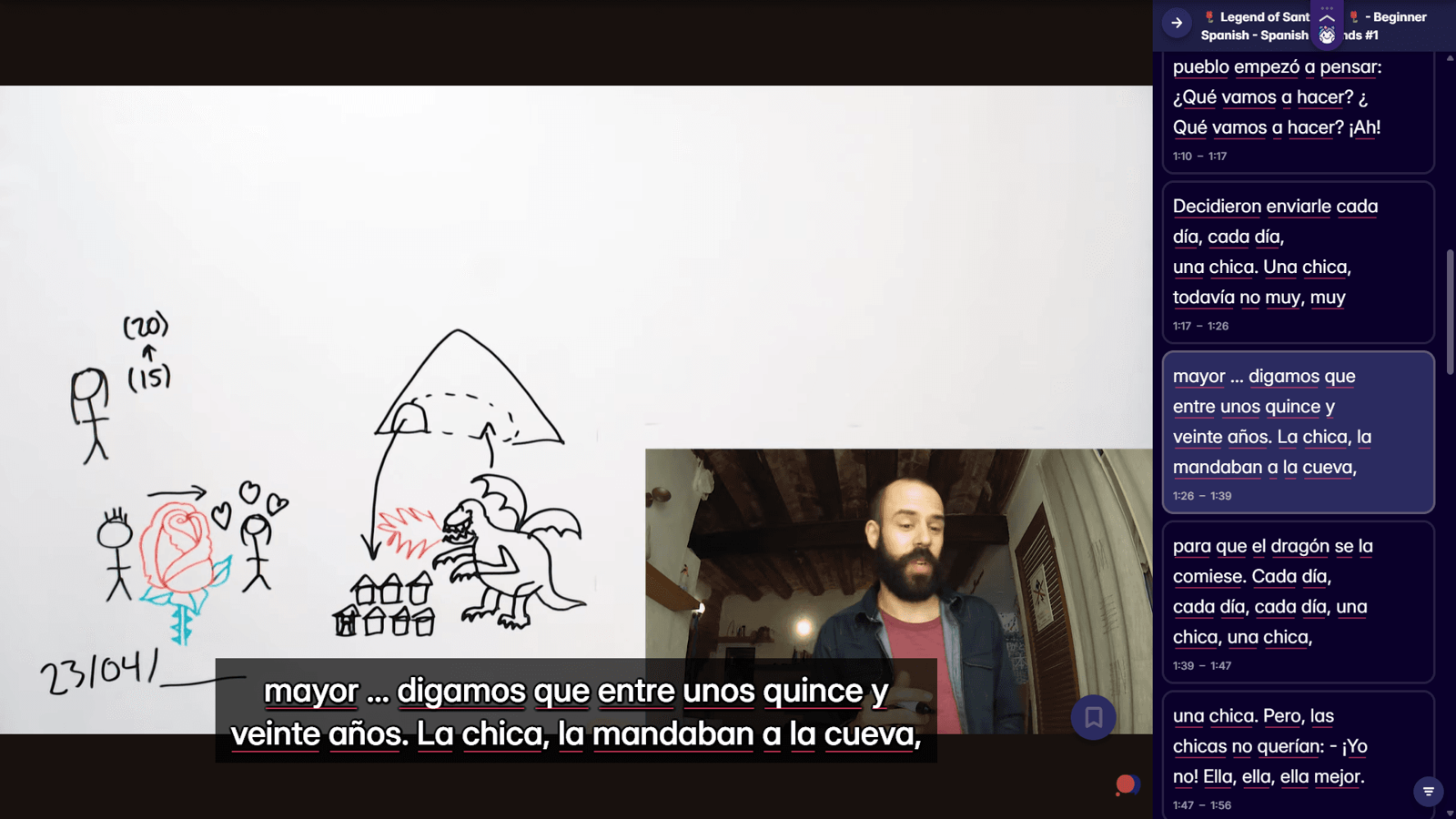
Maintaining motivation to learn multiple languages is the biggest challenge
One language often becomes more fun or useful, and the other gets neglected. Find content you genuinely enjoy in both languages. If you're forcing yourself to study textbooks for both, you'll burn out. But if you're watching Korean dramas you love and reading French comics that crack you up, the learning feels less like work.
If you consume media in the language you want to learn, and you understand at least some of the messages and sentences within that media, you will make progress. Period.
Media makes the languages feel alive!📺🎧