# Language Learning for Busy Adults: How to Learn a Language While Maintaining Your Busy Schedule
> Fit language learning into your busy schedule with practical strategies. Explore other language learning tips and methods to reach fluency faster.
**URL:** https://migaku.com/blog/language-fun/language-learning-for-busy-adults
**Last Updated:** 2026-03-27
**Tags:** culture, discussion
---
You know what's funny? Everyone acts like [learning a language](https://migaku.com/) requires hours of daily study time, like you need to quit your job and become a full-time student again. But here's the reality: most successful language learners I know are people juggling careers, families, and about a million other responsibilities. They just figured out how to make [language learning](https://migaku.com/blog/language-fun/3-things-to-learn-a-language) work around their actual lives instead of waiting for some magical free time that never shows up.
----
## The real obstacles busy people face
Here's the thing about learning as an adult: the challenge isn't your age or your brain's ability to absorb a new language. It's **decision fatigue**. By the time you get home from work, you've made about 10,000 decisions already. The idea of opening a textbook and deciding what to study feels like climbing a mountain.
That's why most traditional language learning style fails busy people. It assumes you have the mental energy to plan lessons, track progress, and stay motivated through willpower alone. But willpower is a limited resource, and you've already spent most of it by 7 PM on a Tuesday.
The other major obstacle is the guilt cycle. You set ambitious goals (30 minutes of study every day!), miss a few days because life happens, feel guilty, and then avoid the whole thing because it reminds you of failure. I've watched this pattern destroy more language learning attempts than anything else.
----
## How to fit language learning into your schedule
### 1. Stack language learning onto existing habits
Habit stacking is pretty simple: attach your new habit to something you already do automatically. Already drink coffee every morning? That's your flashcard review time. Always scroll social media before bed? Replace 10 minutes of that with reading in your target language.
The key is making it so automatic that you don't have to decide to do it. I know someone who learned Spanish by switching their phone's language settings and looking up every unfamiliar word they encountered. She was already on her phone 20+ times per day anyway. Zero extra time required.
Some practical examples are:
- Listen to [podcasts](https://migaku.com/blog/language-fun/language-learning-with-podcasts) in your target language during your commute or while doing dishes
- Watch one episode of a show with subtitles instead of your usual Netflix show
- Read news articles in your target language while eating breakfast
- Practice speaking by narrating what you're doing while getting ready in the morning
### 2. Use dead time strategically in adult learning
You've got way more dead time than you think. Waiting for meetings to start, standing in line, commuting, waiting for dinner to cook. These 5-minute chunks add up to hours every week, and they're perfect for language learning.
Keep a vocabulary app on your phone and review cards whenever you're waiting for something. I'm not talking about Duolingo necessarily (though it works for some people). Any spaced repetition system works here. The point is having something ready to go that requires zero setup time.
Audio content is especially good for dead time because you can consume it while doing other things. Listening to content in your target language while driving, exercising, or doing chores means you're getting exposure without sacrificing any productive time.
### 3. Apply the 15/30/15 method
What is the 15/30/15 method? It's a time management approach where you break your study into focused intervals: 15 minutes of active learning, 30 minutes of passive exposure, and 15 minutes of review. The beauty of this method is that you can split these chunks throughout your entire day.
Do your 15 minutes of active learning (flashcards, grammar practice, writing) in the morning when your brain is fresh. Get your 30 minutes of passive exposure during lunch or commute time (listening to podcasts, watching videos). Then do 15 minutes of review before bed to reinforce what you encountered during the day.
This totals just one hour, but it's distributed in a way that matches how busy people live. You're not trying to carve out a solid hour of uninterrupted time, which is basically impossible for most adults.
### 4. Focus on high-value activities using the 80/20 rule
The 80/20 rule is a general principle that applies to any language. The idea is that 80% of your results come from 20% of your efforts. In language learning, this means focusing on the most common words, phrases, and grammar patterns that you'll actually use in real conversations.
For French specifically, learning the 1,000 most common words gives you enough vocabulary to understand about 80% of everyday conversations. That's way more efficient than trying to memorize every word in a dictionary. The same principle applies to grammar: a handful of verb tenses cover most of what you'll need for basic communication.
As a busy learner, you can't afford to waste time on obscure vocabulary or complex grammar rules you'll rarely use. Start with high-frequency content and expand from there only when you actually need it.
### 5. Make your environment fit for language learning
Change your environment so you encounter your target language automatically.
- Switch your phone to your target language.
- Follow social media accounts that post in that language.
- Put sticky notes with vocabulary around your house.
- Subscribe to YouTube channels in your target language so they show up in your feed.
The goal is to reduce the activation energy required to practice. When you have to actively seek out practice materials, you're relying on motivation. When practice materials show up in your normal routine, you're using environment design instead.
This approach has been proven to work. People who immerse themselves in a language environment (even an artificial one they create at home) progress faster than people who only study during dedicated sessions.
----
## Best language learning strategies for minimal time investment
### [Spaced repetition](https://migaku.com/blog/language-fun/spaced-repetition-vs-cramming) for vocabulary
If you're going to invest time in one thing, make it spaced repetition for vocabulary. Apps like Anki or purpose-built systems show you words right before you're about to forget them, which is the most efficient way to move information into long-term memory.
The beauty of spaced repetition for busy people is that it's self-adjusting. The system knows what you know and what you don't, so you're not wasting time reviewing words you've already mastered. A good spaced repetition routine takes maybe 10-15 minutes per day once you're in a rhythm.
### [Comprehensible input](https://migaku.com/blog/language-fun/comprehensible-input-method-language-learning) through content you enjoy
Language learners who consume content they genuinely find interesting stick with it way longer than people forcing themselves through boring textbooks. Find YouTube channels, podcasts, or shows in your target language that you'd want to watch even in your native language.
The concept of comprehensible input means consuming content that's just slightly above your current level. You should understand maybe 70-80% of what you're hearing or reading, with enough context to figure out the rest. This keeps you engaged without overwhelming you.
### Language exchange apps like italki for speaking practice
You don't need to hire an expensive tutor to practice speaking. Apps like HelloTalk, Tandem, and italki connect you with native speakers who want to learn your native language. You help them, they help you, and you both get free practice.
The advantage for busy people is flexibility. You can send voice messages back and forth on your own schedule instead of coordinating live conversation times. Even 10 minutes of speaking practice a few times per week makes a huge difference in building confidence.
----
## The practical summary of language learning for adults
How to learn a language when you're busy? Here's what works based on people who've done it successfully:
1. Start with 10-15 minutes of spaced repetition daily for vocabulary. This is non-negotiable and should happen at the same time every day so it becomes automatic.
2. Replace some of your existing media consumption with content in your target language. One episode, one article, one podcast. You're already consuming media anyway, so this doesn't add time to your schedule.
3. Use every scrap of dead time for passive listening. Commute, exercise, chores, whatever. Get those hours of exposure without sacrificing productive time.
4. Practice speaking even if it's just talking to yourself while driving or doing voice exchanges asynchronously with language partners.
That's it. Nothing fancy, nothing requiring huge time commitments. Just consistent small actions that compound over time.
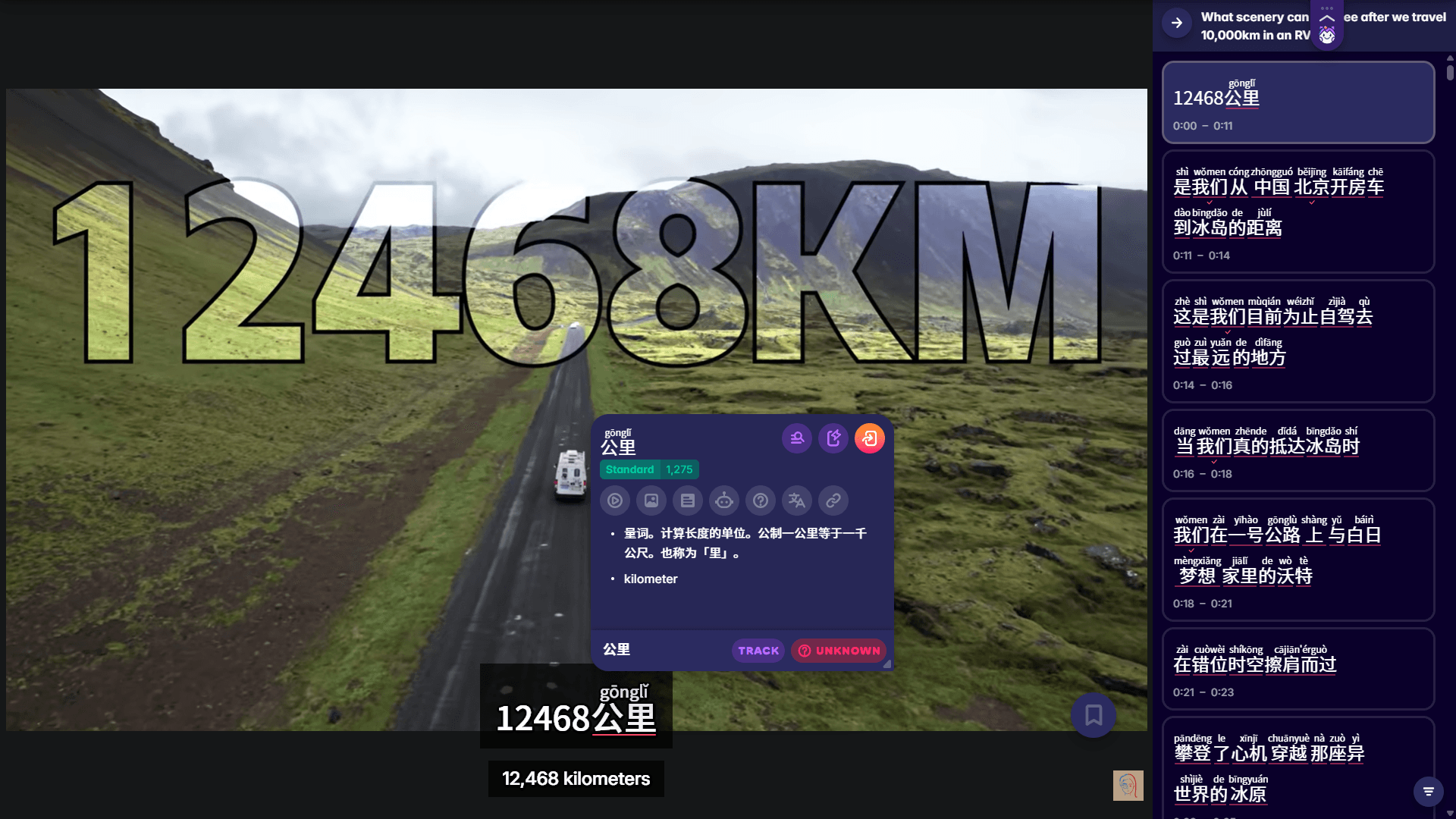
Anyway, if you want to make [immersion](https://migaku.com/blog/language-fun/comprehensible-input-method-language-learning) learning way more practical, Migaku's browser extension and app let you look up words instantly while watching shows or reading articles in your target language. Makes it super easy to learn from real content without constantly switching between tabs or apps. There's a 10-day free trial if you want to check it out.
 ----
## Adult learners probably won't become fluent in six months while working full-time
That's okay. Fluency isn't the only worthwhile goal, and slower progress is still progress.
If you can hold a basic conversation after a year of consistent 15-minute daily practice, that's genuinely impressive. If you can read news articles or watch shows with subtitles after 18 months, you've achieved something most people never do.
> If you consume media in the language you want to learn, and you understand at least some of the messages and sentences within that media, you will make progress. _Period_.
This is a marathon, and you need a pace you can maintain while living your life!
----
## Adult learners probably won't become fluent in six months while working full-time
That's okay. Fluency isn't the only worthwhile goal, and slower progress is still progress.
If you can hold a basic conversation after a year of consistent 15-minute daily practice, that's genuinely impressive. If you can read news articles or watch shows with subtitles after 18 months, you've achieved something most people never do.
> If you consume media in the language you want to learn, and you understand at least some of the messages and sentences within that media, you will make progress. _Period_.
This is a marathon, and you need a pace you can maintain while living your life!